

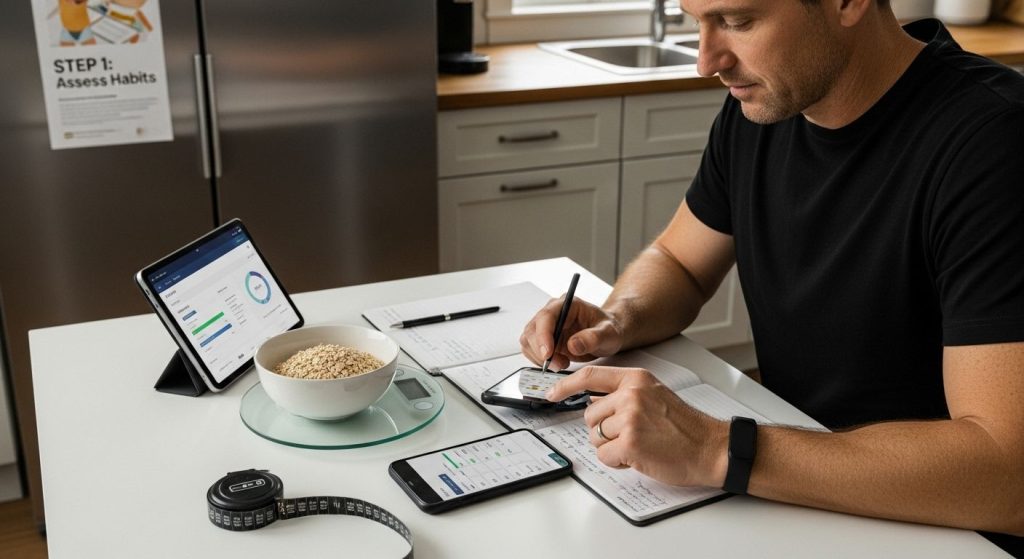
Short answer: Weight loss for men comes down to a steady calorie deficit you can live with, enough protein and regular strength training so the weight you lose is fat rather than muscle, and the habits that make the deficit easier: 7 to 9 hours of sleep, fewer drinks and more daily movement. Health agencies such as the CDC and Mayo Clinic recommend aiming for about 1 to 2 pounds a week. If your weight is high enough to affect your health, a doctor can talk with you about medical options that work alongside these habits.
Key Takeaways
- A pace of 1 to 2 pounds a week is the target both the CDC and Mayo Clinic give, and people who lose weight gradually are more likely to keep it off.[1][2]
- Losing even 5% of your body weight (10 pounds for a 200 pound man) is linked to better blood pressure, cholesterol and blood sugar.[1]
- Strength training at least 2 days a week, plus about 150 minutes of moderate cardio, is the adult activity baseline and helps protect muscle while you diet.[3]
- Short sleep is linked to more hunger and higher calorie intake; adults 18 to 64 should get 7 to 9 hours a night.[4]
- Some medicines can cause weight gain, and prescription weight-loss medicines exist for people who qualify. Both are worth a conversation with your doctor.[4][5]
- Ultra Bann is not a weight-loss product. Diet, training and sleep do the work.
How Weight Loss for Men Actually Works
Your body weight moves in the direction of your energy balance. When you take in fewer calories than you burn over weeks and months, your body draws on stored energy, mostly fat, and the scale moves down. Mayo Clinic puts the practical number at burning about 500 to 750 more calories than you take in each day to reach a steady 1 to 2 pounds a week.[2] You can create that gap by eating less, moving more, or (most effectively) a mix of both.
Men often have an early advantage: larger bodies and more muscle mean a higher calorie burn, so the first few pounds can come off quickly. That early drop is partly water. The real test is the next three to six months, when progress slows and habits matter more than willpower.
Why men tend to gain around the middle
Many men store extra fat in the abdomen. Harvard Health explains that deep belly fat (visceral fat) makes up only about 10% of body fat in most people but is biologically active: it releases inflammatory substances and is linked to a number of chronic conditions.[6] The good news is that visceral fat responds to the same things as overall fat loss: a calorie deficit, regular aerobic exercise and strength training. Sit-ups tone the muscles underneath but do not burn the fat on top of them.[6] If you want to track this, our guide on how to measure your waist shows how to do it properly.
Step 1: Set a Realistic Target and Pace
The CDC lists “lose 20 pounds in 2 weeks” as an example of an unrealistic goal and recommends a gradual pace of about 1 to 2 pounds a week instead.[1] Mayo Clinic suggests that 5% of your current weight is a good first goal.[2] Hitting it gives you a health payoff and proof that your plan works.
| Starting weight | First goal (5%) | Time at 1 lb/week | Time at 2 lb/week |
|---|---|---|---|
| 180 lb | 9 lb | About 9 weeks | About 5 weeks |
| 200 lb | 10 lb | About 10 weeks | About 5 weeks |
| 240 lb | 12 lb | About 12 weeks | About 6 weeks |
| 280 lb | 14 lb | About 14 weeks | About 7 weeks |
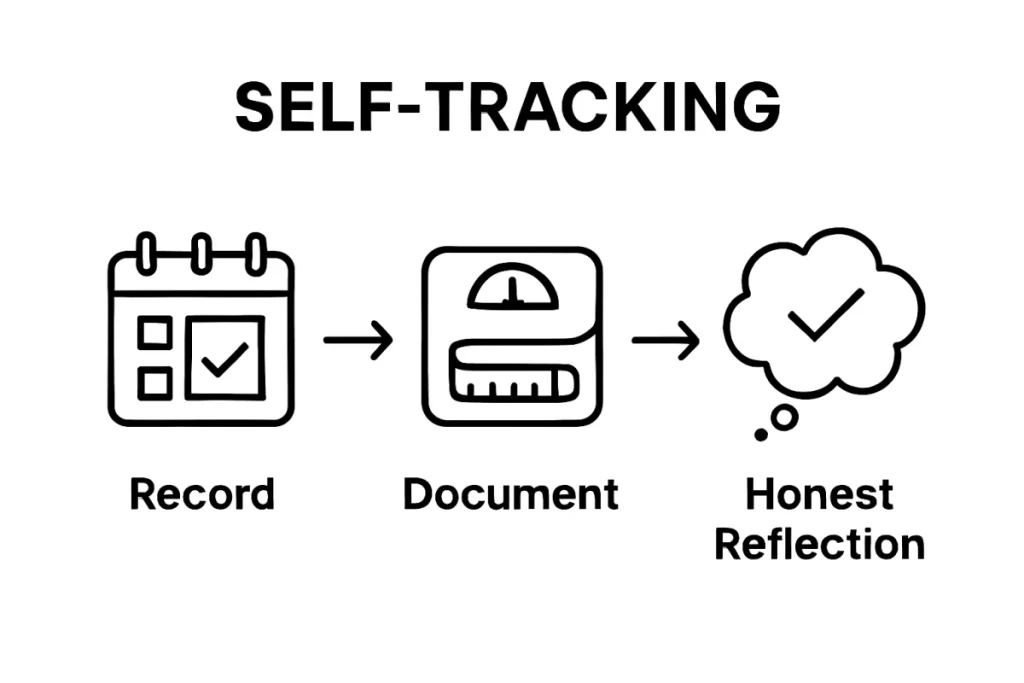
The CDC also recommends working on only two or three goals at a time and keeping a food and drink diary for a few days before you change anything.[1] Weekend drinking, late snacks and liquid calories often explain more than main meals.
Action goals beat outcome goals
“Lose 10 pounds” is an outcome you cannot control day to day. “Walk 30 minutes every day” is an action you can.[2] Set action goals for the week (for example: protein at every meal, two strength sessions, no drinks on weeknights) and let the weight follow.
Step 2: Eat for a Deficit Without Losing Muscle
Build meals around protein and plants
When you eat less, your body can break down muscle as well as fat. Two things push it toward fat: lifting weights and eating enough protein. Put a palm-sized or larger portion of lean protein (chicken, fish, eggs, Greek yogurt, beans, lean meat) at each meal. Protein is filling, which makes a deficit easier to hold. For daily targets by body weight and activity level, see our guide on how much protein men need.
Fill the rest of the plate with vegetables, fruit and whole grains. Mayo Clinic recommends at least four servings of vegetables and three servings of fruit a day.[2] These foods add volume and fiber for few calories.
Cut the easy calories first
- Sugary drinks: soda, sweet coffee drinks and juice add calories without filling you up. Harvard Health specifically flags fructose-sweetened drinks in relation to belly fat.[6]
- Alcohol: covered below; for many men it is the single biggest lever.
- Restaurant and takeout portions: eat half, box the rest.
- Mindless snacking: eating straight from the bag at the TV is where food diaries usually find hidden calories.
What about fasting and diet styles?
Low carb, Mediterranean, intermittent fasting and plain calorie counting can all work when they produce a deficit you can maintain. The best plan is the one you will still follow in six months. If you are curious about time-restricted eating and hormones, read our article on whether fasting affects testosterone.
Step 3: Train to Keep Muscle and Burn More
The CDC’s adult guideline is 150 minutes a week of moderate aerobic activity (such as 30 minutes, 5 days a week) or 75 minutes of vigorous activity, plus muscle-strengthening work on at least 2 days that hits all major muscle groups.[3] Mayo Clinic gives the same picture for weight loss: work up to at least 30 minutes of aerobic exercise most days, and strength train at least twice a week.[2]
| Activity | Weekly target | Why it matters for weight loss |
|---|---|---|
| Strength training (squats, presses, rows, deadlifts or machines) | 2 to 3 sessions, all major muscle groups | Signals your body to keep muscle while you are in a deficit |
| Moderate cardio (brisk walking, cycling, swimming) | 150 minutes, or 75 minutes vigorous | Adds to calorie burn and supports heart health |
| Daily movement (steps, stairs, standing breaks) | Every day | Counters long periods of sitting, which NIDDK lists as a weight factor |
If you are starting from zero, start small. The CDC example is a 15-minute walk, 3 days a week for the first week, then build up.[1] Our article on grip strength after 40 is a useful check on whether your training is keeping you strong, not just lighter.
Step 4: Fix Sleep, Alcohol and Stress
Sleep
NIDDK reports that lack of sleep is linked to weight gain and that short sleep may increase hunger, calorie intake and the chance of choosing less healthy foods. Its guideline is 7 to 9 hours a night for adults 18 to 64, and 7 to 8 hours for adults 65 and older.[4] Harvard Health also describes a five-year study in which adults under 40 who slept five hours or less a night gained significantly more visceral fat.[6] The CDC suggests turning off screens at least 30 minutes before bed.[1] For a full routine, see our guide to the best sleep routines for men.
Alcohol
Alcohol adds calories, lowers your guard around food and tends to cut into sleep quality. The CDC defines moderate drinking for men as two drinks or less in a day.[7] That is an upper limit, not a target. If you are trying to lose weight, setting alcohol-free days during the week is one of the fastest ways to widen your calorie gap without feeling hungrier.
Stress
NIDDK lists long-term stress among the factors that may lead to weight gain.[4] Stress tends to push people toward comfort food, late nights and skipped workouts. Regular exercise, a fixed bedtime and planned meals reduce how many decisions you have to make when you are tired.
When to Talk to a Doctor About Medical Options
See a doctor before a big change in diet or exercise if you have heart disease, diabetes, high blood pressure or take daily medicines. A visit is also worth it if you are gaining weight without a clear reason. NIDDK notes that some medicines can increase appetite or reduce calorie burning, including corticosteroids, some diabetes medicines such as insulin and sulfonylureas, some blood pressure medicines such as beta-blockers, and some antidepressants, epilepsy medicines and antihistamines. Conditions such as hypothyroidism and depression can also play a role.[4] Never stop a prescribed medicine on your own; ask whether an alternative exists.
Prescription weight-loss medicines are an option for some adults. According to NIDDK, they may be considered with a BMI of 30 or higher, or 27 or higher with a weight-related problem such as high blood pressure or type 2 diabetes. After one year, adults using medicine plus a lifestyle program lose 3% to 12% more of their starting weight than with lifestyle changes alone.[5] These medicines are meant to be used with diet and activity, not instead of them. If you are considering GLP-1 medicines, our article on semaglutide side effects in men covers what to ask your doctor.
Where Ultra Bann Fits (and Where It Does Not)
Ultra Bann is not a weight-loss product and does not burn fat, suppress appetite or replace any part of the plan above. It is a natural male vitality supplement from DL Bioproducts: one capsule every 2 days, with seven botanicals listed by amount on the label (Thai Butea superba, Panax ginseng, Cynomorium songaricum, black ginger, tongkat ali, epimedium and reishi, 800 mg in total, no proprietary blend). You can read the full label on our ingredients page. Some men who are already working on diet, training and sleep choose to add it as part of a broader vitality routine. If that interests you, you can find it in our shop, where your first order includes free US shipping and a 60-day money-back guarantee. Check with your doctor first if you take prescription medicines.
Frequently Asked Questions
How fast can a man safely lose weight?
The CDC and Mayo Clinic both recommend about 1 to 2 pounds a week over the long term. Men often lose faster in the first week or two because of water loss, but the rate settles. A slower, steady pace is more likely to last.[1][2]
What is the best way for men to lose belly fat?
You cannot spot-reduce fat with ab exercises. Belly fat, including visceral fat, comes down with overall fat loss: a calorie deficit, regular aerobic exercise, strength training, enough sleep and cutting sugary drinks.[6] Track your waist measurement along with your weight to see progress.
Should men do cardio or weights to lose weight?
Both. Cardio adds to your daily calorie burn and supports heart health, while strength training helps you keep muscle during a deficit. The CDC recommends 150 minutes of moderate aerobic activity plus at least 2 days of strength training each week.[3]
Why am I not losing weight even though I eat healthy?
Healthy food still has calories, and portions, cooking oils, drinks and weekend eating add up. Keep an honest food and drink diary for a few days.[1] Also look at sleep, alcohol and medicines. If nothing explains it, ask your doctor to check for causes such as an underactive thyroid or a medicine side effect.[4]
Do weight-loss supplements work for men?
Diet, activity and sleep drive weight loss; supplements do not replace them. For men who qualify, prescription medicines have the strongest evidence and should be discussed with a doctor.[5] Ultra Bann is a vitality supplement, not a weight-loss product. Before you buy any supplement, read our guide to harmful ingredients in supplements.
References
- Centers for Disease Control and Prevention. Steps for Losing Weight. CDC.
- Mayo Clinic Staff. Weight loss: 6 strategies for success. Mayo Clinic, 2024.
- Centers for Disease Control and Prevention. Adult Activity: An Overview. CDC.
- National Institute of Diabetes and Digestive and Kidney Diseases. Factors Affecting Weight and Health. NIDDK, NIH.
- National Institute of Diabetes and Digestive and Kidney Diseases. Prescription Medications to Treat Overweight and Obesity. NIDDK, NIH.
- Harvard Health Publishing. Taking aim at belly fat. Harvard Medical School, updated 2024.
- Centers for Disease Control and Prevention. About Moderate Alcohol Use. CDC.
These statements have not been evaluated by the Food and Drug Administration. This product is not intended to diagnose, treat, cure or prevent any disease. This article is for information only and is not medical advice.
Ultra Bann natural male vitality support
1 capsule every 2 days. Free US shipping and a 60-day money-back guarantee on your first order.
See Ultra BannThese statements have not been evaluated by the Food and Drug Administration. This product is not intended to diagnose, treat, cure, or prevent any disease.

