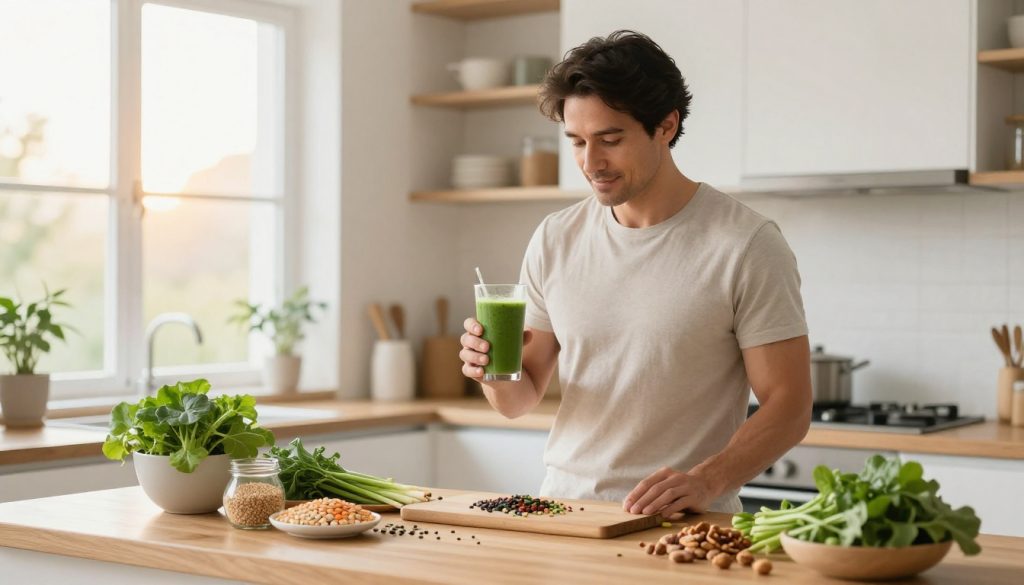
Short answer: The best plant based protein sources for men are soy foods (tempeh, edamame, tofu), lentils and beans, seeds such as hemp and pumpkin, and protein-dense grains like oats and quinoa. Tempeh gives about 15 to 16 grams of protein per 3-ounce serving and lentils about 12 grams per half cup cooked, so a few servings a day add up fast.[1] Plant protein can support muscle as well as animal protein in trials when total intake and training are adequate, but you usually need slightly bigger portions and a mix of sources at each meal.[3][4]
Key Takeaways
- Soy foods are the standout: whole soy is a complete protein, and edamame provides about 18 grams per cup.[1]
- Legumes are the backbone of a plant plan: beans give 6 to 9 grams and lentils about 12 grams per cooked half cup.[1]
- In a 12-week randomized trial, soy protein matched for leucine produced lean mass and strength gains similar to whey.[3]
- Plant proteins are often lower in leucine and less digestible than animal proteins, so older men benefit from larger servings, blends (grains plus legumes) and soy or pea isolates.[4]
- Watch vitamin B12 if you cut out animal foods, and talk with a doctor or dietitian about it.[1][4]
What Counts as a Plant-Based Protein Source?
A plant-based protein source is any food from plants that delivers a meaningful amount of protein per serving. Nutritionists usually group them into five families:
- Soy foods: tofu, tempeh (fermented, pressed soybeans), edamame and soy milk.
- Legumes: lentils, chickpeas, black beans, kidney beans and green peas.
- Nuts and seeds: peanuts, almonds, pistachios, hemp, pumpkin and sunflower seeds.
- Whole grains: oats, quinoa and barley.
- Concentrated options: protein powders made from soy or pea isolate, plus meat substitutes.
Protein is built from amino acids. Nine of them are “essential,” meaning your body cannot make them, so they must come from food. A “complete” protein supplies all nine in useful amounts. Cleveland Clinic notes that whole soy is a complete protein.[1] Most other plants have one or two weaker spots: grains tend to be limited in lysine, while legumes tend to be limited in the sulfur amino acids. That is why pairing a grain with a legume (rice and lentils, oats and soy milk, hummus and whole wheat pita) gives a more balanced amino acid profile across the meal.[4]
Best Plant Based Protein Sources: Protein per Serving
The table below uses serving sizes and protein amounts published by Cleveland Clinic and Mayo Clinic. Use it to build meals instead of guessing.
| Food | Serving | Protein (approx.) | Source |
|---|---|---|---|
| Edamame (shelled) | 1 cup | 18 g | Cleveland Clinic[1] |
| Tempeh | 3 oz | 15 to 16 g | Cleveland Clinic[1] |
| Lentils, cooked | 1/2 cup | about 12 g | Cleveland Clinic[1] |
| Tofu | 1/2 cup | 10 g | Mayo Clinic[2] |
| Hemp seeds | 1 oz | about 10 g | Cleveland Clinic[1] |
| Beans, peas and lentils (general) | 1/2 cup | 7 to 10 g | Mayo Clinic[2] |
| Peanuts | 1/4 cup | 9 g | Cleveland Clinic[1] |
| Sunflower seeds | 1 oz | 8 g | Cleveland Clinic[1] |
| Green peas, cooked | 1 cup | 8 g | Cleveland Clinic[1] |
| Pumpkin seeds | 1 oz | 7 g | Cleveland Clinic[1] |
| Hummus (store-bought) | 1/3 cup | 6 g | Mayo Clinic[2] |
| Barley or quinoa, uncooked | 1/4 cup | 5 to 6 g | Cleveland Clinic[1] |
| Oats | 1/2 cup | 5 g | Cleveland Clinic[1] |
| Nutritional yeast | 1 tbsp | 2 g | Cleveland Clinic[1] |
For perspective, Mayo Clinic lists about 21 grams of protein in a 3-ounce serving of lean meat.[2] No single plant food beats that per bite except a generous serving of tempeh or edamame, which is why combining two or three sources per meal matters.
Top picks for men who train
- Tempeh: the most protein per ounce on the list, firm texture, easy to slice into bowls or sandwiches.
- Edamame: a cup is close to a full meal’s worth of protein and works as a snack.
- Lentils: cheap, quick to cook, high in fiber, ideal for batch prep.
- Hemp seeds: an easy add-on to oats, yogurt alternatives or smoothies.
- Soy or pea protein powder: the most practical way to hit a high-protein breakfast or post-workout serving.
Can Plant Protein Build Muscle as Well as Animal Protein?
What human trials show
A randomized, double-blind trial published in the International Journal of Environmental Research and Public Health in 2020 put untrained adults (aged 18 to 35) on 12 weeks of supervised resistance training three times per week. One group took 19 g of whey protein isolate daily, the other 26 g of soy protein isolate, chosen so both delivered about 2 g of leucine. Of 48 completers, 17 were men. Lean body mass rose by 1.5 kg with whey and 1.2 kg with soy, and leg strength increased in both groups, with no significant difference between them.[3]
Two limits are worth knowing: the soy group received about 7 g more total protein to match leucine, and there was no training-only control group. Still, the result supports a practical rule: plant protein works when you eat enough of it.
Why older men need a bit more care
A 2026 narrative review in Nutrients explains the gap between plant and animal proteins in three points:[4]
- Leucine: leucine is the amino acid that switches on muscle protein synthesis. The review states older adults need roughly 3 to 4 g of leucine per meal, versus 2 to 3 g in younger adults, and many plant proteins are less leucine-dense than animal proteins. Soy and pea isolates are among the richer plant options.
- Digestibility: legume proteins are digested less completely than animal proteins, partly because of fiber and polyphenols.
- Dose response: in older men, 20 g of soy isolate produced a smaller muscle-building response than 20 g of whey, and doubling soy to 40 g narrowed but did not fully close the gap.
The same review concludes that when total protein and training are adequate, plant and animal diets show similar long-term muscle and strength outcomes. Its authors still favor a mixed approach in older adults rather than strict plant-only eating. The takeaway is not “plants do not work”; it is “plants work better with larger portions, blends and smart choices.”
The bigger health picture
Observational research also links plant protein with healthier aging. A Harvard T.H. Chan School of Public Health and Tufts study of more than 48,000 women in the Nurses’ Health Study found that those who ate more plant protein were 46% more likely to age healthily, while higher protein from meat and dairy was linked to a 6% lower likelihood.[5] This was an association study in women, so it does not prove cause and effect for men, but it points in a consistent direction: beans, nuts and soy are worth eating regularly.
How Much Plant Protein Do Men Need?
Mayo Clinic cites 0.8 g of protein per kilogram of body weight per day for an average sedentary adult, which works out to about 60 g for a 75 kg (165 lb) person.[2] The Nutrients review recommends at least 1.0 to 1.2 g/kg/day for healthy older adults.[4] Your exact target depends on body weight, age and training, so see our full guide on how much protein men need for the detailed math. On a plant-based diet, aim toward the upper part of your range to account for lower digestibility.
A simple plant protein day
Here is how the table above turns into real meals. Amounts are added from the listed servings:
- Breakfast: 1/2 cup oats (5 g) with 1 oz hemp seeds (about 10 g), made with soy milk. About 15 g plus the milk, or add a scoop of soy or pea protein for a bigger start.
- Lunch: 1 cup cooked lentils (about 24 g) over 1/4 cup uncooked quinoa, cooked (5 to 6 g). About 30 g.
- Snack: 1 cup shelled edamame (18 g).
- Dinner: 3 oz tempeh (15 to 16 g) stir-fried with 1 cup green peas (8 g). About 23 to 24 g.
That day lands at roughly 85 g of protein before counting the soy milk, spread across the day in three solid meals and a snack. Spreading protein across meals, rather than loading it all at dinner, makes it easier to reach a meaningful per-meal leucine dose.
Practical rules that make it work
- Anchor every meal with soy or a legume. Then add a grain or seed to round out the amino acids.
- Go bigger on portions. Plant meals need more volume to match animal protein, so plan for it.
- Use an isolate when convenient. Soy and pea isolates are closer to animal proteins in quality scores than whole legumes.[4]
- Keep training. Protein supports muscle only when paired with resistance exercise.
- Protect sleep. Recovery is not just food; see our guide to sleep routines for men.
Side Effects, Nutrient Gaps and Who Should Be Careful
Digestive comfort
Beans, lentils and peas are high in fiber. If you are not used to them, increase portions gradually, drink enough water, and rinse canned beans. Most people adapt within a few weeks.
Nutrients to watch
Cleveland Clinic advises talking with your doctor or dietitian to make sure a vegetarian or vegan diet covers nutrients such as vitamin B12.[1] The Nutrients review also flags vitamin B12 and creatine as nutrients that need attention on plant-forward diets, since both come mainly from animal foods.[4] If creatine interests you, read our overview of creatine for men.
Who should talk to a clinician first
- Men with kidney disease, who may have specific protein limits.
- Men with soy, peanut or tree nut allergies, or celiac disease (seitan and many meat substitutes are made from wheat gluten).
- Men with low appetite or unintended weight loss, since plant meals are bulkier and can be harder to finish.
- Anyone on a medically prescribed diet.
Where Ultra Bann Fits
Ultra Bann is not a protein supplement and does not replace food. It is a natural male vitality supplement by DL Bioproducts with seven botanicals per serving and every amount shown on the label, with no proprietary blend: Thai Butea superba 345 mg, Panax ginseng 110 mg, Cynomorium songaricum 85 mg, black ginger (Kaempferia parviflora) 85 mg, tongkat ali 85 mg, epimedium (horny goat weed) 45 mg and reishi 45 mg, for a total of 800 mg. You take one capsule every 2 days. Some men add it to a routine that already covers the basics: enough protein, training and sleep. You can review the full ingredient label, and first orders from the Ultra Bann shop include free US shipping and a 60-day money-back guarantee.
Frequently Asked Questions
What is the highest protein plant food?
Among common whole foods, shelled edamame (about 18 g per cup) and tempeh (15 to 16 g per 3-ounce serving) are at the top of Cleveland Clinic’s list.[1] Soy and pea protein isolates are even more concentrated per serving.
Is plant protein as good as whey for building muscle?
In a 12-week trial, soy protein matched to whey for leucine produced similar gains in lean mass and strength.[3] In older men, plant protein per gram tends to produce a smaller short-term muscle response, so slightly larger servings or blends help.[4]
Do I need to combine plant proteins at every meal?
Not strictly, but it helps. Grains and legumes have different limiting amino acids, so pairing them (rice and lentils, oats with soy milk) gives a more complete profile.[4] Soy on its own is already a complete protein.[1]
How much protein is in tofu compared with meat?
Mayo Clinic lists 10 g of protein in a half cup of tofu and about 21 g in a 3-ounce serving of lean meat.[2] Doubling the tofu portion, or pairing it with beans or seeds, closes most of that gap.
Can men over 50 get enough protein from plants?
Yes, with planning. Older adults need more leucine per meal and at least 1.0 to 1.2 g of protein per kg per day, according to a 2026 review, so lean on soy, lentils, protein isolates and bigger portions.[4] A dietitian can help if appetite is low.
References
- Cleveland Clinic. 13 of the Best Vegetarian and Vegan Protein Sources. health.clevelandclinic.org
- Mayo Clinic. Discover meat-free protein alternatives. mayoclinic.org
- Lynch HM, Buman MP, Dickinson JM, Ransdell LB, Johnston CS, Wharton CM. No Significant Differences in Muscle Growth and Strength Development When Consuming Soy and Whey Protein Supplements Matched for Leucine Following a 12 Week Resistance Training Program in Men and Women: A Randomized Trial. International Journal of Environmental Research and Public Health. 2020;17:3871. MDPI
- Cannito T, Ivetac A, Fiotti N, Mearelli F, Di Bella S, Di Girolamo FG, Biolo G. Sustaining Muscle, Cardiovascular Health, and the Environment: Is Plant-Based Protein the Key? Nutrients. 2026;18:1446. MDPI
- Harvard T.H. Chan School of Public Health. Eating plant protein in midlife may help women stay healthy as they age. hsph.harvard.edu
These statements have not been evaluated by the Food and Drug Administration. This product is not intended to diagnose, treat, cure or prevent any disease. This article is for information only and is not medical advice.
Ultra Bann natural male vitality support
1 capsule every 2 days. Free US shipping and a 60-day money-back guarantee on your first order.
See Ultra BannThese statements have not been evaluated by the Food and Drug Administration. This product is not intended to diagnose, treat, cure, or prevent any disease.