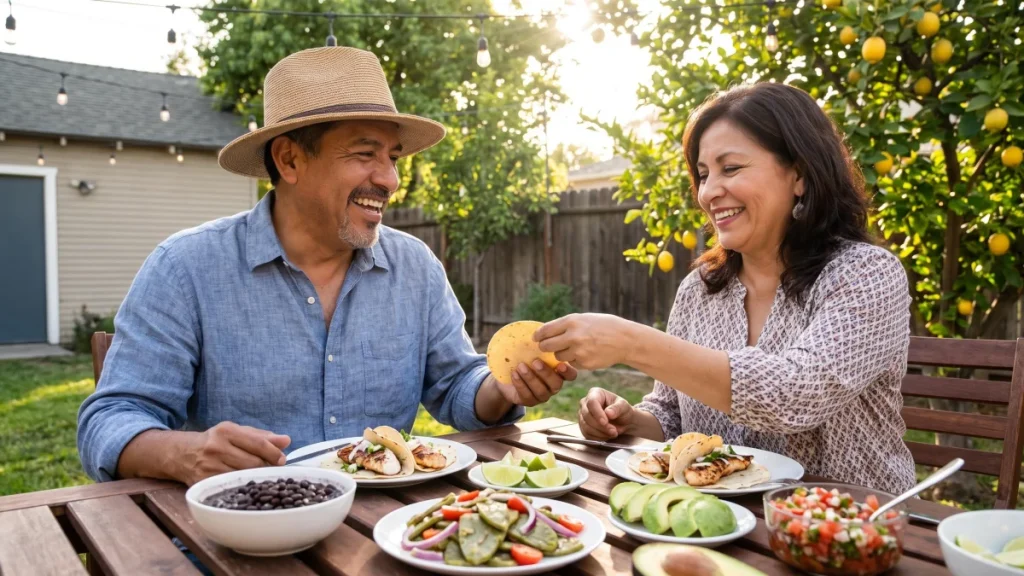
Short answer: Healthy Mexican food is mostly traditional Mexican food. Frijoles, nopales, aguacate, corn tortillas, squash, tomatoes, chiles and fish are nutrient dense staples that fit any healthy eating plan. What makes many Mexican and Latino meals heavy is the way they are often prepared today: refried in lard, deep fried, loaded with cheese and sour cream, served in very large portions and washed down with sugary drinks. Keep the ingredients, change the cooking and the portions, and you have a plate that gives steady energy.
Key Takeaways
- The traditional Latin American kitchen is built on plants: Oldways describes a heritage diet with fruits, vegetables, whole grains, legumes, nuts and seeds every day, fish about twice a week, and meats and sweets only now and then.[2]
- Beans are one of the best foods on the plate. Harvard’s Nutrition Source links regular legume intake with better cholesterol numbers and lower heart disease risk in large studies.[3]
- Nopales are very low in calories (about 24 per cup raw) and offer about 3.3 g of fiber per cup.[5] Small studies suggest they may blunt the rise in blood sugar after a meal, but the evidence is still limited.[6]
- Half an avocado provides 487 mg of potassium, and most of its fat is monounsaturated.[4]
- Diabetes is common among Hispanic adults in the US: CDC data put it at 22% overall and 25% among adults of Mexican origin, so food choices matter.[1]
- The biggest wins are simple swaps: frijoles de la olla instead of refritos in lard, grilled instead of fried, corn tortillas instead of giant flour ones, and water or agua fresca sin azúcar instead of soda.
What Makes Mexican and Latino Food Healthy (or Not)
Corn, beans, squash and chiles have fed Mexico and Central America since long before the Spanish arrived, and Oldways notes that maize, beans, potatoes and peanuts are traditional staples of the region, with tomatoes and potatoes originating in Central and South America. Oldways, a nonprofit food and nutrition group, built its Latin American Heritage Diet pyramid around this tradition, which mixes Indigenous, Spanish, Portuguese and African food cultures.[2] At the base of that pyramid are the foods to eat every day: fruits, vegetables, whole grains, legumes, nuts and seeds. Fish and seafood come about twice a week, poultry, eggs and dairy in moderation, and red meat and sweets infrequently.[2]
The problem is not the cuisine itself. It is what happened to it in restaurants and busy homes: more frying, more lard and processed cheese, more seasoning packets high in salt, bigger plates of rice and flour tortillas, and soda with every meal. “Healthy Mexican food” is less about new recipes and more about going back to how abuela cooked on a normal weekday.
Why this matters for Hispanic families
The CDC published the first national estimates of diabetes within Hispanic subgroups using NHANES data from 2011 to 2016 (the study appeared in JAMA). About 22% of Hispanic adults had diagnosed or undiagnosed diabetes. By background, the figures were 25% for Mexican, 22% for Puerto Rican, 21% for Cuban and Dominican, 19% for Central American and 12% for South American adults.[1] Food is only one part of the picture, but meals built on beans, vegetables and less sugar are a practical place to start. If you have not had your blood sugar checked recently, ask your doctor for an A1c or fasting glucose test.
9 Mexican and Latino Staples Worth Eating More Often
1. Frijoles (black, pinto, red beans)
Beans give you plant protein, fiber, folate, iron and phosphorus, with very little saturated fat or sodium when they are cooked from scratch.[3] Harvard’s Nutrition Source reports that a meta-analysis of 11 clinical trials found pulses lowered LDL cholesterol by about 6%, and observational data link eating legumes about four times a week with a 14% lower risk of coronary artery disease.[3] In a US NHANES analysis of 8,229 adults, bean eaters had lower body weight and smaller waists.[3] The US Dietary Guidelines suggest about 3 cups of legumes a week.[3] More on plant protein: plant based protein sources.
2. Nopales (cactus paddles)
One cup of raw cactus has about 24 calories, 2 g of protein, 5 g of carbohydrate and 3.3 g of fiber.[5] They are great grilled, in a salad with tomato and onion, or scrambled with eggs. See the nopales section below for what the research shows.
3. Aguacate (avocado)
A whole medium avocado has about 240 calories, 10 g of fiber and 22 g of fat, mostly monounsaturated, and half an avocado provides 487 mg of potassium.[4] In a large Harvard cohort followed for 30 years, people who ate two or more servings a week had a 16% lower risk of cardiovascular disease than non eaters, especially when avocado replaced processed meat, eggs or whole milk dairy.[4] That is an observational finding, and Harvard notes that much avocado research is industry funded.[4] Portion still matters: a few slices or a quarter to half an avocado per meal is plenty.
4. Corn tortillas
Corn tortillas made from nixtamal (corn cooked with lime) are usually smaller and made with fewer ingredients than large flour tortillas, which often contain lard or shortening. Two warm corn tortillas are a reasonable portion for most meals. Toast them on the comal instead of frying them into tostadas or chips.
5. Calabacita, chayote and other squash
Calabacitas and chayote are mild, low calorie vegetables that bulk up guisos, caldos and tacos so you feel full on less rice.
6. Tomatoes, chiles and fresh salsa
Pico de gallo, salsa verde and salsa roja add flavor with very little fat. Making salsa at home keeps the salt under your control.
7. Pescado and mariscos
The Latin American Heritage Diet calls for fish and seafood about twice a week.[2] Try pescado a la veracruzana, grilled fish tacos or ceviche.
8. Caldos
A homemade caldo de pollo or caldo de res full of carrots, squash, cabbage and chayote is filling and hydrating. Skim the fat, go easy on bouillon cubes, and add rice or tortillas on the side in modest amounts.
9. Fruit, nuts and seeds
Papaya, guava, mango, pineapple and jícama with lime and chile make a better dessert or snack than pan dulce every day. Pepitas (pumpkin seeds) and peanuts fit the daily nuts and seeds part of the heritage pyramid.[2]
Nopales Benefits: What the Research Shows
“Nopales benefits” is one of the most searched questions about Mexican food, and the honest answer is: promising, but not proven for any medical use.
Human studies
A 2017 graduate systematic review from Pacific University found three studies that met its criteria (two cohort studies and one randomized controlled trial) on Opuntia and blood sugar after meals. All three showed lower post meal glucose and insulin, but the reviewer rated the overall quality of the evidence as low and called for larger randomized trials.[6] One of the included studies looked at nopal eaten with breakfast by Mexican patients with type 2 diabetes.[6] WebMD’s overview also notes that some research links regular nopal eating with lower blood sugar and that the fiber in the pads may help with cholesterol.[5]
What we do not know
Long term effects are unknown, and nobody knows whether nopal can complement or replace diabetes medicine.[6] Do not stop or change any medication because you started eating nopales. If you take insulin or glucose lowering pills and plan to eat nopales daily, tell your doctor, since anything that lowers blood sugar after meals can add to the effect of those drugs. Also be careful with cactus juices, candies and jams: WebMD warns these products can be mixed with other juices and add a lot of sugar.[5]
Healthy Mexican Food Swaps: The Plate Table
You do not have to give up the food from home (no hay que dejar la comida de la casa). Use these swaps to keep the flavor and drop the extra fat, salt and sugar.
| Instead of | Try | Why it helps |
|---|---|---|
| Frijoles refritos made with lard | Frijoles de la olla, or beans mashed with a little oil and their own broth | Keeps the fiber and protein, cuts saturated fat |
| Large flour tortillas | Two corn tortillas warmed on the comal | Smaller portion, simpler ingredients |
| Fried taquitos, chimichangas, chiles rellenos | Grilled, baked or comal cooked versions | Far less added oil |
| Carne asada or chorizo every day | Pollo a la plancha, fish, eggs or beans most days | Matches the heritage diet: meat infrequent, fish twice a week[2] |
| Rice filling half the plate | A quarter plate of rice, the rest vegetables and beans | More fiber, steadier energy |
| Crema and lots of queso | A few slices of avocado, fresh salsa, a sprinkle of queso fresco | Swaps saturated fat for mostly unsaturated fat[4] |
| Seasoning packets and bouillon cubes | Garlic, onion, cumin, oregano, chiles, lime, cilantro | Same flavor, much less sodium |
| Soda, sweet horchata, sweetened juices | Water, agua fresca with little or no sugar, unsweetened tea | Removes liquid sugar |
A Sample Day of Healthy Mexican Food
- Breakfast: huevos a la mexicana with nopales, a corn tortilla, black beans and a piece of papaya.
- Lunch: caldo de pollo with lots of vegetables, a small portion of rice, lime and salsa.
- Dinner: grilled fish tacos on corn tortillas with cabbage slaw, pico de gallo and a few slices of avocado, with frijoles de la olla on the side.
- Drinks: water, agua de jamaica with little sugar, or coffee without a lot of sugar.
If you feel sleepy after big lunches, plate size and refined starch are often the reason. See our guide to the afternoon slump and feeling tired after eating, and for more ideas on daily energy read how to get more energy.
Side Effects, Safety and Who Should Talk to a Doctor
- Gas from beans: beans contain fermentable starches and sugars that can cause gas and bloating in some people. Harvard notes that soaking dried beans for at least three hours and then cooking them may help.[3] Increase portions slowly.
- Diabetes medicine: if you take insulin or other glucose lowering drugs, talk to your doctor before making big changes in carbohydrates or adding daily nopales.
- Kidney disease: avocado, beans and some fruits are rich in potassium. People with kidney disease or on certain blood pressure drugs may need to limit potassium, so follow your care team’s advice.
- Blood pressure: salt from seasoning packets, canned foods, chorizo and cheese adds up quickly. Read labels and cook with herbs and spices.
- Handling fresh cactus: wear gloves and remove all spines before cooking.[5]
Where Ultra Bann Fits
Food comes first, and no supplement replaces a good plate. Ultra Bann is a natural male vitality supplement made by DL Bioproducts, taken as one capsule every 2 days. It contains seven botanicals with every amount on the label and no proprietary blend: Thai Butea superba, Panax ginseng, Cynomorium songaricum, black ginger (Kaempferia parviflora), tongkat ali, epimedium (horny goat weed) and reishi, for 800 mg in total. You can see the full label on the Ultra Bann ingredients page. Your first order ships free in the US and comes with a 60 day money back guarantee. If you want to learn more, visit the Ultra Bann shop. If you take medication or have a health condition, check with your doctor before starting any supplement.
Frequently Asked Questions
What is the healthiest Mexican food to order at a restaurant?
Look for grilled fish or chicken, fajitas with extra vegetables, ceviche, caldos, or tacos on corn tortillas with salsa and a little avocado. Ask for frijoles de la olla or black beans instead of refried beans, go light on cheese and crema, and skip the refill of chips.
Are refried beans healthy?
The beans themselves are very healthy. Traditional refried beans are often cooked with lard, which adds saturated fat. Whole beans, or beans mashed with a little vegetable oil and their own cooking liquid, keep all the fiber and protein with less saturated fat.[3]
Are corn tortillas healthier than flour tortillas?
In most cases, yes. Corn tortillas are usually smaller and made only from nixtamalized corn, water and lime, while large flour tortillas often contain shortening or lard. Portion size still matters: two corn tortillas is a sensible amount for one meal.
What are the benefits of eating nopales?
Nopales are very low in calories, provide fiber, and are easy to add to eggs, salads and tacos.[5] Small studies suggest they may lower the rise in blood sugar after meals, but the evidence is low quality and long term effects are unknown.[6] Treat them as a healthy vegetable, not a medicine.
Is Mexican food good for people with diabetes?
Traditional Mexican food can fit a diabetes friendly plan when you fill the plate with vegetables and beans, keep rice and tortillas to modest portions, choose grilled proteins and avoid sugary drinks. Work with your doctor or a registered dietitian on your carbohydrate targets, especially if you take medication.
References
- Centers for Disease Control and Prevention. “CDC Releases First National Estimates on Diabetes within Hispanic and Asian Populations in the US.” Press release, 2019 (NHANES 2011 to 2016, published in JAMA). archive.cdc.gov
- Oldways. “What is the Latin American Heritage Diet?” oldwayspt.org
- Harvard T.H. Chan School of Public Health, The Nutrition Source. “Legumes and Pulses.” nutritionsource.hsph.harvard.edu
- Harvard T.H. Chan School of Public Health, The Nutrition Source. “Avocados.” nutritionsource.hsph.harvard.edu
- WebMD. “Health Benefits of Cactus.” webmd.com
- Aaseby M. “The Effects of Opuntia (Cactaceae) on Lowering Postprandial Blood Glucose.” Pacific University, graduate systematic review, 2017. pacificu.edu
These statements have not been evaluated by the Food and Drug Administration. This product is not intended to diagnose, treat, cure or prevent any disease. This article is for information only and is not medical advice.
Ultra Bann natural male vitality support
1 capsule every 2 days. Free US shipping and a 60-day money-back guarantee on your first order.
See Ultra BannThese statements have not been evaluated by the Food and Drug Administration. This product is not intended to diagnose, treat, cure, or prevent any disease.