
Short answer: The most reliable way to get more energy naturally is to fix the basics in the right order across the day: bright outdoor light soon after waking, water and a protein breakfast, short movement breaks, caffeine finished by about 2 p.m., a walk after meals, and a fixed bedtime that gives you at least 7 hours of sleep. If you still feel drained after two or more weeks of good habits, see a doctor, because thyroid problems, anemia, low B12 and sleep apnea are common and testable causes.
Key Takeaways
- Sleep is the foundation: the CDC recommends 7 or more hours a night for adults aged 18 to 60, and 7 to 9 hours for ages 61 to 64.[2]
- Morning daylight is far stronger than indoor light (up to 10,000 lux outside versus about 500 lux in a bright office), and light is one of the strongest signals for your body clock.[5]
- Caffeine can stay in the body for a long time (half-life of 2 to 12 hours), so stopping at least 8 hours before bed protects tonight’s sleep and tomorrow’s energy.[4]
- A short walk after meals blunts the blood sugar spike that drives the afternoon slump; even 2 to 5 minutes helps somewhat.[6]
- Thirst often shows up first as fatigue, and alcohol at lunch or in the early evening drains energy.[1]
- Fatigue that lasts two weeks or more despite rest, good food and fluids deserves a medical check.[3]
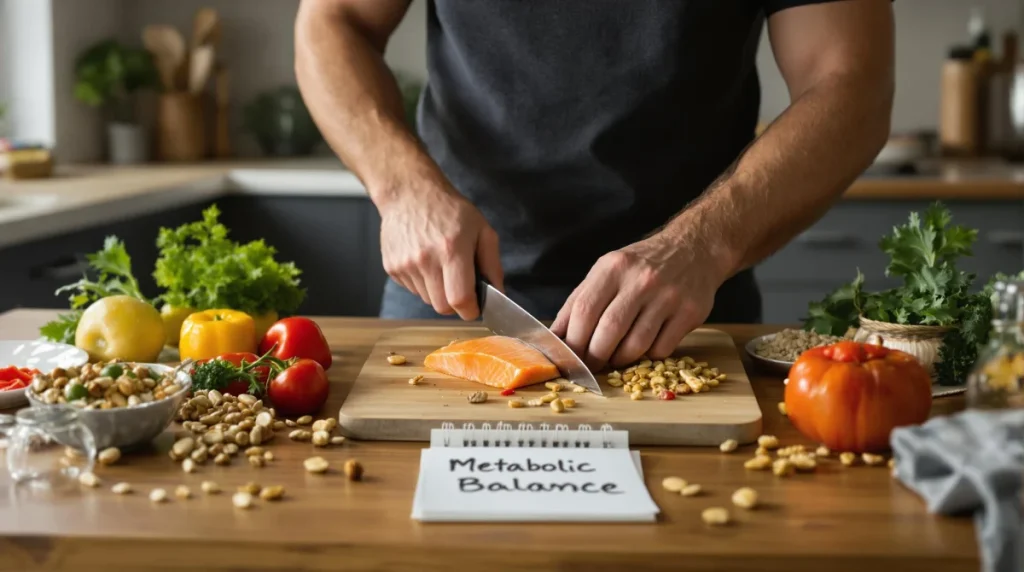
Why Your Energy Runs Low (and What You Can Actually Change)
Low energy is common. Harvard Health cites a Gallup survey in which 14% of Americans said they lacked the energy they needed to get things done.[1] For most men the problem is not one big thing but several small leaks: short or irregular sleep, a body clock that never gets a clear morning signal, too much caffeine too late, long stretches of sitting, refined carbohydrate meals that spike and crash blood sugar, mild dehydration, alcohol and chronic stress.
Each of these has a time of day when it is easiest to fix, so an hour-by-hour plan works better than a vague list of tips: you attach each habit to something you already do.
The times below assume a 6:30 a.m. wake-up and a 10:30 p.m. bedtime; shift every row if your schedule differs. This plan is for everyday tiredness, not for fatigue with chest pain, breathlessness or fainting, which needs urgent care.[3]
How to Get More Energy: The Hour-by-Hour Plan
| Time | Do this | Why it works |
|---|---|---|
| 6:30 a.m. | Get outside (or next to a bright window) within the first 30 minutes after waking, even for 10 minutes | Light is one of the strongest regulators of the body clock; direct sunlight reaches up to 10,000 lux versus about 500 lux indoors[5] |
| 6:45 a.m. | Drink a large glass of water before coffee | One of the first signs of being short on fluids is a feeling of fatigue[1] |
| 7:00 a.m. | Breakfast built on protein plus slow carbohydrates (eggs and whole grain toast, Greek yogurt with nuts) | Low glycemic foods absorb slowly and help avoid the dip that follows quick sugars and refined starches[1] |
| 10:00 a.m. | Stand up and move for a few minutes every hour you sit | Regular activity supports deeper sleep and mood; breaking up sitting keeps you from going flat[1] |
| 12:30 p.m. | Balanced lunch: vegetables, protein, a modest portion of whole grains; no alcohol | Alcohol’s sedative effect is strongest at midday[1] |
| 1:00 p.m. | Walk for 5 to 15 minutes after lunch | Blood sugar peaks about 30 to 90 minutes after a meal; even 2 to 5 minutes of walking lowers it somewhat[6] |
| 2:00 p.m. | Last caffeine of the day | Caffeine can cause insomnia, especially after 2 p.m.; aim for at least 8 hours between your last cup and bedtime[1][4] |
| 3:00 p.m. | Water, a short stretch or stairs instead of a sugary snack | Refined snacks bring a quick rise and a quicker crash[1] |
| 5:30 to 6:30 p.m. | Exercise, a brisk walk or an active hobby; skip the five o’clock drink | Regular exercise may help you sleep more soundly; alcohol saps evening energy[1] |
| 7:30 p.m. | Moderate dinner, finished well before bed | The CDC advises avoiding large meals and alcohol before bedtime[2] |
| 8:30 to 9:30 p.m. | Dim, warm lights; screens down; bedroom quiet and cool | Evening light can slow melatonin; the CDC suggests devices off at least 30 minutes before bed[2][5] |
| 10:30 p.m. | Lights out at the same time every night, weekends included | A consistent schedule is the first CDC sleep recommendation[2] |
The Morning Block: Light, Water, Protein
Get daylight early
Your internal clock decides when you feel alert and when you feel sleepy, and light is one of its strongest inputs.[5] Outdoor light, even on a cloudy morning, is far brighter than the lights in a kitchen or office, which is why a short walk, coffee on the porch or a few minutes on a balcony works better than sitting under ceiling lights. Light therapy lamps are often used in the morning for the same reason: to anchor circadian timing.[5]
Rehydrate before you caffeinate
You go seven or eight hours without fluids overnight. Harvard Health notes that water is the only nutrient shown to enhance performance for all but the most demanding endurance activities, and that fatigue is often the first sign of being short on fluids.[1] A large glass of water before coffee is the easiest win of the day.
Build breakfast around protein
Proteins and fats have almost no effect on blood sugar, while sugary cereals, pastries and white bread are absorbed fast and tend to leave you hungry and flat by mid-morning.[1] Eggs, Greek yogurt, cottage cheese, leftover chicken or beans with whole grains give steadier fuel. If you are not sure how much protein you need, see our guide to daily protein intake for men.
The Midday Block: Movement, Lunch and the Caffeine Cutoff
Break up sitting
Long hours in a chair make most men feel more tired, not less. Harvard Health lists exercise as one of its core energy strategies, noting that activity can help you sleep more soundly and supports mood through brain chemistry, and suggests picking up the pace now and then when you walk.[1] Stand for calls, take the stairs, refill your water bottle on another floor.
Walk after lunch
The classic 2 to 3 p.m. slump is partly a blood sugar story. Cleveland Clinic explains that blood sugar peaks about 30 to 90 minutes after you eat, and cites research showing that walking just 2 to 5 minutes after a meal keeps glucose from spiking as high as it does when you sit.[6] A 10 minute loop around the block after lunch is one of the highest return habits in this plan.
Set a hard caffeine cutoff
Caffeine works, but it has a long tail. The Sleep Foundation puts its half-life anywhere from 2 to 12 hours and recommends stopping at least 8 hours before bedtime (10 or more if you still sleep poorly).[4] Harvard Health says insomnia is most likely when caffeine is taken after 2 p.m.[1] With a 10:30 p.m. bedtime, a 2 p.m. cutoff satisfies both. For daily totals, the FDA cites 400 mg a day as an amount not generally associated with negative effects in healthy adults, while warning that too much can cause a racing heartbeat, higher blood pressure, jitteriness and sleep problems.[7]
The Evening Block: Protect Tomorrow’s Energy
Most of tomorrow’s energy is decided tonight. The CDC recommends going to bed and getting up at the same times each day, keeping the bedroom quiet, calm and cool, turning off electronic devices at least 30 minutes before bed, and avoiding alcohol, large meals and caffeine late in the day.[2] The Sleep Foundation goes further and suggests minimizing electronics two to three hours before bed and switching to dim, warm lighting, because light at night can slow or halt melatonin production.[5]
Alcohol deserves a special mention. It can make you drowsy, but Harvard Health advises skipping the five o’clock drink if you want energy in the evening and drinking only in moderation at a time when winding down is fine.[1]
If you lie awake for long stretches, Harvard Health describes a sleep restriction approach: skip naps, go to bed later so the time in bed matches the time you actually sleep, then add 15 to 30 minutes per night as long as sleep stays solid.[1] For a full evening routine, read our guide to the best sleep routines for men.
Do not forget stress and workload
Harvard Health lists stress and overwork among the main energy drains: stress-induced emotions consume huge amounts of energy, and professional, family and social demands pile up.[1] Ranking your must-do tasks, dropping the least important ones and using a short wind-down practice (a walk, breathing, yoga or tai chi) are legitimate energy strategies, not luxuries.
When Tiredness Needs a Doctor
Habits fix a lot, but not everything. Mayo Clinic advises booking an appointment if resting, reducing stress, eating well and drinking plenty of fluids for two or more weeks has not helped your fatigue.[3] Its list of medical causes includes thyroid disorders, anemia, diabetes, heart disease, sleep apnea, depression, low vitamin D and side effects of common medicines.[3] The table below shows the checks most worth asking about.
| Possible cause | Clues | How it is checked | Read more |
|---|---|---|---|
| Underactive thyroid | Tiredness, feeling cold, weight gain, low drive | Blood test ordered by your doctor | Hypothyroidism symptoms in men |
| Low iron stores (ferritin) | Fatigue, breathlessness on stairs, poor exercise tolerance | Blood test (ferritin, blood count) | Low ferritin in men |
| Vitamin B12 deficiency | Fatigue, tingling hands or feet, poor focus | Blood test | B12 deficiency symptoms |
| Sleep apnea | Loud snoring, gasping at night, waking unrefreshed | Sleep study | Sleep apnea and testosterone |
Do not start iron supplements on a hunch: get tested first. And seek emergency care if fatigue comes with chest pain, shortness of breath, an irregular or fast heartbeat, a feeling that you might pass out, or a severe headache.[3] If fatigue is tied to low mood with thoughts of self-harm, call or text 988 in the U.S.[3]
Where Ultra Bann Fits
No supplement replaces sleep, daylight, food, water and movement, and Ultra Bann is not sold as an energy product. Ultra Bann is a natural male vitality supplement by DL Bioproducts, taken as one capsule every 2 days. Each serving contains seven botanicals with the amounts listed on the label and no proprietary blend: Thai Butea superba 345 mg, Panax ginseng 110 mg, Cynomorium songaricum 85 mg, black ginger (Kaempferia parviflora) 85 mg, tongkat ali 85 mg, epimedium (horny goat weed) 45 mg and reishi 45 mg, for 800 mg in total. You can review the full label or visit the Ultra Bann shop; first orders ship free in the US and come with a 60-day money-back guarantee. If you take medication or have a health condition, check with your doctor before adding any supplement.
Frequently Asked Questions
What is the fastest way to get more energy naturally?
For an immediate lift, drink a large glass of water, get outside into daylight and walk briskly for 5 to 10 minutes. Over the following days, the biggest gains usually come from a fixed sleep schedule with at least 7 hours in bed asleep and a firm caffeine cutoff.
Why am I tired after lunch every day?
A dip in the early afternoon is normal, but a large lunch heavy in refined carbohydrates, alcohol at midday and sitting right after eating all make it worse. A balanced lunch followed by a short walk helps, since blood sugar peaks 30 to 90 minutes after a meal.[1][6]
What time should I stop drinking coffee?
Aim for at least 8 hours before bedtime, which means about 2 p.m. for a 10 p.m. to 10:30 p.m. bedtime.[1][4] If you still sleep poorly, move the cutoff earlier.
Are naps good or bad for energy?
It depends on your night sleep. If you sleep well, a short early afternoon rest is fine for many people. If you struggle to fall or stay asleep at night, Harvard Health suggests skipping daytime naps while you rebuild a solid night of sleep.[1]
How long until I feel a difference?
Hydration, daylight and post-meal walks often feel helpful within days. Sleep schedule changes take longer to settle. If you see no improvement after two or more weeks of consistent habits, book a doctor’s visit.[3]
References
- Harvard Health Publishing. 9 tips to boost your energy naturally (updated April 2024).
- Centers for Disease Control and Prevention. About Sleep.
- Mayo Clinic. Fatigue: causes and when to see a doctor.
- Sleep Foundation. Caffeine and Sleep.
- Sleep Foundation. Light and Sleep.
- Cleveland Clinic Health Essentials. Walking after eating and blood sugar.
- U.S. Food and Drug Administration. Spilling the Beans: How Much Caffeine Is Too Much?
These statements have not been evaluated by the Food and Drug Administration. This product is not intended to diagnose, treat, cure or prevent any disease. This article is for information only and is not medical advice.
Ultra Bann natural male vitality support
1 capsule every 2 days. Free US shipping and a 60-day money-back guarantee on your first order.
See Ultra BannThese statements have not been evaluated by the Food and Drug Administration. This product is not intended to diagnose, treat, cure, or prevent any disease.