


Short answer: The most reliable ways to improve sperm quality are the unglamorous ones: stop smoking, keep alcohol moderate, reach a healthy weight, keep the testicles cool (no hot tubs, saunas or long hours sitting), avoid workplace chemicals, exercise regularly and eat more fruit, vegetables, fish and nuts. Sperm take weeks to form, so give any change at least a few months before judging it. Popular “fertility” supplements have weaker evidence than most labels suggest, and a large trial found folic acid plus zinc did not help.
Key Takeaways
- Healthy sperm is judged on three things: count, movement (motility) and shape (morphology). Mayo Clinic cites at least 15 million sperm per milliliter and at least 40% moving sperm as markers linked to better odds of pregnancy.[1]
- Smoking, heavy drinking, excess body weight, scrotal heat and toxic chemicals are the best documented, fixable threats to sperm quality.[1][2]
- Diets richer in fruit, vegetables, fish and walnuts, and lower in processed meat and trans fats, are associated with better semen measures, although most of that research shows association, not proof of cause.[3][4]
- In a randomized trial of 2,370 couples, daily folic acid (5 mg) plus zinc (30 mg) for six months did not improve semen quality or live birth rates.[6]
- New sperm take weeks to form and more time to mature, so habits need a few months to show up in a semen test.[5]
- If there is no pregnancy after a year of regular unprotected sex, both partners should be evaluated.[1]

What “Sperm Quality” Actually Means
When a lab runs a semen analysis, it does not give a single “quality” score. It reports several separate measures, and each one can be affected by different habits. Knowing them helps you understand which changes matter.
Count (concentration)
This is how many sperm are present per milliliter of semen. Mayo Clinic notes that pregnancy is most likely when an ejaculate contains at least 15 million sperm per milliliter. Fewer sperm lowers, but does not eliminate, the chance of conception.[1]
Movement (motility)
Sperm have to swim through the female reproductive tract to reach an egg. According to Mayo Clinic, at least 40% of sperm should be moving. Lower motility can still lead to pregnancy, but it happens less often.[1]
Shape (morphology)
Typical sperm have an oval head and a long tail. Shape matters less than count or movement, but a higher share of normally shaped sperm improves the odds.[1]
Age also plays a role: sperm movement and normal shape tend to decline with age, especially after 50.[1] If you want a deeper look at testing, causes of infertility and when to see a specialist, our guide to fertility tips for men covers the medical side. This page focuses on the daily habits you control.
Why Changes Take Time: The Sperm Production Cycle
Sperm are not stored indefinitely. The testes produce them continuously through a process called spermatogenesis. An NIH StatPearls chapter on testicular histology states that it takes about 30 to 40 days for spermatogenic stem cells to generate spermatozoa, and that increased temperature disrupts this process and reduces production.[5]
In practice, that means two things:
- Today’s semen sample reflects your habits from weeks ago. Quitting smoking or cutting back on alcohol this week will not show up in a test next week.
- Consistency beats intensity. A short burst of clean eating followed by a weekend in a hot tub undoes much of the effort. Aim for at least a few months of steady habits before retesting, and ask your doctor about the right timing for a repeat analysis.
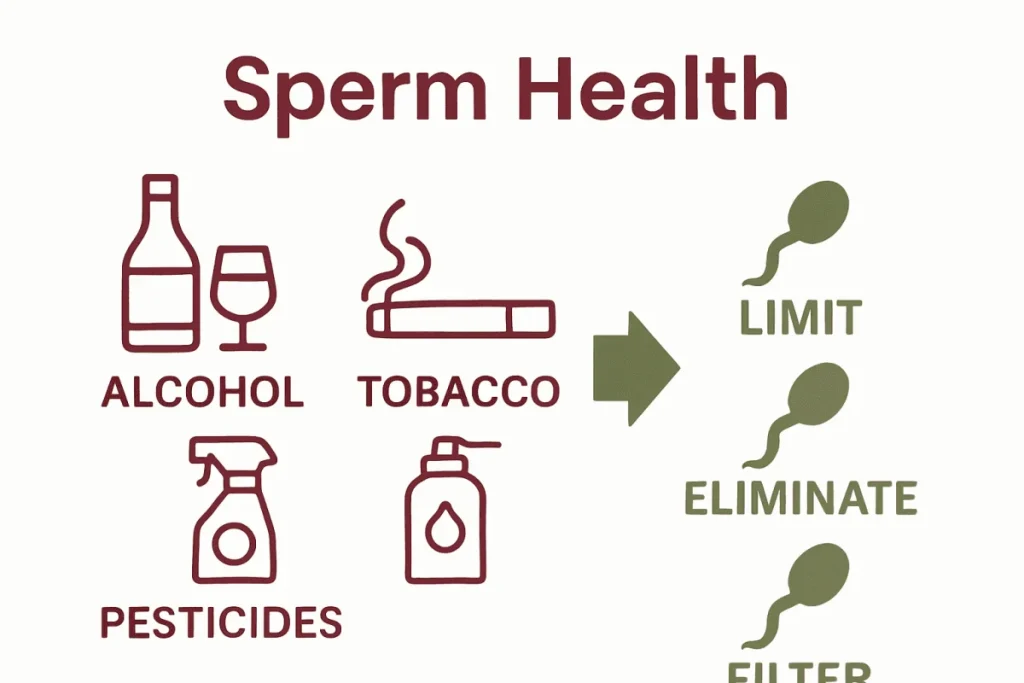
9 Evidence-Based Ways to Improve Sperm Quality
1. Quit smoking (including cannabis)
Men who smoke are more likely to have low sperm counts.[1] University of Utah Health adds that smoking, including marijuana, is linked to lower counts and motility, more abnormally shaped sperm and possibly a reduced ability to fertilize an egg. The same source advises stopping other illicit drugs as well.[2]
2. Keep alcohol moderate
Heavy drinking can lower sperm count and testosterone and raise estrogen.[1][2] Mayo Clinic defines moderate drinking for men as up to two drinks a day.[1] If you are actively trying to conceive, staying well under that limit is a sensible target.
3. Reach a healthy weight
A higher body mass index is associated with lower sperm count and movement.[1] Overweight and obese men typically have lower testosterone and higher estrogen, which can reduce sperm production.[2] Waist size is a useful at-home check; see our guide on how to measure your waist.
4. Keep the testicles cool
The testicles sit outside the body for a reason: they work best a couple of degrees cooler than core body temperature.[2] Mayo Clinic recommends loose underwear, sitting less, and avoiding saunas and hot tubs while trying to conceive.[1] Heat from laptops on the lap and phones in pockets is often blamed, but UChicago Medicine notes that this link has not been proven.[3]
5. Limit exposure to toxins
Pesticides, lead, solvents and other industrial chemicals can harm sperm.[1][2] If you work in agriculture, manufacturing, painting or construction, use protective clothing and equipment and avoid skin contact. At home, washing produce and limiting plastics and BPA-lined cans are simple steps, since these chemicals can act like estrogen in the body.[3]
6. Exercise regularly, but sensibly
University of Utah Health suggests about 30 minutes of aerobic activity five days a week. Regular exercise helps control weight and stress, both of which affect sperm.[2] Avoid anabolic steroids and testosterone products used for bodybuilding, which Mayo Clinic lists among the medicines that can impair fertility.[1]
7. Eat more plants, fish and nuts
In a fertility clinic study of 250 men cited by UChicago Medicine, higher fruit and vegetable intake was linked to higher sperm concentration and motility.[3] UCLA Health highlights walnuts, tomatoes, citrus, beans, lentils and low-mercury fish such as sardines and salmon.[4] The food table below summarizes the main picks.
8. Manage stress and protect your sleep
Stress can affect sexual function and interfere with the hormones needed to produce sperm.[1] Good sleep supports weight control, energy for exercise and stress management. Our sleep routine guide for men has practical steps.
9. Review your medications and prevent infections
Some blood pressure drugs, some antidepressants, antiandrogens, opioids and anabolic steroids can affect fertility.[1] Do not stop a prescribed medicine on your own: ask your doctor whether it could be a factor and whether alternatives exist. Sexually transmitted infections can also harm fertility, so protection and testing matter.[1] Some lubricants can slow sperm; Mayo Clinic suggests vegetable, mineral or canola oil, or a fertility-friendly lubricant, if one is needed.[1]
Foods That May Support Sperm Health
No single food fixes sperm quality. The evidence points to an overall eating pattern that is rich in plants and healthy fats and low in processed food. Most studies are observational, which means they show links rather than proven cause and effect.[3]
| Food or habit | What it provides | What the research says |
|---|---|---|
| Walnuts | Omega-3 fats, vitamin E | One study reported healthier sperm after about 42 grams (a handful) a day for three months.[4] |
| Tomatoes (cooked) | Lycopene | Linked to sperm count and movement; cooking raises available lycopene.[4] |
| Citrus fruits | Vitamin C, polyamines | Antioxidants that may protect sperm from oxidative damage.[4] |
| Beans and lentils | Folate, spermidine | Higher folate levels from diet are associated with better sperm count and quality.[4] |
| Sardines, salmon, anchovies | Omega-3 fats, low mercury | Preferred fish choices while trying to conceive.[4] |
| Fruits and leafy greens | Fiber, antioxidants | Higher intake linked to higher sperm concentration and motility.[3] |
| Processed meat, trans fats | Limit | Fertility clinicians advise cutting back; swap for fish and whole foods.[2][3] |
| Excess soy, high-fat dairy | Limit | Some studies tie large amounts to lower sperm concentration.[3] |
Do Supplements Improve Sperm Quality?
Supplement aisles are full of “male fertility” formulas, but the best controlled data are less exciting than the marketing.
Folic acid and zinc: the FAZST trial
The Folic Acid and Zinc Supplementation Trial, published in JAMA in 2020, is the largest randomized test of this popular combination. It enrolled 2,370 couples seeking infertility treatment. Men took 5 mg of folic acid plus 30 mg of zinc, or a placebo, every day for six months. Live birth rates were essentially the same (34% with supplements vs 35% with placebo), and most semen measures did not change. Sperm DNA fragmentation was slightly higher in the supplement group (29.7% vs 27.2%), and digestive side effects were more common. The authors concluded the findings do not support folic acid and zinc supplementation by male partners.[6] If you want to know more about the mineral itself, see our article on zinc for men.
CoQ10 and antioxidants
Coenzyme Q10 is an antioxidant the body makes on its own. University of Utah Health says it may help men with abnormal sperm improve sperm integrity and motility, and also recommends a basic multivitamin.[2] The evidence is still limited, doses vary, and supplements can interact with medicines, so the decision belongs with a urologist or fertility specialist who has seen your semen analysis. Our CoQ10 guide covers general safety.
The bottom line on pills
Supplements are not a substitute for the lifestyle steps above or for a medical evaluation. Conditions such as a varicocele (enlarged veins in the scrotum) can affect sperm and need a doctor, not a capsule; read more about varicocele symptoms.
When to See a Doctor
Mayo Clinic recommends an infertility evaluation if pregnancy has not happened after a year of regular sex without birth control.[1] Many couples choose to go earlier, especially if the female partner is older or there is a known problem. See a doctor promptly if you notice:
- Pain, swelling or a lump in the testicles or scrotum
- Problems with erection or ejaculation
- A history of groin surgery, testicular injury or undescended testicles
- Planned chemotherapy or radiation (ask about sperm storage before treatment begins)[1]
A semen analysis is simple, inexpensive compared with most fertility tests, and the only way to know whether your habits are actually changing anything.
Where Ultra Bann Fits
Ultra Bann is a natural male vitality supplement by DL Bioproducts, taken as one capsule every 2 days. It contains seven botanicals with every amount shown on the label: Thai Butea superba 345 mg, Panax ginseng 110 mg, Cynomorium songaricum 85 mg, black ginger 85 mg, tongkat ali 85 mg, epimedium 45 mg and reishi 45 mg. It is not a fertility product and has not been studied for sperm quality, so it should not replace any step on this page or a visit to a doctor. You can review the full Ultra Bann ingredient label or visit the Ultra Bann shop.
Frequently Asked Questions
How long does it take to improve sperm quality?
New sperm take weeks to form, plus time to mature, so most men need a few months of consistent changes before a semen test reflects them.[5] Ask your doctor when to repeat the analysis.
How can I increase my sperm count naturally?
Stop smoking, keep alcohol moderate, lose excess weight, avoid hot tubs and saunas, limit toxic chemicals, exercise about 30 minutes most days and eat more fruit, vegetables, fish and nuts.[1][2] If your count is very low, see a doctor, because a medical cause may need treatment.
Does zinc or folic acid improve sperm?
In the large FAZST randomized trial, 5 mg of folic acid plus 30 mg of zinc daily for six months did not improve semen quality or live birth rates compared with placebo.[6] A person with a diagnosed deficiency is a different case, which a doctor can assess.
Do hot showers or laptops lower sperm count?
Prolonged heat to the scrotum, such as hot tubs and saunas, can impair sperm production.[1] Laptops and phones in pockets are often blamed, but that link has not been proven.[3] Keeping a laptop on a desk is a harmless precaution.
What foods are best for sperm?
Walnuts, cooked tomatoes, citrus fruit, beans, lentils, leafy greens and low-mercury fish such as sardines and salmon are the most frequently recommended choices.[3][4] Cutting processed meat and trans fats matters as much as adding these foods.
References
- Mayo Clinic Staff. Healthy sperm: Improving your fertility. Mayo Clinic. mayoclinic.org
- University of Utah Health. How to Increase Male Fertility With Healthy Sperm. 2020. healthcare.utah.edu
- UChicago Medicine. Diet and male fertility: Foods that affect sperm count. uchicagomedicine.org
- UCLA Health. 6 foods that boost fertility. uclahealth.org
- Suede SH, Malik A, Sapra A. Histology, Spermatogenesis. StatPearls, NCBI Bookshelf. 2023. ncbi.nlm.nih.gov
- Schisterman EF, Sjaarda LA, Clemons T, et al. Effect of Folic Acid and Zinc Supplementation in Men on Semen Quality and Live Birth Among Couples Undergoing Infertility Treatment: A Randomized Clinical Trial. JAMA. 2020;323(1):35-48. PubMed
These statements have not been evaluated by the Food and Drug Administration. This product is not intended to diagnose, treat, cure or prevent any disease. This article is for information only and is not medical advice.
Ultra Bann natural male vitality support
1 capsule every 2 days. Free US shipping and a 60-day money-back guarantee on your first order.
See Ultra BannThese statements have not been evaluated by the Food and Drug Administration. This product is not intended to diagnose, treat, cure, or prevent any disease.

