
Short answer: The most reliable ways to improve mood naturally are regular movement (even a daily walk), a consistent sleep schedule, time outdoors in daylight, real contact with people you trust, and cutting back on alcohol. These habits are backed by guidance from the National Institute of Mental Health, Mayo Clinic and Harvard Health. Supplements play a small, uncertain role and some carry real drug interactions. If low mood lasts two weeks or more, or makes daily life hard, talk to a clinician.
Key Takeaways
- Exercise is the best studied natural mood lever. Harvard Health notes it can work as well as antidepressants for some people, but it is not enough on its own for severe depression.[1]
- You do not need a gym: NIMH suggests about 30 minutes of walking a day, and it can be split into shorter sessions.[3]
- Sleep timing, morning light, and time with other people are low cost levers that support each other.
- Alcohol can feel like a quick fix but is listed by Mayo Clinic as an unhealthy coping strategy; notice how it affects your mood and cut back if needed.[2][3]
- St. John’s wort interacts with many common medicines, including some antidepressants, birth control pills, warfarin and simvastatin.[4]
- Persistent low mood is a medical issue, not a willpower issue. In a crisis, call or text 988 in the US.
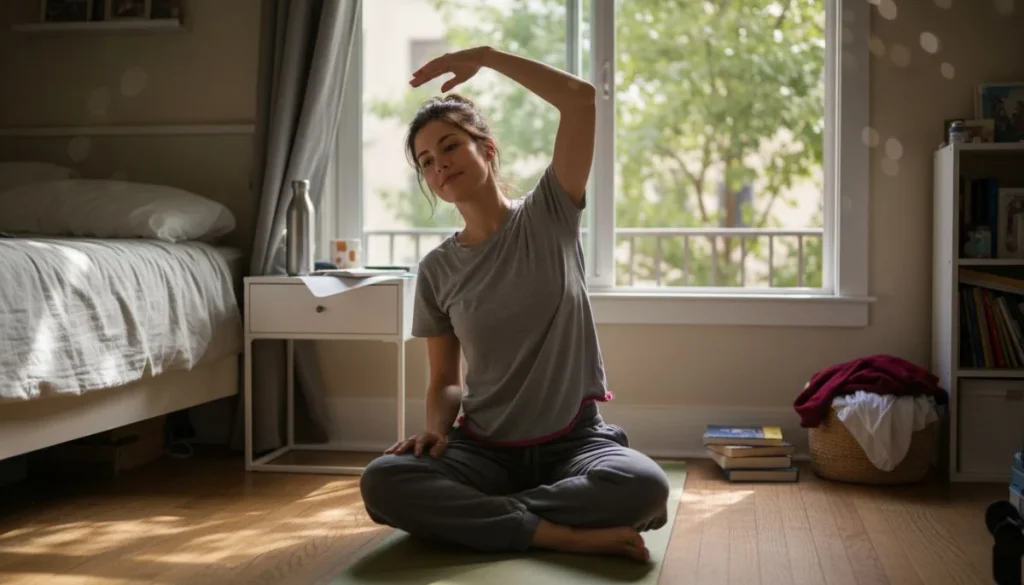
What “Improving Your Mood” Realistically Means
Everyone has flat days, irritable weeks and stretches when motivation disappears. The habits below are meant for that everyday range: stress, poor sleep, a heavy workload, a dark winter, or feeling disconnected. They can lift energy and outlook, and they also support recovery when someone is in treatment.
They are not a replacement for care when the problem is bigger. Harvard Health estimates that about 10% of US adults have depression.[1] Men in particular tend to show it as irritability, anger, fatigue or heavier drinking rather than sadness, which is why it is often missed. Our guide to men’s mental health awareness covers those warning signs in more detail. If your low mood follows the seasons, read our article on winter blues and seasonal changes.
8 Evidence-Based Ways to Improve Mood Naturally
1. Move your body most days
Exercise has the strongest evidence of any self-help habit. Mayo Clinic explains that it may increase feel-good brain chemicals such as endorphins, takes your mind off worries, builds confidence when you meet small goals, and creates chances for social contact.[2] Harvard Health adds that low intensity exercise sustained over time promotes growth factors that support new nerve connections in brain regions such as the hippocampus, which helps regulate mood.[1]
How much? For most healthy adults, US federal guidelines cited by Mayo Clinic call for at least 150 minutes a week of moderate aerobic activity or 75 minutes of vigorous activity, and bouts of 10 to 15 minutes add up.[2] If that feels out of reach, a Harvard psychiatrist suggests starting with five minutes a day of walking, then building to 10 and then 15 minutes.[1] People usually begin to feel better a few weeks after starting, and the benefit lasts only as long as the habit does.[1][2]
Practical tips: choose an activity you actually enjoy, schedule it when you are most likely to follow through, find a partner, and simply restart the next day after a missed session.[2]
2. Protect your sleep schedule
Poor sleep and low mood feed each other. NIMH recommends keeping a regular sleep schedule and reducing screen use before bed, because blue light can make it harder to fall asleep.[3] A fixed wake time, even on weekends, is the single easiest anchor. See our sleep routine guide for men for a step by step plan.
3. Get outside and into daylight
Harvard Health reports that research suggests mood problems can be eased by spending more time outdoors, and suggests simple options such as walking in wooded areas.[5] Combining a morning walk with daylight covers two levers at once.
For people whose mood drops every fall and winter, NIMH describes light therapy as a standard treatment for seasonal affective disorder: a light box rated at 10,000 lux, used for about 30 to 45 minutes a day, usually in the morning, from fall through spring.[6] NIMH notes that people with certain eye diseases or those on medicines that increase light sensitivity may need a different approach or medical supervision, so ask a clinician before buying one.[6]
4. Stay connected to people
NIMH lists reaching out to friends or family for emotional and practical support as a core part of caring for your mental health.[3] Mayo Clinic also points out that group exercise and walks create social contact that can lift mood.[2] For many men, a standing weekly activity (a game, a gym session, a coffee) is easier to keep than an open invitation.
5. Cut back on alcohol and watch caffeine
NIMH advises noticing how alcohol and caffeine affect your mood and cutting back if they make things worse.[3] Mayo Clinic lists drinking alcohol as an unhealthy way to cope compared with exercise.[2] A practical test: take two alcohol free weeks and track your sleep and morning mood. For limits and context, see how much alcohol is too much.
6. Eat regular, balanced meals and drink water
NIMH recommends balanced, regular meals and plenty of water to keep energy and focus steady through the day.[3] Skipping meals and then relying on sugar or caffeine often produces energy crashes that feel like mood swings.
7. Use a short relaxation or gratitude practice
NIMH suggests relaxation programs or apps using meditation, muscle relaxation or breathing exercises, scheduling time for activities you enjoy, and writing down or reflecting on specific things you are grateful for each day.[3] It also recommends identifying and challenging negative or unhelpful thoughts.[3] Five minutes is enough to start.
8. Reduce overload
Deciding what must get done now, what can wait, and saying no to new tasks when you feel overloaded is another NIMH recommendation.[3] A short written priority list at the start of the day lowers the background stress that drags mood down.
Quick Comparison: Natural Mood Boosters
| Lever | What the sources say | Practical starting dose | Cautions |
|---|---|---|---|
| Exercise | Can work as well as antidepressants for some people; not enough alone for severe depression[1] | 5 minutes of walking a day, building to 150 minutes a week of moderate activity[1][2] | Check with your doctor before a new program[2] |
| Walking | About 30 minutes a day, can be split up[3] | Two or three 10 minute walks | None for most people |
| Sleep schedule | Regular schedule and less screen time before bed[3] | Same wake time 7 days a week | Persistent insomnia needs evaluation |
| Outdoors and daylight | Time outdoors linked to easier mood[5]; light box for seasonal depression[6] | Morning walk outside; light box only on advice | Eye disease or light sensitizing medicines[6] |
| Social contact | Reaching out for support is core self care[3] | One planned contact a week | None |
| Less alcohol | Alcohol is an unhealthy coping strategy[2] | Two alcohol free weeks as a test | Heavy daily drinkers should stop under medical guidance |
| Relaxation and gratitude | Recommended by NIMH[3] | 5 minutes of breathing or a 3 item gratitude list | None |
What About Supplements for Mood?
Supplements are where marketing runs furthest ahead of evidence, and where safety matters most.
St. John’s wort
According to NCCIH, studies suggest St. John’s wort may help mild or moderate depression, performing better than placebo and about as well as standard antidepressants, but evidence is uncertain for severe depression or use beyond 12 weeks.[4] The bigger issue is interactions. NCCIH warns it can weaken many medicines, including birth control pills, cyclosporine, the seizure drugs phenytoin and carbamazepine, digoxin, some HIV and cancer drugs, warfarin and simvastatin, and can cause serious serotonin related side effects when combined with certain antidepressants.[4] Reported side effects include diarrhea, dizziness, sleep trouble and restlessness, and large doses can cause severe skin reactions after sun exposure.[4] Never start it on your own if you take any prescription medicine, and never use it to self treat depression instead of seeing a clinician.
Vitamin D
NIMH notes that vitamin D deficiency is common in people with winter pattern seasonal depression, but the evidence for supplements is mixed: some studies found a benefit and others found none.[6] A blood test is the sensible first step.
A general rule
Dietary supplements are not approved by the FDA before they are sold, and manufacturers are responsible for their safety and labeling.[4] Tell every provider about every supplement you take, because interactions are the most common avoidable problem.
When Low Mood Needs a Professional
NIMH advises seeking help if severe or distressing symptoms last two weeks or more, such as trouble sleeping, appetite or weight changes, struggling to get out of bed, trouble concentrating, loss of interest in things you used to enjoy, being unable to do usual tasks, or irritability and restlessness.[3] A primary care provider is a good first stop and can refer you to a mental health professional.[3]
Mayo Clinic is clear that exercise supports treatment but does not replace talk therapy or medicine, and that you should see a professional if symptoms still interfere with daily life despite regular activity.[2]
In crisis? If you or someone you know is struggling or having thoughts of suicide, call or text 988 (Suicide and Crisis Lifeline in the US) or chat at 988lifeline.org. It is free, confidential and available 24/7. In a life threatening emergency, call 911.[3]
Where Ultra Bann Fits (and Where It Does Not)
Ultra Bann is a natural male vitality supplement made by DL Bioproducts, taken as one capsule every 2 days. It contains seven botanicals with amounts on the label and no proprietary blend: Thai Butea superba, Panax ginseng, Cynomorium songaricum, black ginger, tongkat ali, epimedium and reishi. It is not a mood product, it has not been studied as a treatment for low mood or depression, and it is not a substitute for any of the habits or medical care described above. Like any supplement, mention it to your doctor or pharmacist if you take prescription medicines. You can read the full label on our ingredients page or visit the shop, where first orders include free US shipping and a 60-day money-back guarantee.
Frequently Asked Questions
What is the fastest way to improve mood?
A short walk outside, ideally with someone, combines three levers at once: movement, daylight and social contact. Mayo Clinic notes that even regular walking without a formal program has been linked to better mood.[2] Lasting change comes from repeating it, not from a single session.
How long does exercise take to improve mood?
Harvard Health says people should begin to feel better a few weeks after starting to exercise, and that the habit needs to be sustained for the benefit to last.[1]
What are the best natural mood boosters?
The best supported are regular physical activity, a consistent sleep schedule, time outdoors, staying connected with people, and reducing alcohol. Relaxation and gratitude practices are also recommended by NIMH.[3] Supplements have weaker and more mixed evidence.
Is St. John’s wort safe to take for mood?
It interacts with many medicines, including some antidepressants, birth control pills, warfarin and certain statins, and can cause serious serotonin related reactions when combined with some antidepressants.[4] Only consider it after talking with a doctor or pharmacist, and not as a replacement for diagnosis and care.
When should I see a doctor about low mood?
See a provider if distressing symptoms last two weeks or more or make work, relationships or daily tasks hard.[3] If you have any thoughts of suicide, call or text 988 now.
References
- Harvard Health Publishing. Exercise is an all-natural treatment to fight depression. Harvard Medical School, updated 2021. health.harvard.edu
- Mayo Clinic Staff. Depression and anxiety: Exercise eases symptoms. Mayo Clinic. mayoclinic.org
- National Institute of Mental Health. Caring for Your Mental Health. NIMH. nimh.nih.gov
- National Center for Complementary and Integrative Health. St. John’s Wort: Usefulness and Safety. NCCIH, updated May 2025. nccih.nih.gov
- Harvard Health Publishing. Sour mood getting you down? Get back to nature. Harvard Medical School, updated 2021. health.harvard.edu
- National Institute of Mental Health. Seasonal Affective Disorder. NIMH. nimh.nih.gov
These statements have not been evaluated by the Food and Drug Administration. This product is not intended to diagnose, treat, cure or prevent any disease. This article is for information only and is not medical advice.
Ultra Bann natural male vitality support
1 capsule every 2 days. Free US shipping and a 60-day money-back guarantee on your first order.
See Ultra BannThese statements have not been evaluated by the Food and Drug Administration. This product is not intended to diagnose, treat, cure, or prevent any disease.