
Short answer: Men’s mental health problems, especially depression, often do not look like sadness. In men they frequently show up as irritability, anger, heavy drinking, reckless behavior, overwork or physical complaints such as headaches and stomach trouble, which is why they are easy to miss.[3] Men die by suicide about four times as often as women,[2] yet depression usually improves with talk therapy, medication or both.[3] If you or someone you know is in crisis, call or text 988 (US) right now.
Need help now? Call or text 988, or chat at 988lifeline.org. The 988 Suicide and Crisis Lifeline is free, confidential and open 24/7, including for people worried about someone else. Veterans and service members can press 1 after dialing 988. If a life is in immediate danger, call 911.[3][6]
Key Takeaways
- Depression is one of the most common mental disorders in the United States; in 2021 about 6.2% of US men had at least one major depressive episode.[1][5]
- Signs of depression in men often look like anger, irritability, escape into work or sports, substance use and risk taking rather than tears.[3]
- Males are about half the population but nearly 80% of US suicide deaths, and more than half of suicides involve a firearm.[2]
- Only 41.6% of men with any mental illness receive treatment, compared with 56.9% of women.[4]
- Psychotherapy, medication or a combination, chosen with a clinician, is the proven path. No supplement is a treatment for depression.
- Asking a friend directly about suicide does not increase risk, and it can open the door to help.[4]
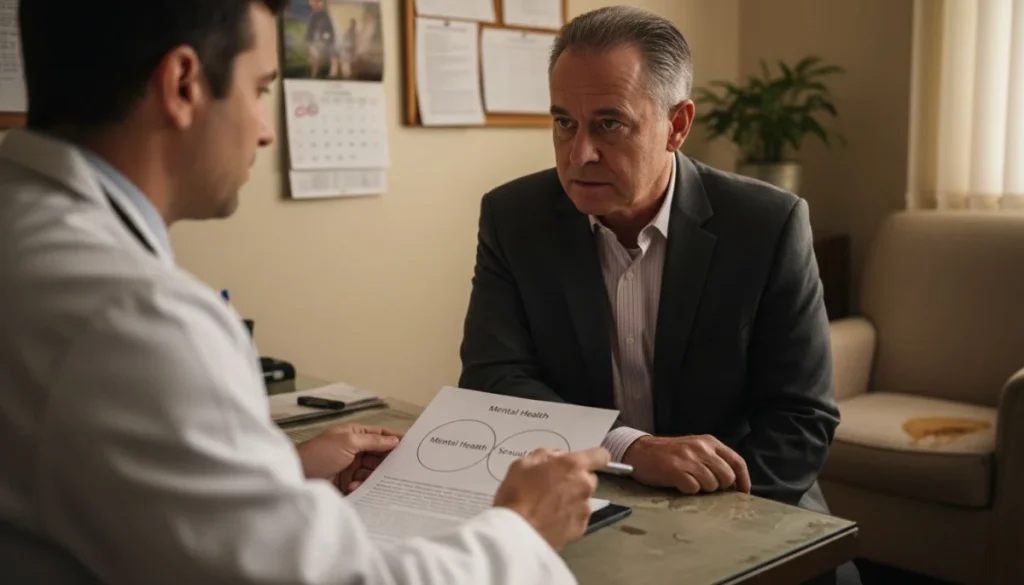
What Men’s Mental Health Awareness Really Means
Men’s mental health awareness is not a slogan about “opening up.” It is the practical skill of recognizing that a man who is short tempered, drinking more, working 70 hour weeks or complaining of constant back pain might be depressed, and then getting him to a professional. Depression affects people of every age, income, culture and background, and research points to a mix of genetic, biological, environmental and psychological factors.[1]
It also carries physical costs. The National Institute of Mental Health notes that depression is linked to conditions such as heart disease and diabetes, and it is a risk factor for suicidal thoughts and behaviors.[1] Treating it is part of looking after your whole body, not a separate “soft” issue.
Why depression in men goes unrecognized
According to Mayo Clinic, several forces keep male depression hidden:[3]
- Men may not recognize depression when it shows up as irritability, physical pain or withdrawal instead of sadness.
- They often downplay symptoms or mask them with unhealthy behavior, which makes things worse.
- Social expectations about self control discourage talking about feelings.
- Fear that a diagnosis will hurt their standing at work or within the family keeps many men away from treatment.
The Anxiety and Depression Association of America adds that men often express distress through anger and irritability, which contributes to misdiagnosis.[4] Our guide to healthy masculinity looks at how these expectations can shift.
Signs of Depression in Men
Men can have the same core symptoms as anyone else: persistent sadness or emptiness, hopelessness, fatigue, sleep changes and loss of interest in things they used to enjoy.[3] What differs is the outer layer. The table below sets the classic picture beside the behaviors Mayo Clinic describes as more typical in men.
| Classic depression symptom | How it often shows up in men |
|---|---|
| Sadness, emptiness | Uncontrolled irritability or anger, a short fuse at home or work |
| Loss of interest and pleasure | Escaping into work, sports or screens; pulling away from family |
| Feeling unwell, low energy | Physical complaints such as headaches, digestive problems or pain |
| Hopelessness, wanting to numb feelings | Drinking more or using drugs |
| Feeling out of control | Controlling or abusive behavior, conflict in relationships |
| Not caring what happens | Risky behavior such as reckless driving |
Source: Mayo Clinic, Male depression: Understanding the issues.[3] These behaviors can also come from other mental health or medical conditions, so they call for a professional evaluation rather than self diagnosis.
Depression, stress, loneliness and midlife: how they overlap
Ordinary stress, isolation and life transitions can produce some of the same signals. Chronic stress is covered in our article on stress symptoms in men, and isolation in our piece on male loneliness. The difference with depression is persistence and impact: when low mood, irritability or loss of interest last for weeks and start damaging work, sleep or relationships, it is time to talk to a clinician. The same applies when a “midlife crisis” looks more like hopelessness than restlessness.
Men and Suicide: What the Data Shows
The most serious consequence of untreated depression is suicide, and the numbers are stark for men. CDC data for 2023 show:[2]
- The suicide rate among males was about four times the rate among females.
- Males make up about 50% of the population but nearly 80% of suicides.
- Firearms were used in more than 50% of suicides.
- People aged 85 and older had the highest suicide rates.
- After rising 37% from 2000 to 2018 and dipping 5% through 2020, rates returned to their peak in 2022.
Women attempt suicide more often, but men die more often. Mayo Clinic explains that men are more likely to use lethal methods such as firearms, may act suddenly, show fewer outward warning signs and are more likely to use alcohol or drugs to cope.[3] ADAA reports, citing CDC data, that 60% of men who died by suicide had no documented mental health condition, which shows how many never reach care.[4]
Suicide warning signs to take seriously
The 988 Lifeline lists these warning signs, which are most concerning when they are new, getting worse or tied to a painful event, loss or change:[6]
- Talking about wanting to die, feeling hopeless, feeling trapped or in unbearable pain, or being a burden to others
- Looking for a way to end their life, such as searching online or buying a gun
- Increasing the use of alcohol or drugs
- Acting anxious or agitated, or behaving recklessly
- Sleeping too little or too much
- Withdrawing or isolating themselves
- Showing rage or talking about seeking revenge
- Extreme mood swings
If you notice any of these, contact 988 by call, text or chat.[6]
Treatment Options: What Actually Works
The good news is clear. Mayo Clinic states that depression, even when severe, usually improves with medication, counseling (psychotherapy) or both.[3] Untreated depression, on the other hand, is unlikely to go away on its own.[3] In 2021, 61.0% of US adults with a major depressive episode received treatment, so most people who look for help do get it.[5]
Talk therapy
Psychotherapy, including telehealth and online options, is a first line approach.[1] ADAA highlights cognitive behavioral therapy (CBT) in particular.[4] A good therapist helps you track emotions, build coping strategies, manage stress, set realistic goals and stay connected to people.[3] For men who dislike “talking about feelings,” many therapists use structured, goal based sessions that feel more like problem solving.
Medication
Antidepressants are a standard option, alone or combined with therapy.[3] Which medication, at what dose and for how long is a decision to make with a doctor or psychiatrist who knows your history. Do not start or stop psychiatric medication on your own, and tell your clinician about every supplement and herbal product you take.
Daily habits that support recovery
Lifestyle steps do not replace treatment, but Mayo Clinic recommends them alongside it:[3]
- Keep a regular daily routine and protect your sleep (see our sleep routines guide).
- Exercise and eat well.
- Avoid alcohol and recreational drugs, which tend to deepen depression (our guide on how much alcohol is too much can help).
- Delay big decisions, such as quitting a job, until you feel better.
- Consider a men’s depression support group or confide in someone you trust.
How to Help a Friend Who Is Struggling
Many men will never book an appointment on their own. A friend, partner or brother noticing the signs is often what changes that. Practical steps drawn from ADAA, Mayo Clinic and the 988 Lifeline:[3][4][6]
- Say what you see. “You have seemed angry and worn out for weeks. How are you really doing?” works better than a vague “Are you okay?”
- Ask directly about suicide if you are worried. ADAA notes that asking does not increase risk.[4]
- Listen more than you advise. Do not argue him out of his feelings.
- Reduce access to lethal means. Store firearms and medications safely; Mayo Clinic advises unloading guns and locking them away or using trigger locks.[3][4]
- Help him connect to care. Offer to find a therapist, book a doctor visit or sit with him while he calls or texts 988. You can also contact 988 yourself for guidance on how to help.[6]
- Follow up. Check in again in a few days, and look after your own support too.
Where Supplements Fit (and Where They Do Not)
We sell a men’s herbal supplement, so we want to be plain: no supplement, ours included, is a treatment for depression, anxiety or any mental health condition, and none should delay a visit to a clinician. Ultra Bann is a once every two days botanical vitality supplement with seven labeled herbs; the full list is on our ingredients page. If you take any supplement, bring the label to your doctor or pharmacist so they can check it against your other medicines.
Frequently Asked Questions
What are the first signs of depression in men?
Early signs often include irritability, a shorter temper, poor sleep, fatigue, losing interest in hobbies, pulling away from people, drinking more and unexplained aches or stomach problems. Persistent sadness and hopelessness may be present but hidden.[3]
Why do men have higher suicide rates if women are diagnosed with depression more often?
Men are diagnosed less, seek treatment less and, when in crisis, are more likely to use lethal methods such as firearms, to act suddenly and to use alcohol or drugs.[3] In 2023 the male suicide rate was about four times the female rate.[2]
Can depression in men go away on its own?
It is unlikely. Mayo Clinic notes that untreated depression rarely resolves by itself and can harm health, work, relationships and safety, while treatment with therapy, medication or both usually helps.[3]
How do I talk to a man about his mental health?
Pick a private moment, describe specific changes you have noticed, ask open questions and listen. If you are worried about suicide, ask directly, then help him connect with a doctor, therapist or 988.[4][6]
Is 988 only for people who are suicidal?
No. The 988 Lifeline is for anyone in emotional distress, and for people worried about someone else. It is free, confidential and available 24/7 by call, text or chat.[6]
References
- National Institute of Mental Health. Depression. nimh.nih.gov
- Centers for Disease Control and Prevention. Suicide Data and Statistics (2025). cdc.gov
- Mayo Clinic. Male depression: Understanding the issues. mayoclinic.org
- Anxiety and Depression Association of America. Men’s Mental Health Resources. adaa.org
- National Institute of Mental Health. Major Depression (2021 National Survey on Drug Use and Health data). nimh.nih.gov
- 988 Suicide and Crisis Lifeline. Warning Signs and Help Someone Else. 988lifeline.org
These statements have not been evaluated by the Food and Drug Administration. This product is not intended to diagnose, treat, cure or prevent any disease. This article is for information only and is not medical advice.
Ultra Bann natural male vitality support
1 capsule every 2 days. Free US shipping and a 60-day money-back guarantee on your first order.
See Ultra BannThese statements have not been evaluated by the Food and Drug Administration. This product is not intended to diagnose, treat, cure, or prevent any disease.