
Short answer: Depression and erectile dysfunction are closely linked, and the link runs both ways. A 2018 meta-analysis in The Journal of Sexual Medicine found that depression raised the odds of erectile problems, and that men with erectile dysfunction had almost three times the odds of depression.[1] Some antidepressants can also affect desire, erection or orgasm, but there are several options to discuss with your prescriber. Never stop or change an antidepressant on your own.[2][3]
Key Takeaways
- Depression, anxiety and stress are recognized causes of erection problems, alongside physical causes such as high blood pressure, diabetes and hormone problems.[4]
- The relationship is two-way: low mood can lead to sexual problems, and ongoing sexual problems can feed low mood, shame and relationship strain.[1]
- Every antidepressant can cause sexual side effects, but some carry a lower risk than others. Your prescriber can wait, adjust, switch or add a medicine.[2]
- Stopping an antidepressant because of sexual side effects is common, and for most people depression then returns. Talk to your prescriber first.[2][3]
- Counselling, therapy and sex therapy help when erection problems are tied to emotional or mental health problems.[5]
- If you have thoughts of suicide, call or text 988 in the U.S. at any time. In an emergency, call 911.[6]

How Depression and Erectile Dysfunction Are Connected
An erection is not only a blood flow event. It starts in the brain, with desire, attention and a sense of safety, and it depends on the nervous system, hormones and blood vessels working together. Depression can disrupt the first step. It flattens interest in things that used to feel good (including sex), drains energy, disturbs sleep and makes it hard to stay present with a partner. Anxiety does something similar from a different angle: the body stays on alert, and alert is the opposite of the relaxed state an erection needs.
The NHS lists stress, depression and anxiety as emotional causes of erection problems, right next to physical causes such as high blood pressure, high cholesterol, diabetes, hormone problems, medicine side effects and heavy drinking.[4] In real life these causes often overlap. A man with early blood vessel changes may notice a few unreliable erections, start to worry, and then the worry itself makes the next attempt harder.
What the research shows: a two-way link
A systematic review and meta-analysis published in The Journal of Sexual Medicine in 2018 pooled observational studies on both directions of the relationship:[1]
- Depression first: across 48 studies, depression was associated with about 39% higher odds of erectile dysfunction (pooled odds ratio 1.39).
- Erectile dysfunction first: across 6 studies, men with erectile dysfunction had nearly three times the odds of depression (pooled odds ratio 2.92).
These are human observational studies, so they show association, not proof of cause. The results between studies also varied a lot in the depression first analysis. Still, the pattern fits what clinicians see: each problem makes the other more likely, and treating one often helps the other.
Signs men often miss
Many men do not describe depression as sadness. The National Institute of Mental Health lists anger, irritability or aggressiveness among the warning signs of mental health conditions in men, along with persistent sadness or hopelessness, and notes that men and women may experience different symptoms.[6] For some men, the first noticeable change is in the bedroom: less interest, avoiding intimacy, or erections that are less reliable than before.
| What you may notice | What it can point to | Who to talk to |
|---|---|---|
| Short temper, irritability, withdrawing from people | Depression or chronic stress | Primary care doctor or mental health professional |
| Low interest in sex, avoiding closeness | Depression, anxiety, relationship strain or medicine effects | Doctor, therapist, partner |
| Erection problems that started soon after a new medicine | Possible medicine side effect | The prescriber of that medicine |
| Erection problems mainly with a partner, worry before sex | Performance anxiety or stress | Doctor, counsellor or sex therapist |
| Erection problems that keep happening in every situation | Possible physical cause (blood pressure, diabetes, hormones) | Doctor, for a checkup |
| Thoughts of death or suicide | A crisis that needs help now | Call or text 988, or 911 in an emergency |
Antidepressant Sexual Side Effects
Antidepressants help many men feel like themselves again, and that can improve desire and closeness on its own. But Mayo Clinic notes that every antidepressant can cause sexual side effects, including reduced desire, trouble getting an erection, reduced satisfaction and difficulty reaching orgasm. How strong these effects are depends on the person, the medicine and the dose. Some fade in the first weeks as the body adjusts, while others persist.[2] MedlinePlus also lists antidepressants and other medicines for mental health conditions, including fluoxetine and sertraline, among drugs that may cause erection problems.[3]
Which antidepressants carry more or less risk
The table below summarizes Mayo Clinic’s grouping. It is a general guide, not a reason to change your own treatment.[2]
| Risk of sexual side effects | Examples named by Mayo Clinic |
|---|---|
| Lower risk | Bupropion, mirtazapine, vilazodone, vortioxetine; the SNRIs desvenlafaxine, duloxetine and levomilnacipran; the selegiline skin patch |
| Higher risk | The SSRIs citalopram, escitalopram, fluoxetine, paroxetine (highest among SSRIs) and sertraline; venlafaxine; tricyclics such as amitriptyline, nortriptyline and clomipramine; older MAOIs such as phenelzine |
Other medicines can play a role too. MedlinePlus lists some blood pressure medicines (thiazide diuretics and beta blockers are the most common culprits in that group), opioid painkillers, some antihistamines, finasteride and recreational drugs, including alcohol and nicotine.[3] If you take more than one of these, bring the full list to your appointment.
Options to discuss with your prescriber
Mayo Clinic describes several strategies a clinician may suggest:[2]
- Waiting a few weeks to see whether the effect improves as your body adjusts.
- Adjusting the dose, which may lower the risk. This should only be done with your clinician.
- Switching to an antidepressant that is less likely to cause sexual side effects.
- Adding a medicine, for example bupropion alongside another antidepressant.
- Prescription erectile dysfunction medicine, which a doctor may consider for some men.
The most important rule: do not stop or change an antidepressant on your own. Mayo Clinic notes that stopping because of sexual side effects is common, and that for most people the depression then comes back.[2] MedlinePlus warns that some medicines can lead to life-threatening reactions if they are stopped or changed carelessly.[3] Finding the right fit can take some trial and error, so tell your prescriber plainly what you are noticing. They hear this question often.
What Helps: Treatment and Daily Habits
Treat the mood, not just the symptom
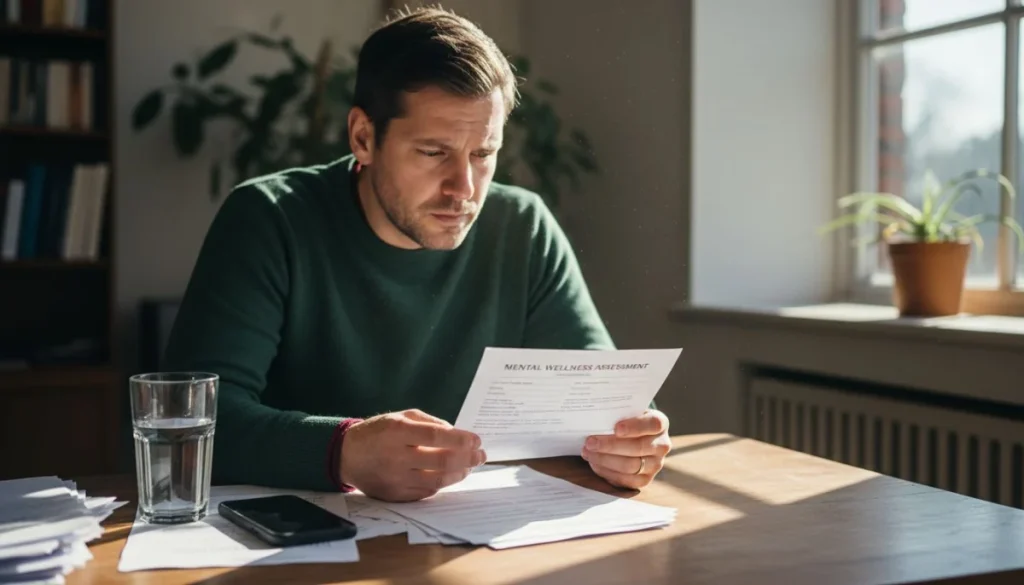
When erection problems are linked to emotional or mental health problems, the NHS says counselling and therapy can help, and it points men toward qualified sex therapists and relationship services as well.[5] Therapy can work on the depression or anxiety itself, on the worry cycle that builds around sex, and on communication with a partner. If your mood is low, ask your primary care doctor where to start. NIMH recommends the primary care provider as a first step, since they can refer you to a mental health professional.[6]
Get checked for physical causes
Because high blood pressure, high cholesterol, diabetes and hormone problems can also cause erection problems, a doctor visit is worthwhile even when stress seems like the obvious reason.[4] The NHS notes that some men still get erections at other times, such as on waking, depending on the cause.[4] That clue can be useful to share with your doctor, but it is not a test you should rely on alone.
Habits that support both mood and sexual health
The NHS lists several lifestyle changes that can sometimes help erection problems: losing weight if needed, stopping smoking, eating a healthy diet, exercising every day, reducing stress and anxiety, and keeping alcohol moderate.[5] Most of these also support mood. Regular movement, a steady sleep schedule and staying connected with friends are simple places to start. Our guide to alcohol and men’s health explains why drinking can make both low mood and erections worse over time.
For more on related topics, see our articles on men’s mental health, stress and sex drive and sexual performance anxiety.
Talking About It: Your Doctor and Your Partner
Many men delay this conversation for months. A few plain sentences are enough to start:
- With your doctor: “My mood has been low for a few weeks, and I have also noticed changes in my sex life. I want to check both.”
- With your prescriber: “Since starting this medicine, my desire and erections have changed. What are my options without stopping it?”
- With your partner: “This is not about you. I have been struggling with stress and mood, and I am getting help. I want us to work on it together.”
Partners often assume that a change in desire means a loss of attraction. Naming what is really going on can lower pressure on both of you, which in turn can make intimacy easier.
When it is urgent
If you are having thoughts of suicide or feel unable to cope, call or text 988 to reach the 988 Suicide and Crisis Lifeline, or chat at 988lifeline.org. If someone is in immediate danger, call 911.[6] In Canada, you can also call or text 988.
Where Supplements Fit (and Where They Do Not)
No supplement is a treatment for depression, anxiety or medicine side effects, and herbal products can interact with prescription drugs. If you take an antidepressant or any other prescription, ask your doctor or pharmacist before adding any supplement. Ultra Bann is a botanical supplement by DL Bioproducts, and its full label is listed on our ingredients page so you can review it with your clinician.
Frequently Asked Questions
Can depression cause erectile dysfunction?
Yes, it can contribute. The NHS lists depression, anxiety and stress as emotional causes of erection problems, and a 2018 meta-analysis linked depression with about 39% higher odds of erectile dysfunction.[1][4] A doctor should still check for physical causes, because the two often overlap.
Do all antidepressants cause sexual side effects?
Any antidepressant can, but the risk varies. Mayo Clinic groups bupropion, mirtazapine, vilazodone and vortioxetine among the lower risk options, and most SSRIs, including paroxetine, among the higher risk ones.[2] Your prescriber can weigh this against how well a medicine is working for you.
Will sexual side effects go away?
Sometimes. Mayo Clinic notes that some effects fade within a few weeks as the body adjusts, while others persist.[2] If they last, ask about a dose change, a switch or an added medicine instead of stopping on your own.
Can erectile dysfunction cause depression?
It can play a role. In the same meta-analysis, men with erectile dysfunction had nearly three times the odds of depression.[1] Ongoing sexual problems can lead to shame, avoidance and relationship stress, so it is worth mentioning mood to your doctor when you discuss erections.
What kind of therapy helps with mental health and intimacy?
Counselling or psychotherapy for depression and anxiety, and sex or relationship therapy for problems that center on intimacy, are both options. The NHS recommends looking for therapists who belong to a recognized professional body.[5]
References
- Liu Q, Zhang Y, Wang J, et al. Erectile Dysfunction and Depression: A Systematic Review and Meta-Analysis. The Journal of Sexual Medicine, 2018 (abstract via UroToday). urotoday.com
- Mayo Clinic Staff. Antidepressants: Which cause the fewest sexual side effects? Mayo Clinic, 2024. mayoclinic.org
- Drugs that may cause erection problems. MedlinePlus Medical Encyclopedia, U.S. National Library of Medicine. medlineplus.gov
- Erectile dysfunction (impotence): Causes. NHS. nhs.uk
- Erectile dysfunction (impotence). NHS. nhs.uk
- Men and Mental Health. National Institute of Mental Health. nimh.nih.gov
These statements have not been evaluated by the Food and Drug Administration. This product is not intended to diagnose, treat, cure or prevent any disease. This article is for information only and is not medical advice.
Ultra Bann natural male vitality support
1 capsule every 2 days. Free US shipping and a 60-day money-back guarantee on your first order.
See Ultra BannThese statements have not been evaluated by the Food and Drug Administration. This product is not intended to diagnose, treat, cure, or prevent any disease.