
Short answer: Most men can learn to last longer in bed naturally with behavioral training: the start-stop and squeeze techniques, pelvic floor muscle work, slower breathing and less performance pressure. Urology sources describe these as first-line self-help, and they take regular practice over several weeks. If finishing too early happens nearly every time and causes distress, it may be premature ejaculation, a common and treatable condition that a doctor or urologist should assess.
Key Takeaways
- Finishing sooner than you would like now and then is common. Doctors only consider it premature ejaculation (PE) when it happens always or nearly always and causes distress.
- The International Society for Sexual Medicine (ISSM) describes PE as ejaculation that always or almost always occurs before or within about 1 minute of penetration (lifelong type).
- The start-stop and squeeze techniques teach you to recognize the point just before climax and pause there. Both need repeated practice.
- Anxiety, stress and relationship strain are among the most frequent drivers. Lowering pressure is part of the plan, not an extra.
- No supplement is a fix for premature ejaculation. If self-help is not enough, a clinician can discuss counseling and medical options with you.
What “lasting longer” actually means
Before you change anything, it helps to know what is normal. Mayo Clinic notes that the average time from the start of intercourse to ejaculation is about five minutes[2]. Many men who worry about stamina are within the typical range and are comparing themselves to films or locker room stories. Our guide to realistic stamina expectations for men covers average duration in detail, so this article focuses on what you can do about it.
When it becomes premature ejaculation
Premature ejaculation is a recognized sexual dysfunction, not a character flaw. Definitions vary slightly by source:
- ISSM: ejaculation that always or almost always occurs before or within about 1 minute of penetration. It is called lifelong if it has been present since the first sexual experiences, and acquired if it starts later in life[1].
- Mayo Clinic: diagnosis is considered when a man always or nearly always ejaculates within 1 to 3 minutes of penetration, cannot delay ejaculation nearly all the time, and feels distressed or avoids intimacy as a result[2].
- Urology Care Foundation: ejaculation sooner than the man or his partner would like, usually in less than 2 to 3 minutes[4].
- NHS: ejaculating sooner than you or your partner wishes. Occasional episodes are common and not usually a concern[5].
The common thread is that timing alone is not the whole story. Frequency, lack of control and distress are what separate a bad night from a condition worth discussing with a doctor.
How common is it?
Very. Cleveland Clinic states that between 30% and 40% of people with a penis experience premature ejaculation at some point, making it the most common sexual dysfunction in that group[3]. The Urology Care Foundation reports that about 1 in 3 men aged 18 to 59 in the United States have problems with PE[4]. You are far from alone, and that matters, because shame is one of the things that keeps the cycle going.
Why some men finish too soon
The exact cause is not known. Current thinking is that psychological and biological factors interact[2].
Psychological factors
Cleveland Clinic names anxiety as the most frequent cause, with performance anxiety, stress, relationship problems, depressive thoughts and low self-esteem also playing a role[3]. The NHS adds learned habits from early sexual experiences, past traumatic experiences and a strict upbringing around sex[5]. Mayo Clinic mentions guilt that leads to rushing[2]. Worry about finishing early can itself make it happen sooner, which is why our article on performance anxiety is worth reading alongside this one.
Physical factors
Sources list hormone or brain chemical differences (including serotonin), an inflamed or infected prostate or urethra, thyroid problems, recreational drug use and inherited traits[2][3][5]. Erectile difficulties are also linked: a man who fears losing his erection may rush to finish. The Urology Care Foundation notes that when both issues are present, the erection issue is usually addressed first[4]. These physical causes are one reason a medical check is sensible if the problem is persistent or new.
Behavioral techniques that help you last longer
Every major source reviewed here lists behavioral techniques as a core part of managing early ejaculation. They work by training you to notice the sensations just before the “point of no return” and to pause there. Practice alone first, then with a partner once you feel more confident[5].
The start-stop technique
Cleveland Clinic describes it this way: stimulation continues until just before orgasm, then stops for about 30 seconds until the urge fades. Repeat three or four times before allowing orgasm, and keep practicing until control improves[3]. The Urology Care Foundation suggests repeating the cycle three times, aiming to finish on the fourth, and practicing three times a week[4].
The squeeze technique
This works like start-stop, with one change: when you are close, the head of the penis is gently squeezed to lower arousal before continuing. The NHS describes squeezing for 10 to 20 seconds, letting go, waiting 30 seconds and repeating several times[5]. Cleveland Clinic describes a squeeze of about 30 seconds[3]. Either way, the goal is the same: learning to recognize, and respond to, rising arousal earlier.
Simple adjustments during intimacy
The NHS and ISSM mention a few practical changes[1][5]:
- Masturbating an hour or two before sex.
- Using a thicker condom to reduce sensation.
- Choosing positions where your partner can pause or move away when you signal you are close.
- Slowing the pace, switching focus to touch, or taking a short break. Many couples find this adds to the experience rather than interrupting it.
Comparison of natural approaches
| Approach | What you do | What it trains | Source |
|---|---|---|---|
| Start-stop | Stop stimulation just before climax, wait about 30 seconds, repeat 3 to 4 times | Recognizing the point just before climax | Cleveland Clinic, Urology Care Foundation |
| Squeeze | Gently squeeze the head of the penis when close, release, wait, repeat | Lowering arousal on demand | NHS, Cleveland Clinic |
| Pelvic floor training | Regular contraction and relaxation of the pelvic floor muscles | Muscle awareness and control, if those muscles are weak | ISSM |
| Practical adjustments | Masturbating beforehand, thicker condom, pacing and position changes | Lower sensitivity and more time to adjust | NHS, ISSM |
| Counseling or sex therapy | Work with a therapist alone or as a couple | Reducing anxiety and relationship pressure | NHS, Cleveland Clinic, Urology Care Foundation |
Pelvic floor training
The pelvic floor muscles support the bladder and bowel and are involved in ejaculation. The ISSM notes that strengthening these muscles may help if they are weak[1]. The muscles are the ones you would use to stop urinating midstream; once you have found them, train them separately, not while urinating. Keep breathing and avoid clenching your stomach, thighs or buttocks.
We cover the full technique, how to progress and common mistakes in our separate guide to pelvic floor exercises for men, so we will not repeat it here. The key point for stamina is consistency: pelvic floor work is a habit you keep, not a one-week fix.
A 4-week practice plan
This plan puts the techniques above in a sensible order. It is a structure for practice, not a medical program, and the right pace is the one you can keep up.
- Week 1, find and train the muscles: learn to identify your pelvic floor and start regular short sessions. Begin noticing your arousal level on a simple scale of 1 to 10.
- Week 2, add breathing and awareness: practice slow belly breathing daily so it becomes automatic. Fast, shallow breathing tends to go with rising tension.
- Week 3, solo start-stop or squeeze: practice one technique on your own several times a week, pausing when you reach roughly 7 out of 10.
- Week 4, bring it into partnered sex and lower the pressure: tell your partner what you are working on, agree on a signal to pause, and put more attention on touch and connection than on the clock.
Expect gradual change. The Urology Care Foundation reports that about 95 out of 100 men recover from PE using the techniques it lists, while noting that recovery cannot be promised and that men whose problem continues should keep working with their provider[4].
Lifestyle factors that support control
General health does not replace the techniques, but it removes friction:
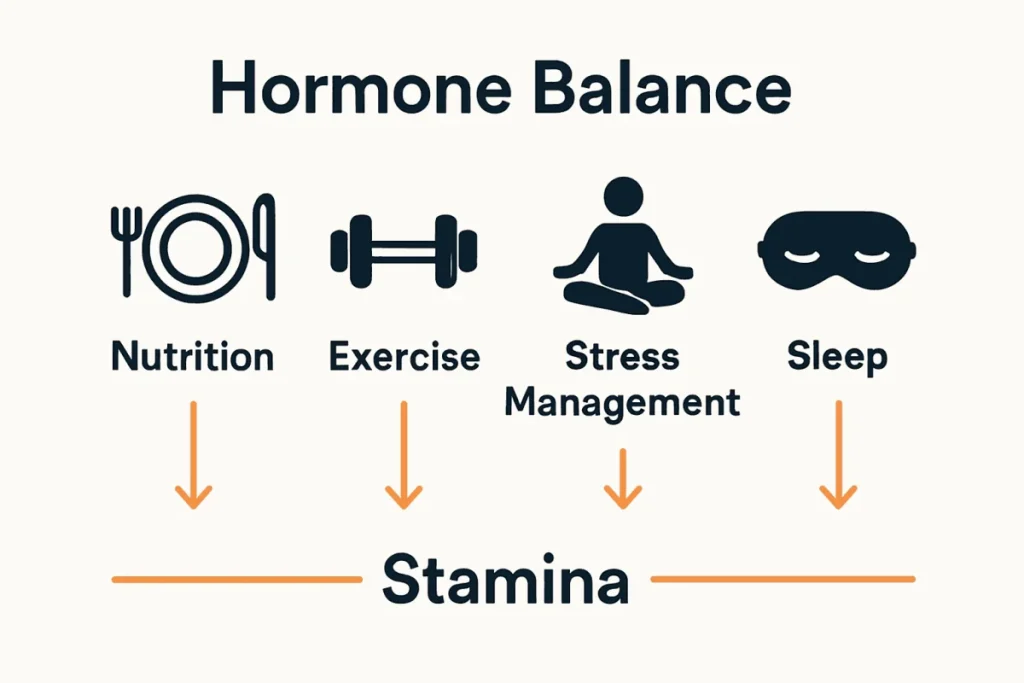
- Stress management: since anxiety and stress are frequent drivers, regular exercise, enough sleep and downtime all help. See our guides to stress and physical performance and sleep routines for men.
- Alcohol and recreational drugs: the NHS lists recreational drug use among physical causes[5]. Keep drinking moderate.
- Overall fitness: cardiovascular fitness and endurance help with stamina in general. Our article on how to increase stamina covers training.
- Communication: talking openly with a partner removes a hidden source of pressure. The Urology Care Foundation calls talking about the problem an important first step[4].
A note on supplements: no supplement is a treatment for premature ejaculation, and none should replace the techniques above or a medical assessment. Ultra Bann is a once every two days botanical vitality supplement with seven labeled herbs (full list on our ingredients page), and it is not designed or presented as a solution for early ejaculation.
When to see a doctor
Talk to your doctor or a urologist if:
- You regularly ejaculate sooner than you would like, and it has lasted for months[2].
- It causes anxiety, low mood or strain in your relationship[3].
- It started suddenly after years without a problem (acquired), since a physical cause such as a prostate or thyroid issue may be involved[5].
- You also have erection problems, pain, urinary symptoms or other new changes.
- Self-help techniques have not helped after consistent practice.
A provider usually starts with a conversation and a physical exam; lab tests are only needed if something is found[4]. Psychosexual counseling or sex therapy, alone or as a couple, is widely recommended when anxiety or relationship issues are involved[3][5]. Medical treatment is a clinician decision: your doctor can discuss medical options, their benefits and their side effects based on your health history. Mayo Clinic is clear that embarrassment should not stop you from asking for help, because the condition is treatable[2].
Frequently Asked Questions
How can I last longer in bed naturally?
The best supported natural approaches are the start-stop and squeeze techniques, pelvic floor training, slower breathing, pacing during sex and lowering performance pressure through communication. They need regular practice over several weeks. If they are not enough, see a doctor.
How long should a man last in bed?
Mayo Clinic puts the average time from the start of intercourse to ejaculation at about five minutes. Premature ejaculation is usually considered when it happens within about 1 to 3 minutes nearly every time and causes distress. Our realistic stamina guide goes deeper.
Does the start-stop technique really work?
It is recommended by the NHS, Cleveland Clinic, the Urology Care Foundation and the ISSM as a self-help method. The Urology Care Foundation reports that about 95 out of 100 men recover from PE using the techniques it describes, though results are not guaranteed and practice is essential.
Can anxiety cause premature ejaculation?
Yes. Cleveland Clinic names anxiety as the most frequent cause, and worry about finishing early can make it happen sooner. Counseling or sex therapy can help break that cycle.
Is there a pill or supplement that makes you last longer?
No supplement is a proven fix for premature ejaculation. There are medical options, but whether any of them is right for you is a decision to make with a doctor who knows your health history.
References
- International Society for Sexual Medicine. What is premature ejaculation?
- Mayo Clinic. Premature ejaculation: Symptoms and causes.
- Cleveland Clinic. Premature Ejaculation.
- Urology Care Foundation. What is Premature Ejaculation?
- NHS. Ejaculation problems.
These statements have not been evaluated by the Food and Drug Administration. This product is not intended to diagnose, treat, cure or prevent any disease. This article is for information only and is not medical advice.
Ultra Bann natural male vitality support
1 capsule every 2 days. Free US shipping and a 60-day money-back guarantee on your first order.
See Ultra BannThese statements have not been evaluated by the Food and Drug Administration. This product is not intended to diagnose, treat, cure, or prevent any disease.