

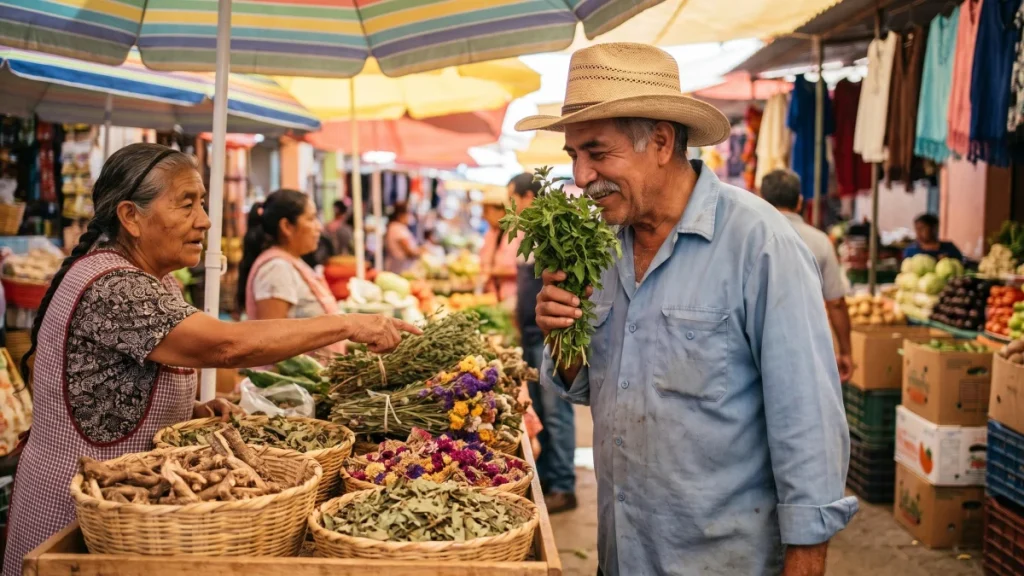
Short answer: The best-studied herbs for men are Panax ginseng (Korea and China), tongkat ali (Southeast Asia), ashwagandha (India) and maca (Peru). Even for these, human trials are small and short, so “best” means “most researched,” not “proven.” Many other traditional herbs for men, such as Butea superba, epimedium and bois bandé, rest mostly on folk use and animal studies. Choose a herb by its human evidence and its safety profile, and talk to your doctor first if you take any medication.
Key Takeaways
- Every major herbal tradition (Chinese, Ayurvedic, Thai, Malay, Andean, Caribbean) has its own “men’s tonic” herbs, but traditional use alone does not prove an effect.
- Panax ginseng has the deepest research base: NCCIH reports a small benefit for general fatigue in a 2023 review of 19 studies and some evidence for sexual function, while most trials are small and under 3 months.[1]
- A 2022 meta-analysis of 5 randomized trials (232 men) found tongkat ali raised total testosterone, with a clear effect in men with low testosterone but not a significant one in healthy men.[3]
- Maca evidence is thin: a systematic review found only 4 small trials and called the evidence “limited.”[5]
- Natural does not mean harmless: ashwagandha is a likely cause of rare liver injury, ginseng can affect blood sugar and clotting, and FDA keeps finding hidden prescription drugs in “herbal” sexual enhancement products.[1][4][7]
Herbs for Men Around the World: The Evidence Table
This table maps the best-known traditional herbs for men by region and rates the human evidence in plain terms. “Moderate” means several small human trials with consistent signals. “Limited” means one or two small or flawed human studies. “Very limited” means almost no human data beyond tradition and lab or animal work.
| Herb | Origin and tradition | Traditional use | Human evidence level | Key safety note |
|---|---|---|---|---|
| Panax ginseng (Asian ginseng) | Korea, northeastern China (traditional Chinese medicine) | Adaptogen for stress, energy, aging | Moderate: many small trials, mixed results | Insomnia; may lower blood sugar and affect clotting |
| Tongkat ali (Eurycoma longifolia) | Malaysia, Indonesia (Malay folk medicine) | Male vigor, fatigue | Moderate for testosterone in men with low levels; weak in healthy men | Product quality varies widely |
| Ashwagandha (Withania somnifera) | India (Ayurveda) | Tonic for energy, stress, sleep | Moderate for stress; limited for male vitality | Rare but serious liver injury |
| Maca (Lepidium meyenii) | Peruvian Andes (food and folk medicine) | Energy, fertility, desire | Limited: 4 small trials in one review | Few safety data from trials |
| Black ginger (Kaempferia parviflora) | Thailand (Thai traditional medicine) | Energy, endurance, men’s vitality | Limited but growing: small trials on physical fitness | Long-term safety not well studied |
| Butea superba (red kwao krua) | Thailand (Thai traditional medicine) | Male vitality and rejuvenation tonic | Very limited: 2 small, flawed trials | Hormonal and genotoxic effects at high doses in rats |
| Epimedium (horny goat weed) | China (traditional Chinese medicine) | Men’s vigor, kidney “yang” tonic | Very limited: mostly lab and animal studies | Few human safety data |
| Cynomorium songaricum (suo yang) | China, Mongolia (traditional Chinese medicine) | Yang tonic for men | Very limited: mostly animal studies | Few human safety data |
| Reishi (Ganoderma lucidum) | China, Japan, Korea | General wellness, calm, longevity | Limited for men’s vitality | Use care with blood thinners and liver disease |
| Damiana (Turnera diffusa) | Mexico, Central America | Traditional tonic and aphrodisiac | Very limited | Few human safety data |
| Bois bandé (bwa bande) | Haiti and the Caribbean | Traditional men’s tonic, often in rum or tea | No reliable human studies | Plant identity varies; safety unknown |
The safety notes for ginseng, ashwagandha and Butea superba come from the sources in the references.[1][4][6]
The Herbs With the Most Human Research
Panax ginseng (Korea and China)
Asian ginseng is native to Korea, northeastern China and far-eastern Siberia, and its root has been used in traditional Chinese medicine as an adaptogen, a herb thought to help the body resist stress. “Red” and “white” ginseng are two ways of preparing the same root.[1]
According to NCCIH, a 2023 review of 19 studies with 2,413 participants found a small benefit for general fatigue. Some research suggests oral ginseng may improve sexual function in people with erectile dysfunction, and a 2022 review of 20 studies found improvements in some cardiometabolic markers in people with prediabetes or diabetes. Most research finds no improvement in athletic performance. NCCIH also points out that most ginseng trials are small (often under 200 people) and last less than 3 months.[1] Our Panax ginseng guide for men goes deeper.
Tongkat ali (Malaysia and Indonesia)
Tongkat ali, also called longjack, is a root used in Malay folk medicine for male vigor. A 2022 systematic review and meta-analysis in Medicina pooled 5 randomized controlled trials with 232 men and found a significant increase in total testosterone overall. The effect was significant in men with low testosterone (hypogonadism), but the rise in healthy men was not statistically significant.[3]
The authors flagged serious limitations: high heterogeneity between studies, signs of publication bias and small samples. They also noted that many commercial products labeled as tongkat ali do not meet recommended levels of its marker compound, eurycomanone, and concluded that more research is needed before clinical use.[3] See our tongkat ali benefits guide for details.
Ashwagandha (India)
Ashwagandha, sometimes called “Indian ginseng,” is the root of Withania somnifera and the most frequently used Ayurvedic herb. It is traditionally taken as a general tonic for energy, fatigue, aging, stress and sleep.[4] It is better studied for stress than for male vitality; our ashwagandha guide covers those trials. Its main concern is safety, covered below.
Maca (Peruvian Andes)
Maca is a root vegetable eaten as food in the high Andes. A 2010 systematic review in BMC Complementary and Alternative Medicine found only 4 randomized trials with 131 participants in total. Two reported benefits on sexual function (including one in men with mild erectile dysfunction), one reported better desire in healthy men, and one in cyclists found no effect. The authors judged the evidence “limited,” noting tiny samples, unclear randomization and no assessment of side effects.[5] More in our maca root guide.
Traditional Herbs With Thin Human Evidence
Butea superba (Thailand)
Butea superba, or red kwao krua, is one of three tubers called “kwao krua” in Thai traditional medicine and is used as a male vitality tonic. Examine.com counts only 2 human trials with 70 participants. In the first, the placebo group dropped out entirely. In the second, an early open-label batch looked impressive, but a double-blind repeat with a different batch did not reproduce the effect, and researchers suspected the first batch had been spiked with a prescription drug.[6]
Safety research is mostly in rats. Examine reports that high doses of the root powder lowered testosterone and produced androgen-like effects in some rat studies, that very high doses may be mutagenic, and that a Thai regulator reportedly set a limit of 100 mg per day. Low doses appear safe in the available data, but human safety studies are lacking.[6] Read our Butea superba guide for the full picture.
Black ginger (Thailand)
Kaempferia parviflora is a Thai rhizome used for energy and endurance. Small human trials have looked at physical fitness and performance, but the studies are short and often industry funded. See our black ginger guide.
Epimedium, Cynomorium and reishi (China)
Epimedium (horny goat weed) and Cynomorium songaricum are classic “yang” tonics in traditional Chinese medicine, and reishi is a mushroom prized for general wellness. Almost all the research on their effects in men comes from cell and animal studies, so human evidence remains very limited. Our guides to horny goat weed and reishi separate the animal data from what has been tested in people.
Damiana and bois bandé (Mexico and the Caribbean)
Damiana is a Mexican shrub traditionally brewed as a tonic, and bois bandé is the Caribbean name for barks, often steeped in rum, that men in Haiti and the islands have used for generations. Neither has reliable human trials. With bois bandé, the bark sold may come from different plant species, so you cannot be sure what you are taking.
Safety: What “Natural” Does Not Guarantee
Liver, blood sugar and bleeding
The NIH LiverTox database rates ashwagandha as a likely cause of clinically apparent liver injury. Since 2017, cases have been reported with commercial ashwagandha products, usually appearing 2 to 12 weeks after starting. Most cases resolve after stopping, but fatal cases have occurred, mostly in people with existing liver disease.[4]
Asian ginseng appears safe for most people short term (up to 6 months) at recommended amounts. Its most common side effect is insomnia, and it may lower blood sugar, interfere with blood clotting and worsen autoimmune conditions.[1]
Drug interactions
NCCIH’s 2024 clinical digest on herb-drug interactions lists possible interactions for Asian ginseng with calcium channel blockers, other blood pressure medicines, statins and some antidepressants, and says studies on ginseng with warfarin have had mixed results.[2] If you take a blood thinner, diabetes medicine, blood pressure medicine or antidepressant, ask your doctor or pharmacist before adding any herb.
Hidden drugs in “herbal” products
The FDA has repeatedly found undeclared prescription drugs in products sold as natural sexual enhancement supplements. In one public notification, FDA lab tests found sildenafil and tadalafil (the active ingredients in Viagra and Cialis) in a product labeled as herbal. These hidden drugs can interact with nitrates such as nitroglycerin and drop blood pressure to dangerous levels.[7] Our guide to dangerous supplement ingredients lists the warning signs.
Who should talk to a doctor first
- Men taking blood thinners, diabetes medicines, blood pressure medicines, statins or antidepressants.
- Anyone with liver disease, autoimmune disease or a bleeding disorder.
- Men with symptoms such as persistent fatigue, low desire or erection problems: these can signal heart disease, diabetes or hormone problems that need a medical workup, not a herb.
How to Choose and Use a Herbal Product
- Read the label: look for the plant species, the part used and the amount of each ingredient. Avoid proprietary blends that hide amounts. Our guide on how to read supplement labels helps.
- Check testing: choose brands that test for identity and contaminants (see third-party tested supplements).
- Stick to the label dose: more is not better, especially for herbs with only animal safety data.
- Give it time, then judge honestly: most human trials run several weeks to 3 months. If you notice nothing after that, stop.
Where Ultra Bann Fits
Ultra Bann is a natural male vitality supplement by DL Bioproducts that combines seven traditional botanicals from several of the traditions above. Each capsule contains Thai Butea superba 345 mg, Panax ginseng 110 mg, Cynomorium songaricum 85 mg, black ginger 85 mg, tongkat ali 85 mg, epimedium 45 mg and reishi 45 mg, for 800 mg in total, with every amount on the label and no proprietary blend. You take one capsule every 2 days.
As with any herbal product, the evidence for each ingredient varies, as the table above shows, and the safety notes for Butea superba and ginseng apply. Review the full ingredient label and check with your doctor if you take medication. Your first order ships free in the US and comes with a 60-day money-back guarantee. You can see Ultra Bann here.
Frequently Asked Questions
What is the best herb for men?
There is no single best herb. Panax ginseng has the largest body of human research, with small benefits for fatigue and some evidence on sexual function. Tongkat ali has the best data for testosterone, but mainly in men whose levels are already low.[1][3]
Do herbal remedies for men actually work?
Some show modest effects in small trials, and many have little or no human evidence. Product quality also varies widely.[3][7]
Are herbal supplements for men safe?
Many are safe short term at label doses for healthy adults, but not all. Ashwagandha has been linked to rare liver injury, ginseng can affect blood sugar and clotting, and some “herbal” sexual enhancement products contain hidden prescription drugs.[1][4][7]
Can I take several herbs together?
Many traditional formulas combine herbs, but each added ingredient adds possible interactions. Review the full list with your pharmacist if you take any medicine.[2]
How long do herbs for men take to work?
Most human trials last a few weeks to 3 months.[1] Give a product that long at the label dose, track how you feel, and stop if nothing changes. Our guide on how to tell if a supplement is working explains what to track.
References
- National Center for Complementary and Integrative Health (NCCIH). Asian Ginseng. nccih.nih.gov/health/asian-ginseng
- NCCIH Clinical Digest. Herb-Drug Interactions: What the Science Says. December 2024. nccih.nih.gov
- Leisegang K, Finelli R, Sikka SC, Panner Selvam MK. Eurycoma longifolia (Jack) Improves Serum Total Testosterone in Men: A Systematic Review and Meta-Analysis of Clinical Trials. Medicina. 2022;58(8):1047. mdpi.com
- LiverTox: Clinical and Research Information on Drug-Induced Liver Injury. Ashwagandha. NCBI Bookshelf, updated December 2024. ncbi.nlm.nih.gov/books/NBK548536
- Shin BC, Lee MS, Yang EJ, et al. Maca (L. meyenii) for improving sexual function: a systematic review. BMC Complementary and Alternative Medicine. 2010;10:44. link.springer.com
- Examine.com. Butea superba: research summary. examine.com
- U.S. Food and Drug Administration. Public Notification: SexRx Contains Hidden Drug Ingredients. January 2014. fda.gov
These statements have not been evaluated by the Food and Drug Administration. This product is not intended to diagnose, treat, cure or prevent any disease. This article is for information only and is not medical advice.
Ultra Bann natural male vitality support
1 capsule every 2 days. Free US shipping and a 60-day money-back guarantee on your first order.
See Ultra BannThese statements have not been evaluated by the Food and Drug Administration. This product is not intended to diagnose, treat, cure, or prevent any disease.

