
Short answer: The most useful energy conservation techniques for living with a chronic illness are the three Ps used by occupational therapists: pace (break tasks into smaller chunks with rest in between), plan (organize your day and your space so tasks cost less effort) and prioritize (do what matters, delegate or drop the rest). Pair them with a steady sleep routine, activity your clinician approves, attention to mood and a medication review, because fatigue from a long-term condition is often partly treatable. Tell your doctor about fatigue rather than assuming it is just part of the illness.
Key Takeaways
- Chronic conditions are very common: the CDC reports that three in four American adults have at least one, and over half have two or more.[1]
- Fatigue has many contributors at once: the condition itself, its treatment, pain, poor sleep, low mood and some medicines, including certain pain relievers.[2]
- Pace, plan and prioritize is the core energy conservation framework taught by occupational therapists.[3]
- Complete rest is not the answer. Short, planned rest breaks and gradual, supervised activity work better than “boom and bust” days.[4]
- Depression is more common in people with chronic disease and it is treatable, so low mood deserves the same attention as physical symptoms.[5]
- Review every supplement with your care team. Panax (Asian) ginseng, for example, may lower blood sugar and interfere with blood clotting.[6]
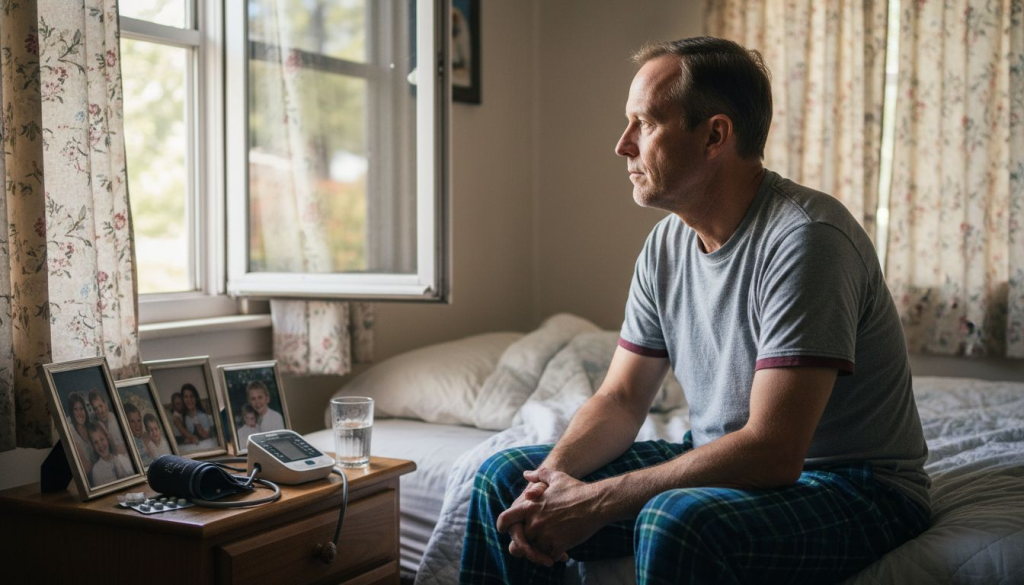
Why Living With Chronic Illness Drains Your Energy
The CDC defines chronic diseases as conditions that last one year or more and need ongoing medical attention, limit daily activities, or both.[1] Heart disease, type 2 diabetes, COPD, arthritis, cancer and chronic pain all fit this picture. They are not rare: the CDC reports that more than 75% of adults aged 35 to 64 and more than 90% of adults 65 and older have at least one chronic condition.[1]
Fatigue in these conditions is rarely caused by one thing. Using cancer fatigue as an example, Mayo Clinic lists the disease itself, its treatment, chronic pain, anxiety and depression, trouble sleeping, difficulty eating enough, certain medicines such as pain relievers, and changes in activity and hormone levels as possible causes.[2] The same mix shows up in other long-term illnesses: a heart or lung condition limits how much you can do, poor sleep makes the next day harder, and inactivity slowly lowers stamina.
Fatigue that needs a doctor, not just a plan
Some fatigue points to a separate, treatable problem. The NHS lists sleep apnea (loud snoring, gasping or choking at night), iron deficiency anemia (low energy, palpitations, shortness of breath, pale skin), diabetes (tiredness with extra thirst, frequent urination and weight loss) and thyroid problems among the medical causes of tiredness.[7] It advises seeing a doctor if you have been tired for a few weeks without knowing why, if tiredness affects daily life, or if it comes with weight loss or mood changes.[7] Mayo Clinic’s advice for people with cancer is just as direct: do not assume your fatigue is simply part of the illness.[2]
Energy Conservation Techniques: The Three Ps
The Royal College of Occupational Therapists teaches energy conservation through three principles: pace, plan and prioritize.[3] Think of energy as a daily budget. Every task spends some of it, and these three habits decide whether you still have something left in the late afternoon.
1. Pace
- Split activities into smaller chunks and spread them across the day or week.[3]
- Change how you do a task so it costs less energy, and sit down whenever possible.[3]
- Rest between tasks before you feel drained. The RCOT describes rest as “key to recharging your energy.”[3]
- Avoid the pattern of doing everything on a good day and paying for it over the next two.
2. Plan
- Organize ahead, build routines and space out demanding activities.[3]
- Keep the things you need together and within easy reach, and use equipment that reduces effort.[3]
- Schedule the most important tasks for the time of day you usually feel best. Mayo Clinic notes many people with cancer fatigue feel worst in the midafternoon.[2]
- Track how much energy different activities take. The NHS suggests a diary or phone app for this.[3][4]
3. Prioritize
- Give yourself permission not to do everything.[3]
- Balance the jobs you must do with activities you enjoy, since enjoyable activities can leave you feeling energized.[3]
- Hand off or drop tasks where you can, and ask for help.[2][3]

Energy Conservation Strategies at a Glance
| Strategy | What it looks like day to day | Source |
|---|---|---|
| Pace | Break big jobs into small steps with short rests in between; sit when you can | RCOT[3] |
| Plan | Routines, tools within reach, hardest tasks at your best time of day | RCOT, Mayo Clinic[2][3] |
| Prioritize | Do what matters, delegate or drop the rest, keep something enjoyable in the day | RCOT[3] |
| Planned rest | Several short naps or rests rather than one long one; Mayo suggests naps of no longer than an hour | Mayo Clinic[2] |
| Gradual activity | Walking, cycling or swimming, started slowly with your clinician’s approval | Mayo Clinic[2] |
| Steady sleep pattern | Regular sleep and wake times; more sleep is not always better | NHS[4] |
| Mood support | Tell your provider about persistent low mood; therapy, medication or both | NIMH[5] |
| Medicine and supplement review | Check every prescription, over the counter product and supplement for fatigue and interactions | Mayo Clinic, NIMH, NCCIH[2][5][6] |
Sleep, Rest and Activity
Rest that actually restores
Rest is part of the plan, not a sign of failure. For people with cancer fatigue, Mayo Clinic suggests several short naps rather than one long rest, each no longer than an hour.[2] In ME/CFS, the NHS describes daytime rest periods of around 30 minutes combined with relaxation such as breathing exercises, and it notes that complete rest is not recommended because there is “no evidence this helps.”[4] Scrolling on a phone often leaves the mind busy; lying down with your eyes closed, gentle stretching or quiet time outdoors usually restores more.
Sleep
Poor sleep is one of the most common causes of tiredness on its own.[7] Aim for a regular sleep and wake time and change it gradually if it has drifted. The NHS points out that having too much sleep does not usually improve fatigue in ME/CFS, and that sleep that stays poor may signal an underlying sleep problem that needs treatment.[4] If pain, breathing problems or frequent night urination wake you, tell your doctor, because these are often adjustable. Our guide to better sleep routines covers the basics.
Activity your condition allows
Moderate activity such as walking, cycling or swimming may relieve fatigue and build stamina for many people, and Mayo Clinic advises getting your clinician’s approval first and starting slowly if you have been inactive.[2] Strength training can be added later. One important exception: the NHS says graded exercise therapy is not recommended for ME/CFS and that people with ME/CFS should not take up vigorous unsupervised exercise.[4] If your main problem is post-exertional crashes, ask for a personalized plan from a physiotherapist or occupational therapist rather than pushing through.
Mental Health Support
Living with chronic illness is stressful, and the link with depression runs both ways. NIMH explains that people with a chronic disease are at higher risk of depression, and people with depression are at higher risk of certain chronic diseases, including heart disease and diabetes.[5] When both are present, symptoms of each tend to be more severe.[5]
The encouraging part: “Depression is treatable, even if you have a chronic disease,” according to NIMH, usually with psychotherapy, medication or both.[5] Ask whether collaborative care (primary care, a care manager and a psychiatric consultant working together) is available to you. In the United States, call or text 988 in a crisis, or 911 if a life is in danger.[5] For more, see our article on men’s mental health.
Intimacy and Chronic Illness
Many long-term conditions and their medicines can affect desire, comfort and stamina, and fatigue alone can make intimacy feel like one more task. The same energy principles apply: choose times when you usually have more energy, keep the focus on closeness rather than performance, and talk openly with your partner. Changes in sexual function can also be an early sign of a circulation, hormone or medication issue, so mention them to your doctor instead of guessing at the cause.
Medication and Supplement Review
Ask a pharmacist to look at everything
Several medicines can add to fatigue; Mayo Clinic names some pain relievers as one example.[2] Once a year, or whenever something changes, bring every prescription, over the counter product, vitamin and herbal supplement to your pharmacist or doctor and ask three questions: could any of these cause tiredness, do any interact with each other, and could timing or dose be adjusted. NIMH also advises telling your provider about all medications and treatments you use so interactions can be avoided.[5] Never stop or change a prescribed medicine on your own.
Supplements need the same review
No supplement treats the fatigue of a chronic condition, and herbs are not a substitute for medical care. Some also interact with the medicines people with chronic illness rely on. NCCIH notes that Panax (Asian) ginseng might lower blood sugar, may interfere with blood clotting, may worsen autoimmune disorders and might interact with certain medications.[6] Its most common side effect is insomnia, and research on ginseng for chronic fatigue is mixed.[6] That matters if you take diabetes medicine, a blood thinner or have an autoimmune condition.
Ultra Bann, the male vitality supplement from DL Bioproducts, contains 110 mg of Panax ginseng per capsule among its seven botanicals. If you live with diabetes, heart disease or any condition that needs regular medication, review it (and any other supplement) with your care team before use because of possible interactions. The full label is on our ingredients page, and our Panax ginseng guide explains the research in more detail.
Frequently Asked Questions
What are the 3 Ps of energy conservation?
Pace, plan and prioritize. Pacing means breaking tasks into smaller chunks with rest in between, planning means organizing your day and your space to cut effort, and prioritizing means doing what matters most and delegating or dropping the rest.[3]
How do you cope with chronic illness fatigue day to day?
Budget your energy with the three Ps, schedule demanding tasks for your best time of day, take short planned rests, keep a regular sleep pattern and stay as active as your clinician advises. Track your energy in a diary to see patterns, and report fatigue that does not improve with rest to your doctor.[2][3][4]
Should I rest completely when I feel exhausted?
Short rests help, but long periods of complete rest are not recommended. The NHS says there is no evidence complete rest helps in ME/CFS, and inactivity tends to lower stamina further in most chronic conditions.[4]
Can depression make chronic illness fatigue worse?
Yes. Depression is more common in people with chronic disease, it adds its own fatigue, and having both tends to make symptoms more severe. It is treatable, so tell your provider if low mood persists.[5]
Are energy supplements safe with chronic conditions?
Not automatically. Some herbs interact with common medicines; Asian ginseng, for example, may lower blood sugar and affect blood clotting.[6] Review any supplement with your doctor or pharmacist first.
References
- About Chronic Diseases. Centers for Disease Control and Prevention.
- Cancer fatigue: Why it occurs and how to cope. Mayo Clinic.
- Conserving energy. Royal College of Occupational Therapists.
- Myalgic encephalomyelitis or chronic fatigue syndrome (ME/CFS): Treatment. NHS.
- Understanding the Link Between Chronic Disease and Depression. National Institute of Mental Health.
- Asian Ginseng. National Center for Complementary and Integrative Health.
- Tiredness and fatigue. NHS.
These statements have not been evaluated by the Food and Drug Administration. This product is not intended to diagnose, treat, cure or prevent any disease. This article is for information only and is not medical advice.
Ultra Bann natural male vitality support
1 capsule every 2 days. Free US shipping and a 60-day money-back guarantee on your first order.
See Ultra BannThese statements have not been evaluated by the Food and Drug Administration. This product is not intended to diagnose, treat, cure, or prevent any disease.