
Short answer: The best nitric oxide foods are nitrate-rich vegetables: arugula (rocket), spinach, lettuce, celery, cress, chervil and beetroot sit in the highest nitrate category, at more than 2,500 mg of nitrate per kg of fresh weight.[1] Your mouth bacteria and body turn that nitrate into nitrite and then nitric oxide. Watermelon (citrulline), nuts and seeds (arginine), cocoa flavanols, citrus and pomegranate play smaller, supporting roles, and the human evidence for them is thinner.
Key Takeaways
- No food is “high in nitric oxide” itself. Foods supply raw materials (nitrate, arginine, citrulline) or antioxidants that help the body make and keep nitric oxide.
- Leafy greens and beetroot are the strongest food sources of nitrate, far ahead of garlic, onion, tomato or most fruit, which are in the “very low” nitrate group.[1]
- In a 2017 meta-analysis of 13 trials (325 people), dietary nitrate lowered clinic blood pressure by about 4.1/2.0 mmHg, but no clear drop showed up with 24-hour or home monitoring.[3]
- Oral bacteria are part of the pathway. In a small 2019 study, twice-daily chlorhexidine mouthwash for one week was linked to higher systolic blood pressure.[4]
- Food sources are generally the safer route. Nitrate has an acceptable daily intake (3.7 mg per kg body weight), and very large intakes from concentrated products deserve caution.[1]
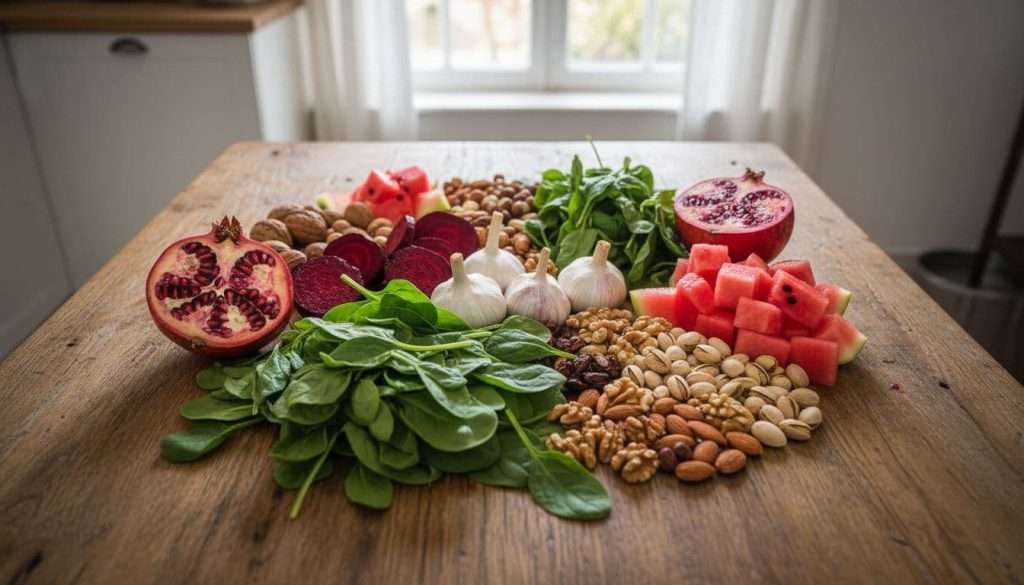
What Nitric Oxide Is and Why Food Matters
Nitric oxide (NO) is a short-lived gas your body makes on demand. The cells that line your arteries (the endothelium) release it to relax the smooth muscle in vessel walls, which lets vessels widen and blood flow more freely. That is why nitric oxide comes up in conversations about blood pressure, exercise, and circulation in general.
Your body makes nitric oxide in two main ways:
- The arginine pathway. Enzymes called nitric oxide synthases convert the amino acid L-arginine into nitric oxide. Citrulline, found in watermelon, can be recycled into arginine.[6]
- The nitrate to nitrite to nitric oxide pathway. Nitrate from vegetables is absorbed, concentrated in saliva, and reduced to nitrite by bacteria living on the tongue. Nitrite is then converted to nitric oxide in the body.[1][4]
The second pathway is the one food influences most directly, and it is why “nitric oxide foods” lists are dominated by vegetables. For a wider look at exercise, sleep and lifestyle factors, see our guide on how to increase nitric oxide naturally. This article focuses on what to put on your plate.
The Best Nitric Oxide Foods, Ranked by Nitrate
A 2024 review in the journal Foods grouped vegetables by nitrate content per kilogram of fresh weight.[1] That ranking is the most useful shopping guide, because nitrate is the main dietary lever for nitric oxide.
| Nitrate category (mg/kg fresh weight) | Foods in this group | How to use them |
|---|---|---|
| Very high (more than 2,500) | Arugula (rocket), spinach, lettuce, celery, cress, chervil, beetroot | Salad base, sautéed greens, roasted beets, beet juice |
| High (1,000 to 2,500) | Celeriac, Chinese cabbage, endive, fennel, leek, parsley | Soups, stir fries, slaws, a handful of parsley on anything |
| Medium (500 to 1,000) | Cabbage, dill, turnip | Coleslaw, braised cabbage, roasted turnip |
| Low (200 to under 500) | Broccoli, carrot, cauliflower, cucumber, pumpkin, chicory | Good vegetables overall, but minor nitrate sources |
| Very low (under 200) | Garlic, onion, tomato, asparagus, potato, sweet potato, peppers, mushrooms, green beans | Valuable for other reasons, not for nitrate |
Source: Olas, Foods 2024, Table 1.[1] Actual nitrate levels vary with soil, season, growing method and storage, so treat the categories as a guide rather than exact numbers.
Leafy greens: arugula, spinach and lettuce
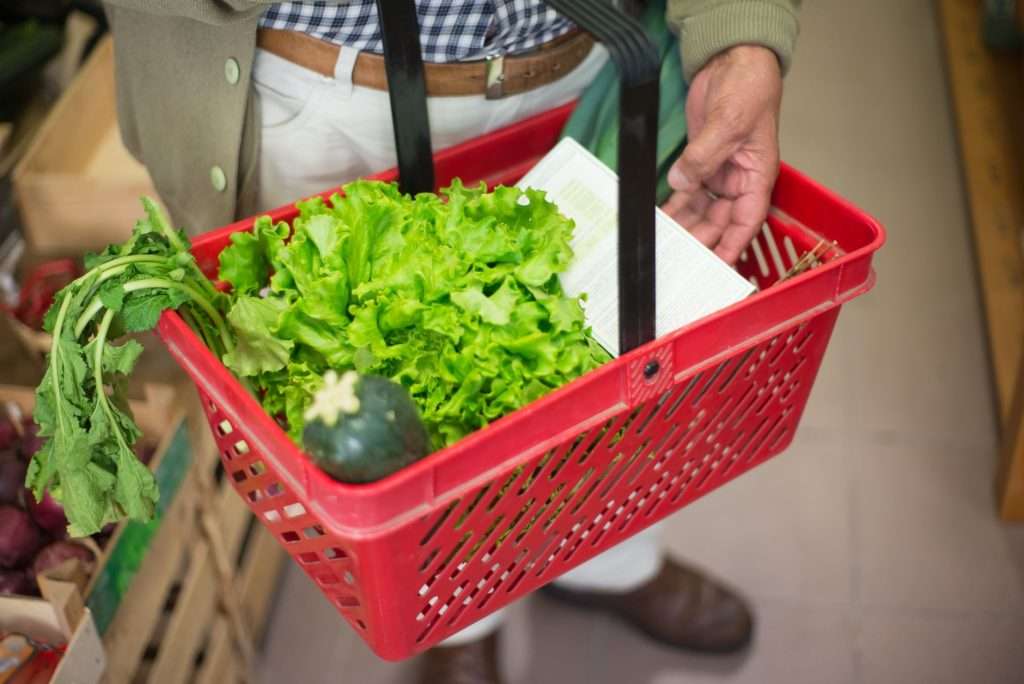
Leafy greens are the everyday workhorses. They are cheap, easy to eat in volume, and sit at the top of the nitrate table. A big arugula or spinach salad most days is the simplest way to raise nitrate intake from food. One study cited in the Foods review used a spinach soup that supplied 845 mg of nitrate per day, which shows how much leafy greens can deliver.[1]
Beetroot and beet juice
Beetroot is the most studied nitric oxide food, mostly as juice. The Foods review notes that beetroot juice can contain up to 11.4 g of nitrate per liter, and that pickled beets contain less nitrate than fresh vegetables.[1] If you want the details on juice versus powder, see our posts on beet juice benefits and beet root powder benefits.
Celery, cress, parsley and fennel
These are easy to overlook. Celery and cress are in the “very high” group, while parsley and fennel are in the “high” group.[1] Adding them to soups, juices and salads raises nitrate intake without needing more beets.
Supporting Foods: Watermelon, Nuts, Cocoa, Citrus and Pomegranate
These foods do not supply much nitrate, but each has a plausible role in the nitric oxide system. The evidence is weaker and often comes from small trials, supplements or lab work rather than the whole food.
Watermelon (citrulline)
Watermelon is a natural source of citrulline, which the body converts to arginine and then to nitric oxide. Healthline summarizes a small 2016 study in which two weeks of watermelon juice improved nitric oxide bioavailability in 8 men.[6] That is promising but very small. If you are weighing amino acid supplements instead of food, our comparison of L-citrulline vs L-arginine covers the trade-offs.
Nuts and seeds (arginine)
Pumpkin seeds, peanuts, walnuts and almonds contain arginine. In a study of 2,771 people summarized by Healthline, higher intake of arginine-rich foods was linked to higher blood nitric oxide levels, but that is an association, not proof of cause.[6]
Dark chocolate and cocoa (flavanols)
Cocoa flavanols are thought to support nitric oxide production by the endothelium. An older 15-day study in 16 people found that 30 g of dark chocolate daily raised blood nitric oxide and lowered blood pressure.[6] Choose high-cocoa chocolate or plain cocoa powder and watch the sugar.
Citrus, pomegranate and garlic
Vitamin C in citrus may help nitric oxide last longer by limiting oxidative damage, and pomegranate antioxidants may do something similar. Garlic is often listed because compounds in garlic may activate nitric oxide synthase, but much of that work used garlic extracts or oil, animal models or test tubes, not ordinary garlic in food.[6] These foods are worth eating for overall diet quality. Just do not expect them to match leafy greens or beets for nitrate.
What the Human Evidence Shows
Blood pressure
The best-tested outcome for nitric oxide foods is blood pressure. A 2017 meta-analysis in the Journal of Hypertension pooled 13 randomized trials with 325 participants lasting 1 to 6 weeks. Dietary nitrate lowered systolic blood pressure by about 4.1 mmHg and diastolic by about 2.0 mmHg, but only when blood pressure was measured at rest in a clinic. With 24-hour ambulatory or home monitoring, which are more accurate, there was no significant change.[3]
A 2022 meta-analysis in Frontiers in Nutrition looked only at adults with high blood pressure: 7 randomized trials, 218 people, beetroot juice for 3 to 60 days. Nitrate-rich juice lowered systolic pressure by about 4.95 mmHg compared with nitrate-depleted juice, while the change in diastolic pressure was not statistically significant.[2] The authors flagged small trials, mixed doses (70 to 250 mL per day) and unknown long-term effects.[2]
The Foods review reaches a similar, cautious conclusion: nitrate-rich vegetables look cardioprotective overall, but some studies found no blood pressure drop and results for endothelial function are mixed.[1]
Exercise and circulation
Beet juice has been shown to raise nitric oxide levels within hours in small studies, which is why it is popular with endurance athletes.[6] Results vary by person, dose and fitness level. Treat it as a possible small edge, not a guarantee.
Nitric Oxide, Circulation and Sexual Health: See a Doctor First
Many men search for nitric oxide foods because erections depend on blood flow. Harvard Health explains that during arousal, nerves and the lining of the arteries release nitric oxide, which relaxes the muscle in penile arteries so blood can fill the tissue. Plaque buildup in the arteries damages vessel walls and reduces nitric oxide.[5]
That is exactly why erection problems should not be self-managed with food alone. Harvard Health notes that trouble getting or keeping an erection can be an early warning sign of heart and blood vessel disease, and recommends a full checkup including cholesterol, blood pressure and diabetes testing.[5] A healthy diet rich in vegetables supports overall cardiovascular health, but it is not a treatment for any medical condition. If you notice a change, talk to your doctor first.
How to Eat More Nitric Oxide Foods (and Stay Safe)
A simple daily pattern
- Lunch: a large arugula, spinach or mixed lettuce salad with olive oil and lemon.
- Dinner: a side of sautéed greens, roasted beets, or a soup with celery, leek and parsley.
- Snack: watermelon, a handful of pumpkin seeds or walnuts, or a square of high-cocoa dark chocolate.
- Optional: beet juice before a workout, if your doctor agrees it suits you.
Do not wipe out your mouth bacteria
Because tongue bacteria convert nitrate to nitrite, strong antiseptic mouthwash may blunt the pathway. In a 2019 study of 26 healthy people reported by Medical News Today, using chlorhexidine mouthwash twice daily for a week was associated with a significant rise in systolic blood pressure.[4] The study was small, so it does not prove mouthwash raises blood pressure in everyone, but it is a reason not to use antiseptic mouthwash without a dental reason.
Safety and limits
- Acceptable daily intake: the WHO and EFSA set 3.7 mg of nitrate per kg of body weight per day, about 222 mg for a 60 kg adult.[1] Eating 400 g of vegetables and fruit a day at typical nitrate levels supplies about 157 mg.[1] Concentrated beet juice can push intake much higher.
- Nitrosamines: nitrate and nitrite can form nitrosamines, compounds with cancer-causing potential. The Foods review suggests the antioxidants in vegetables may help limit this, which is one reason whole vegetables are preferred over processed meats as a nitrate source.[1]
- Food first, not pills: the same review notes L-arginine and L-citrulline supplements can cause stomach upset, heartburn, headache and palpitations.[1]
- Talk to a doctor if you take blood pressure medicine, nitrates for chest pain, or medication for erections, or if you have kidney disease, kidney stones or low blood pressure. Your doctor can tell you whether large amounts of beet juice or greens make sense for you.
Where Ultra Bann Fits
Ultra Bann is a botanical male vitality supplement by DL Bioproducts, and it is not a nitrate or nitric oxide product. One capsule every 2 days provides seven botanicals with every amount on the label: Thai Butea superba 345 mg, Panax ginseng 110 mg, Cynomorium songaricum 85 mg, black ginger (Kaempferia parviflora) 85 mg, tongkat ali 85 mg, epimedium (horny goat weed) 45 mg and reishi 45 mg, for 800 mg total. You can read the full label on our ingredients page. Some men like to pair a vegetable-forward diet with a simple daily supplement routine. If that is you, your first order of Ultra Bann ships free in the US and comes with a 60-day money-back guarantee. A supplement is never a replacement for a medical checkup or for eating your greens.
Frequently Asked Questions
What foods are highest in nitric oxide?
No food contains much nitric oxide directly. The foods that help your body make the most are those highest in nitrate: arugula, spinach, lettuce, celery, cress, chervil and beetroot, all above 2,500 mg nitrate per kg fresh weight.[1]
How fast do nitric oxide foods work?
Studies of beet juice show nitric oxide levels can rise within about 45 minutes of drinking it.[6] Blood pressure trials ran from a few days to about two months.[2][3] Day-to-day consistency matters more than any single meal.
Is garlic a good nitric oxide food?
Garlic is in the “very low” nitrate group.[1] Its possible effect on nitric oxide comes from compounds that may activate nitric oxide synthase, but most of that research used garlic extracts or oil, animal models or test tubes.[6] It is a healthy food, just not a top nitrate source.
Is beet juice better than eating leafy greens?
Beet juice delivers a concentrated, measurable dose of nitrate, which is why most trials use it.[1][2] Leafy greens give you nitrate plus fiber, vitamins and antioxidants with less sugar. For most people, a daily serving of greens is the sustainable base, and beet juice is optional.
Can nitric oxide foods help with erections?
Nitric oxide is part of how erections work, and a heart-healthy diet supports blood vessel health in general.[5] But erection problems can be an early sign of heart or blood vessel disease, so the right first step is a visit to your doctor, not a change in diet alone.[5]
References
- Olas B. “The Cardioprotective Role of Nitrate-Rich Vegetables.” Foods, 2024; 13(5): 691. mdpi.com
- Benjamim CJR, et al. “Nitrate Derived From Beetroot Juice Lowers Blood Pressure in Patients With Arterial Hypertension: A Systematic Review and Meta-Analysis.” Frontiers in Nutrition, 2022; 9: 823039. frontiersin.org
- “Medium-term effects of dietary nitrate supplementation on systolic and diastolic blood pressure in adults: a systematic review and meta-analysis.” Journal of Hypertension, 2017; 35(7): 1353 to 1359. PubMed
- Medical News Today, March 2019. Report on a Frontiers in Cellular and Infection Microbiology study of chlorhexidine mouthwash and blood pressure. medicalnewstoday.com
- Harvard Health Publishing. “Heart disease and erectile function.” health.harvard.edu
- Healthline. Nitric oxide foods (updated June 2024, medically reviewed). healthline.com
These statements have not been evaluated by the Food and Drug Administration. This product is not intended to diagnose, treat, cure or prevent any disease. This article is for information only and is not medical advice.
Ultra Bann natural male vitality support
1 capsule every 2 days. Free US shipping and a 60-day money-back guarantee on your first order.
See Ultra BannThese statements have not been evaluated by the Food and Drug Administration. This product is not intended to diagnose, treat, cure, or prevent any disease.