
Short answer: Adaptogen supplements are products made from herbs and mushrooms, such as Panax ginseng, ashwagandha, rhodiola, eleuthero, schisandra and reishi, that are said to help the body cope with stress. Human evidence is real but uneven: ashwagandha has the most consistent trial data for stress, Panax ginseng shows a possible small effect on fatigue, and most others rest on small or low quality studies. A blend is only as good as its label: look for named doses per herb, a standardized extract, and a plan to use it for weeks, not years.
Key Takeaways
- “Adaptogen” is a traditional and marketing category, not a regulatory one. The FDA does not approve dietary supplements before they are sold.
- Ashwagandha has the strongest human data: a review of seven trials (491 adults) found lower stress and anxiety scores versus placebo at 240 to 1,250 mg per day of extract.[3]
- Panax ginseng has a possible small benefit for general fatigue; rhodiola lacks reliable evidence for any health purpose according to NCCIH.[4][5]
- Adaptogen blends are rarely tested as a finished formula. One exception, a rhodiola, eleuthero and schisandra combination, was tested in a 100 patient, two week trial.[6]
- Most safety data cover a few weeks to six months. Ginseng can cause insomnia, reishi powder has liver warnings, and several adaptogens interact with blood pressure, diabetes and thyroid medicines.
- Choose a label that lists the amount of every herb. Avoid “proprietary blends” that hide doses.
What Counts as an Adaptogen Supplement?
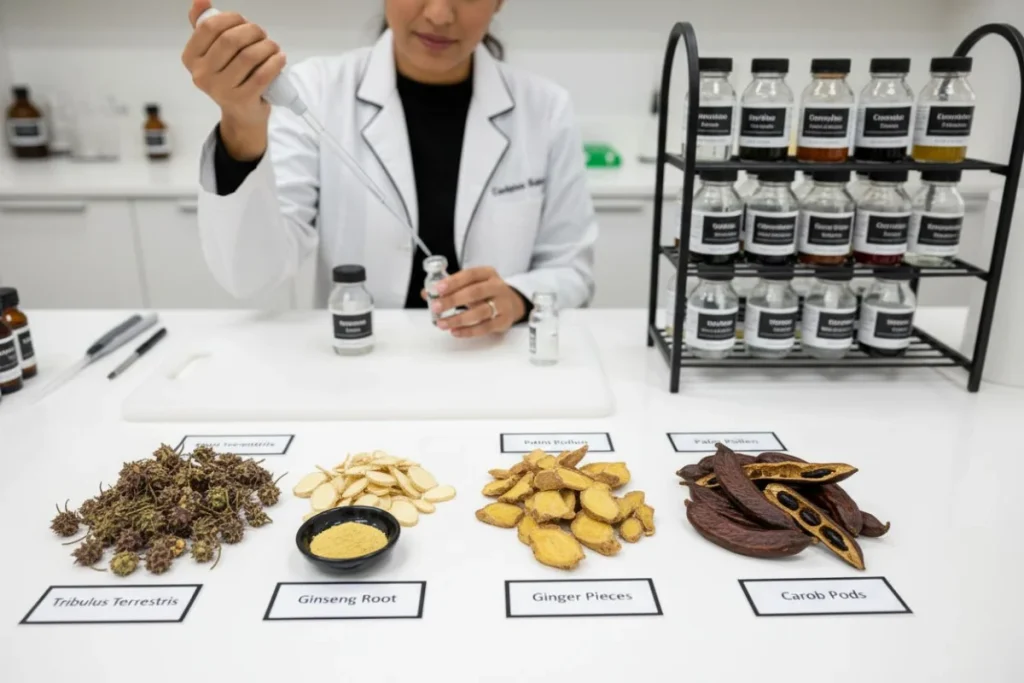
Cleveland Clinic describes adaptogens as active ingredients in certain plants and mushrooms that may affect how the body handles stress, anxiety and fatigue. To earn the label, a plant is traditionally expected to be non-toxic at normal doses, to help the body cope with stress, and to help restore balance (homeostasis).[1] If you want the full background on the concept and where it came from, read our explainer what are adaptogens. This page focuses on the products themselves: what is in them, how blends differ from single herbs, and how to judge one before you buy.
An adaptogen supplement usually comes in one of two forms:
- Single herb extracts, for example an ashwagandha root extract standardized to withanolides, or a Panax ginseng extract standardized to ginsenosides.
- Adaptogen blends, which combine two to ten herbs and mushrooms in one capsule, powder or drink mix.
Because “adaptogen” has no legal definition, the herb list and the dose per herb matter far more than the word on the bottle.
Adaptogenic Herbs List: What Human Evidence Shows
The table below sorts the herbs most often sold as adaptogens by the quality of the human evidence found in the sources we reviewed. “Animal and lab data” means findings in cells or rodents, which do not prove an effect in people.
| Herb or mushroom | Best human evidence | Typical studied amount | Main safety notes |
|---|---|---|---|
| Ashwagandha (Withania somnifera) | Moderate: several small trials show lower perceived stress and anxiety, plus a small sleep benefit | 240 to 1,250 mg/day extract; benefits looked larger at 500 to 600 mg/day | Stomach upset, drowsiness; rare liver injury reports; may affect thyroid hormones; avoid in pregnancy |
| Panax ginseng (Asian ginseng) | Limited: possible small benefit for general fatigue, mixed results; most trials under 200 people and under 3 months | Varies by extract; follow the label | Insomnia most common; may lower blood sugar and affect clotting; short term use up to 6 months appears safe for most people |
| Rhodiola (Rhodiola rosea) | Weak: NCCIH says there is not enough reliable evidence for any health purpose | Varies by extract | Possibly safe up to 12 weeks; dizziness, headache, insomnia; reported interaction with losartan |
| Eleuthero (Eleutherococcus senticosus) | Limited: mostly tested in combinations | Varies | Little single herb safety data in the sources reviewed |
| Schisandra | Limited: mostly tested in combinations | Varies | Little single herb safety data in the sources reviewed |
| Reishi (Ganoderma lucidum) | Weak: small, often poorly designed human studies; animal and lab data dominate | Varies | Powder for more than a month linked to liver warnings; bleeding risk at high doses; may lower blood pressure |
Ashwagandha: the clearest signal
The NIH Office of Dietary Supplements summarizes a 2021 systematic review of seven trials in 491 adults, all conducted in India. Compared with placebo, ashwagandha extract reduced stress, anxiety, sleeplessness, fatigue and serum cortisol over 6 to 8 weeks, at 240 to 1,250 mg per day, with larger benefits at 500 to 600 mg per day.[3] A separate meta-analysis of five trials (372 adults) found a small but significant improvement in sleep. ODS also notes that many trials are small and short, and that one 12 week trial in 120 overweight adults found less fatigue but no drop in perceived stress.
Panax ginseng: modest and mixed
NCCIH reports that most Panax ginseng trials enrolled fewer than 200 people and lasted under three months. A 2023 review found a possible small benefit for general fatigue, but the results were mixed, and most research shows no improvement in athletic performance.[4] See our Panax ginseng benefits for men page for red versus white ginseng.
Rhodiola, eleuthero and schisandra
Rhodiola is one of the most popular adaptogens, yet NCCIH concludes that there is not enough reliable evidence that it is useful for any health purpose, and that most human research is of low to moderate quality.[5] Eleuthero and schisandra appear mainly in combination products, which brings us to blends.
Adaptogen Blends vs Single Herbs
Most adaptogen supplements on the shelf are blends. The idea is that herbs with different traditional roles work better together. The problem is that blends are almost never tested as the finished product you buy, so the evidence for each herb does not automatically transfer to the formula.
What a tested blend looks like
One of the few published trials of a fixed adaptogen combination tested a product containing rhodiola, eleuthero and schisandra (sold as Chisan, also called ADAPT-232). In a randomized, quadruple blind, placebo controlled trial of 100 patients with lingering symptoms after COVID-19, two weeks of the combination shortened the duration of fatigue and pain compared with placebo, while many other measures improved equally in both groups.[6] It is a small, short study in a specific group, so it cannot be applied to healthy men or to other blends.
Why dose transparency matters
Many blends list a single total weight, such as “Adaptogen Complex 600 mg,” without saying how much of each herb is inside. That format, often called a proprietary blend, makes it impossible to compare the product with the doses used in research. If the ashwagandha trials used 500 to 600 mg per day and a blend splits 600 mg across eight herbs, you are probably getting far less of each than the studies tested. We explain how to spot this in our guide to the proprietary blend label format.
When a single herb makes more sense
- You want to test whether one herb works for you. With a blend, you cannot tell which ingredient helped or caused a side effect.
- You take prescription medicine. Fewer herbs means fewer possible interactions to check with your pharmacist.
- You want a dose that matches the studies. Single herb products more often state the extract ratio and standardization.
For the traditional background of individual herbs used by men around the world, see our page on herbs for men.
How Adaptogens Are Thought to Work
The usual explanation is that adaptogens nudge the body’s stress response system, including the hypothalamic pituitary adrenal (HPA) axis that controls cortisol. The ashwagandha trials that measured serum cortisol found lower levels than placebo, which fits this idea.[3] For most other adaptogens, the proposed mechanisms come from animal and cell research and have not been confirmed in people. Cleveland Clinic also notes that adaptogens act more as a temporary support than a solution for long term stress, and that studies suggest they work best for less than six months.[1]
How to Choose and Use an Adaptogen Supplement
- Start from the goal. For stress and sleep, ashwagandha has the most human data. For general tiredness, a doctor visit should come first, because fatigue has many medical causes.
- Read the full label. Every herb should have its own amount in milligrams, and the plant part (root, leaf, fruiting body) should be named.
- Check for standardization. Extracts standardized to marker compounds, such as withanolides or ginsenosides, are easier to compare with research.
- Look for independent testing. A third party seal checks identity and contaminants, not effectiveness. Our guide to third-party tested supplements explains what each seal means.
- Use it in a defined window. Most safety data run from a few weeks to six months. Reassess after 8 to 12 weeks and stop if you notice no benefit.
Side Effects, Interactions and Who Should Avoid Adaptogens
Cleveland Clinic lists allergic reactions, abdominal pain, constipation, nausea and diarrhea as possible side effects, and notes that energizing adaptogens can disturb sleep if taken at night.[1] Herb specific concerns from the sources we reviewed:
- Panax ginseng: insomnia is the most common side effect; uncommon reports include severe rash, liver damage and severe allergic reactions. It may lower blood sugar, interfere with blood clotting and worsen autoimmune disorders.[4]
- Ashwagandha: mild stomach upset, loose stools, nausea and drowsiness; case reports of liver injury; possible effects on thyroid hormones. ODS lists men with hormone sensitive prostate cancer and people with liver disease among those who may need to avoid it.[3]
- Rhodiola: dizziness, headache, insomnia, and a reported interaction with losartan.[5]
- Reishi: dry mouth, upset stomach, headache, nosebleed and dizziness; powdered reishi used for more than a month carries a liver warning; it may increase bleeding risk and lower blood pressure.[2]
Talk to a doctor or pharmacist first if you: take medicine for blood pressure, diabetes, thyroid disease, depression, insomnia or blood clotting; have liver disease or an autoimmune condition; have surgery scheduled; or are pregnant, breastfeeding or planning a pregnancy. Stop and seek care if you notice yellowing skin or eyes, dark urine, a severe rash or unusual bleeding.
Where Ultra Bann Fits
Ultra Bann is a natural male vitality supplement by DL Bioproducts, not a stress formula, but two of its seven botanicals are commonly classed as adaptogens: Panax ginseng (110 mg) and reishi (45 mg). The other five are Thai Butea superba (345 mg), Cynomorium songaricum (85 mg), black ginger (85 mg), tongkat ali (85 mg) and epimedium (45 mg), for 800 mg in total, taken as one capsule every 2 days. Every amount is printed on the label, with no proprietary blend, so you can compare each herb with the research and review it with your doctor. The safety notes above for ginseng and reishi apply. See the full ingredient label, or visit the Ultra Bann shop, where first orders include free US shipping and a 60-day money-back guarantee.
Frequently Asked Questions
Do adaptogen supplements actually work?
Some do, for some outcomes. Ashwagandha has the most consistent human data for stress and sleep. Panax ginseng shows a possible small, mixed benefit for fatigue. Rhodiola, schisandra, eleuthero and reishi rely on small or low quality studies, so results are uncertain.
Is an adaptogen blend better than a single herb?
Not automatically. Blends are rarely tested as a finished product, and many split a small total dose across many herbs. A single, standardized herb at a studied dose is easier to evaluate. A blend is worth considering when it lists every dose and those doses are close to what research used.
Can you take adaptogens every day?
Most studies gave adaptogens daily for 2 to 12 weeks. NCCIH says short term Panax ginseng use up to six months appears safe for most people, and rhodiola is possibly safe up to 12 weeks. Long term daily use has little safety data, so plan a defined period and reassess.
How long do adaptogens take to work?
In the ashwagandha trials, effects on stress were measured after 6 to 8 weeks, and sleep benefits were stronger with at least 8 weeks of use. If you notice nothing after about two to three months at a studied dose, that herb is probably not useful for you.
Are adaptogens safe with medications?
Not always. Adaptogens may interact with medicines for blood pressure, diabetes, thyroid disease, depression, insomnia and blood clotting. Show the full label to your pharmacist before combining them.
References
- Cleveland Clinic. Adaptogens. Cleveland Clinic Health Library, 2022.
- Shane-McWhorter L. Reishi. Merck Manual Consumer Version, reviewed July 2025.
- NIH Office of Dietary Supplements. Ashwagandha: Fact Sheet for Health Professionals. Updated May 2025.
- National Center for Complementary and Integrative Health. Asian Ginseng. Updated February 2025.
- National Center for Complementary and Integrative Health. Rhodiola. Updated April 2025.
- Karosanidze I, Kiladze U, Kirtadze N, et al., Panossian A. Efficacy of Adaptogens in Patients with Long COVID-19: A Randomized, Quadruple-Blind, Placebo-Controlled Trial. Pharmaceuticals (MDPI), 2022.
These statements have not been evaluated by the Food and Drug Administration. This product is not intended to diagnose, treat, cure or prevent any disease. This article is for information only and is not medical advice.
Ultra Bann natural male vitality support
1 capsule every 2 days. Free US shipping and a 60-day money-back guarantee on your first order.
See Ultra BannThese statements have not been evaluated by the Food and Drug Administration. This product is not intended to diagnose, treat, cure, or prevent any disease.