Short answer: The best energy supplement for a man is often the one that fixes a real shortfall, such as low iron or low vitamin B12, so get tested before you buy anything. After that, caffeine (kept under the FDA's 400 mg a day guideline) has the strongest evidence for alertness, and pairing it with L-theanine may sharpen attention. Creatine helps with high-intensity training, and Panax ginseng may have a small effect on general fatigue. Energy drinks, stimulant blends, yohimbe and megadose B vitamins without a deficiency are the ones to skip.
Key Takeaways
- Persistent tiredness has medical causes worth ruling out first: anemia, vitamin B12 deficiency, low vitamin D, an underactive thyroid, sleep apnea, depression, diabetes, low testosterone and some medicines.
- The FDA says 400 mg of caffeine a day, about two to three 12-ounce cups of coffee, is not generally linked to negative effects in healthy adults.
- In a crossover trial in 20 healthy men, 200 mg of L-theanine plus 160 mg of caffeine improved attention measures more than either alone.
- Creatine (3 to 5 g a day) has good evidence for short, intense effort like lifting and sprinting, not for endurance or general tiredness.
- A 2023 review of 19 studies found Asian ginseng may have a small benefit for general fatigue. Rhodiola and CoQ10 have weak or mixed evidence.
- Vitamin B12 does not improve performance when you are not deficient, and yohimbe has been linked to irregular heartbeat, blood pressure problems and seizures.
Step 1: Rule Out the Causes a Supplement Cannot Fix
Fatigue is a symptom, not a diagnosis. Mayo Clinic lists dozens of causes, including anemia, low vitamin D, hypothyroidism (an underactive thyroid), sleep apnea, depression, diabetes, and medicines such as allergy, pain, heart and antidepressant drugs[7]. Taking a stimulant on top of one of these just hides the problem. If you have been worn out for weeks even with decent sleep and food, book a checkup and ask about these tests:
- Complete blood count and ferritin. Iron is part of hemoglobin, which carries oxygen. Iron deficiency impairs oxygen delivery and exercise capacity, and correcting iron deficiency anemia improves work capacity[3]. Healthy men need only 8 mg a day, and side effects such as stomach upset and constipation appear above 45 mg a day, so do not take iron unless a test shows you are low[3]. Our guide to low energy in men covers the common culprits in more depth.
- Vitamin B12. Deficiency can cause fatigue, palpitations and numbness or tingling, and symptoms can take years to appear. Risk is higher in older adults, vegans, and men who take metformin or acid reducers such as proton pump inhibitors[6].
- Vitamin D and thyroid (TSH). Both low vitamin D and an underactive thyroid are recognized causes of fatigue[7], and both are simple blood tests.
- Morning testosterone. Low testosterone can show up as tiredness, low drive and loss of muscle. See our article on the signs of low testosterone for when a test makes sense.
- A sleep evaluation. Loud snoring, gasping at night, or waking unrefreshed points to sleep apnea, where breathing repeatedly stops and starts during sleep[7]. No pill fixes that.
Get urgent care if fatigue comes with chest pain, shortness of breath, a fast or irregular heartbeat, feeling faint, or unusual bleeding[7].
Step 2: Energy Supplements for Men With Real Evidence
Once a medical cause is ruled out, a few options have reasonable human data.
| Supplement | Best for | Evidence | Typical dose | Caution |
|---|---|---|---|---|
| Caffeine | Alertness, endurance workouts | Strong | Up to 400 mg a day total from all sources | Sleep loss, jitters, fast heartbeat, high blood pressure |
| L-theanine (with caffeine) | Focus without as much edge | Small trials | 200 mg with 160 mg caffeine in one trial | Few studies; effects are modest |
| Creatine monohydrate | Lifting, sprinting, short intense effort | Strong for strength and power | 3 to 5 g a day | Water weight gain of 1 to 2 kg; stomach upset or cramps |
| Panax (Asian) ginseng | General fatigue | Small, mixed | Follow the label; most trials lasted under 3 months | Insomnia; may lower blood sugar and affect clotting |
| Rhodiola | Stress related tiredness (traditional use) | Low quality | Follow the label; studied up to 12 weeks | Dizziness, headache, insomnia; reported losartan interaction |
| CoQ10 | Men on statins who ask about it | Weak | 120 mg a day in one exercise study | Insomnia, nausea, heartburn; may blunt training gains |
| Magnesium | Correcting a confirmed low level | Only if deficient | As your doctor advises | Diarrhea and cramping at high doses |
Caffeine: the proven one, with a ceiling
Caffeine is the most reliable energy supplement there is. In sports research, benefits appeared at about 2 to 6 mg per kg of body weight taken 15 to 60 minutes before exercise, which works out to roughly 210 to 420 mg for a 70 kg (154 lb) man, and higher doses did not add benefit[3]. For daily life, the FDA cites 400 mg a day as an amount not generally associated with negative effects in healthy adults. A 12-ounce cup of regular brewed coffee holds about 113 to 247 mg, and black tea about 71 mg[1].
Signs you are past your limit include a racing or pounding heart, high blood pressure, insomnia, anxiety, jitters, nausea and headache[1]. Because poor sleep is one of the biggest drains on energy, stop caffeine early in the day. Avoid pure or highly concentrated caffeine powders and liquids: the FDA warns that around 1,200 mg taken quickly, less than half a teaspoon of pure powder, can cause seizures[1].
L-theanine: smoothing the caffeine edge
L-theanine is an amino acid found in tea. In a placebo controlled crossover trial in 20 healthy men published in Nutritional Neuroscience, 200 mg of theanine, 160 mg of caffeine, and the two combined all improved a visual reaction time task, and the combination produced the largest brain response linked to attention. The authors concluded the two seem to have additive effects on attention at these doses[2]. It is one small study.
Creatine: energy for the gym, not the couch
Creatine helps your muscles regenerate energy during short, hard efforts. The NIH Office of Dietary Supplements says it benefits high-intensity, intermittent activity such as sprinting and weightlifting and offers little for endurance sports. The usual approach is 3 to 5 g a day, with or without a loading phase of 20 g a day for 5 to 7 days. Expect 1 to 2 kg of water weight in the first month; nausea, diarrhea and muscle cramps have also been reported[3]. If your fatigue shows up as weak, short workouts, creatine is worth a look. Read more in our guide to creatine for men.
Panax ginseng: a small effect on fatigue
Asian ginseng (Panax ginseng) is a classic tonic in traditional Chinese medicine. According to the NCCIH, a 2023 review of 19 studies found it may have a small beneficial effect on general fatigue, though not all research agrees[4]. It does not appear to improve athletic performance: numerous small studies found almost no effect on peak power, time to exhaustion or recovery[3]. Short-term use of up to 6 months is considered fairly safe. The most common side effect is trouble sleeping, and it may lower blood sugar, interfere with blood clotting and worsen autoimmune conditions[4]. Learn more about Panax ginseng for men.
Rhodiola: popular, thinly supported
Rhodiola rosea has a long traditional use for fatigue and is marketed today for stress. The NCCIH's verdict is blunt: there is not enough reliable evidence to say whether it helps with any health purpose, and most human research is of low to moderate quality. It is possibly safe for up to 12 weeks, and side effects may include dizziness, headache, insomnia, and dry mouth or excess saliva. An interaction with the blood pressure drug losartan has been reported[5].
CoQ10: mostly for men on statins, and even then weak
Coenzyme Q10 is an antioxidant the body makes itself. Men on statins often ask about it because of muscle aches and tiredness, but the evidence that it adds energy is weak. In one study, 18 young men took 120 mg a day or a placebo for 22 days; after a week of high-intensity cycling sprints, the CoQ10 group improved its power output less than the placebo group, which suggests antioxidants like CoQ10 can blunt training adaptation. Reported side effects are mild: insomnia, nausea, heartburn, dizziness, irritability and headache[3]. If you take a statin and feel drained, talk to the prescriber rather than self-treating, and ask before combining CoQ10 with any blood thinner.
Magnesium: only if you are low
Fatigue and weakness are early signs of magnesium deficiency, and men who are older, have type 2 diabetes, drink heavily or have gut conditions such as celiac disease are at higher risk. A supplement makes sense when a deficiency is likely or confirmed; beyond that, extra magnesium will not add energy, and high supplemental doses commonly cause diarrhea and cramping.
Step 3: What Does Not Work or Carries Real Risk
Energy drinks
Energy drinks hold roughly 41 to 246 mg of caffeine per 12 ounces, and the FDA has no regulation specific to them[1]. Many add large amounts of sugar and extra stimulants, so the total load is hard to judge. Coffee or a measured caffeine tablet gives you more control.
Megadose B vitamins without a deficiency
B12 shots and high-dose B complex products are sold as energy boosters, but the NIH Office of Dietary Supplements says B12 supplementation appears to have no beneficial effect on performance when there is no nutritional deficit[6]. Test, and supplement only if you are low.
Stimulant blends and "proprietary" energy formulas
Pre-workouts and fat burners often stack caffeine with guarana (another caffeine source), bitter orange or other stimulants, sometimes without listing how much of each is inside. Stacking stimulants raises the risk of a fast heartbeat and high blood pressure[1]. Choose products that list every ingredient and amount.
Yohimbe
Yohimbe is still sold in energy and "male" products, but its active compound, yohimbine, has been associated with irregular heartbeat, blood pressure problems, heart attacks and seizures. Most products do not say how much yohimbine they contain, a 2015 analysis of 49 US brands found the amount varied widely, and yohimbe supplements have been restricted or banned in many countries[8]. Skip it.
How to Build a Sensible Plan
- Test first. Blood count, ferritin, B12, vitamin D, thyroid and, if symptoms fit, testosterone and a sleep study.
- Add one thing at a time. Try a single supplement for several weeks before adding another, so you know what is doing what.
- Count all your caffeine. Coffee, tea, soda, pre-workouts and pills all add up toward the 400 mg guideline.
- Tell your doctor. Ginseng and rhodiola have possible drug interactions, including with diabetes, blood pressure and blood thinning medicines.
Where Ultra Bann Fits
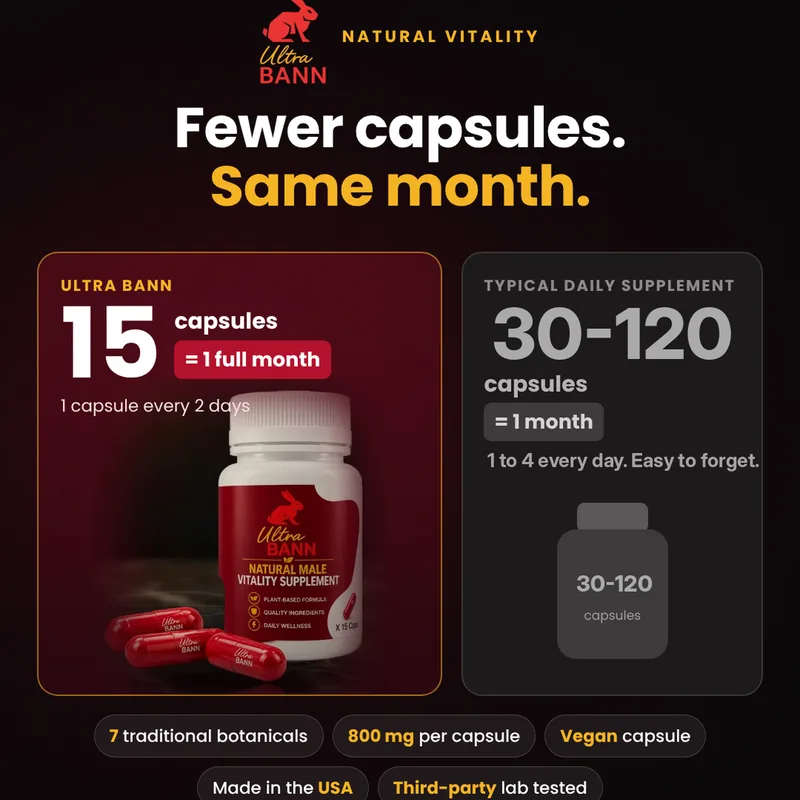
Ultra Bann is a natural male vitality supplement by DL Bioproducts, taken as one capsule every 2 days. Each capsule lists seven botanicals with exact amounts and no proprietary blend: Thai Butea superba 345 mg, Panax ginseng 110 mg, Cynomorium songaricum 85 mg, black ginger (Kaempferia parviflora) 85 mg, tongkat ali 85 mg, epimedium 45 mg and reishi 45 mg, 800 mg in total. It contains no caffeine or other stimulants. It is not a substitute for testing or for medical care, and because it contains Panax ginseng, the ginseng cautions above apply. See the full ingredient list or try Ultra Bann with free US shipping and a 60-day money-back guarantee on your first order.
Frequently Asked Questions
What is the best energy supplement for men?
For most healthy men, caffeine has the strongest evidence for alertness, and creatine has the strongest evidence for gym performance. But if you are deficient in iron or B12, correcting that deficiency will do more than either.
What vitamin is a man usually lacking when he is always tired?
There is no single answer. Low vitamin B12, low vitamin D and iron deficiency anemia are common findings, but thyroid problems, sleep apnea, depression and medicines are also frequent causes. A blood test tells you which, if any, applies to you.
Are energy pills for men safe?
Plain caffeine tablets within the 400 mg daily guideline are generally fine for healthy adults. Products with undisclosed stimulant blends, yohimbe or concentrated caffeine powders carry real risks for the heart and blood pressure.
How long does it take for an energy supplement to work?
Caffeine works within an hour. Creatine builds up in muscle over days to weeks. Herbal options such as ginseng were usually studied for weeks to a few months, so give any herb at least several weeks before judging it.
Can I take ginseng and caffeine together?
Many people do, but both can disturb sleep, which defeats the purpose. Use the lowest caffeine dose that works, take both early in the day, and ask your doctor if you have diabetes, high blood pressure or take blood thinners.
References
- US Food and Drug Administration. Spilling the Beans: How Much Caffeine Is Too Much? fda.gov
- Acute effects of theanine, caffeine and theanine-caffeine combination on attention. Nutritional Neuroscience. 2017;20(6):369-377. pubmed.ncbi.nlm.nih.gov/26869148
- NIH Office of Dietary Supplements. Dietary Supplements for Exercise and Athletic Performance. Fact Sheet for Health Professionals. ods.od.nih.gov
- National Center for Complementary and Integrative Health. Asian Ginseng. nccih.nih.gov/health/asian-ginseng
- National Center for Complementary and Integrative Health. Rhodiola. nccih.nih.gov/health/rhodiola
- NIH Office of Dietary Supplements. Vitamin B12. Fact Sheet for Health Professionals. ods.od.nih.gov
- Mayo Clinic. Fatigue: Causes. mayoclinic.org
- National Center for Complementary and Integrative Health. Yohimbe. nccih.nih.gov/health/yohimbe
These statements have not been evaluated by the Food and Drug Administration. This product is not intended to diagnose, treat, cure or prevent any disease. This article is for information only and is not medical advice.
Ultra Bann natural male vitality support
1 capsule every 2 days. Free US shipping and a 60-day money-back guarantee on your first order.
See Ultra BannThese statements have not been evaluated by the Food and Drug Administration. This product is not intended to diagnose, treat, cure, or prevent any disease.