Short answer: The most specific signs of low testosterone are a drop in sex drive, fewer morning or spontaneous erections and erection problems. Other signs include low energy, depressed mood, poor concentration, loss of muscle, more body fat, reduced body hair, breast tissue growth and bone loss. None of these symptoms proves low testosterone on its own, because many other conditions cause them. Low testosterone is only diagnosed when symptoms are confirmed by two early morning blood tests showing low total testosterone, so the right next step is a visit to a doctor, not a guess.[1][2]
Key Takeaways
- Sexual symptoms (low libido, fewer morning erections, erection problems) are the most specific signs of low testosterone, according to Cleveland Clinic.[1]
- Fatigue, low mood, poor focus, weight gain and loss of strength are common but nonspecific: thyroid disease, depression, poor sleep, diabetes and medicines can cause the same picture.[3]
- The American Urological Association (AUA) uses a total testosterone below 300 ng/dL as a reasonable cutoff and requires two early morning measurements on separate occasions.[2]
- A low number without symptoms, or symptoms without a confirmed low number, is not a diagnosis of testosterone deficiency.[2][4]
- Treatment is a clinician decision. Testosterone therapy has real risks, and it should not be prescribed to men who are trying to conceive.[2][3]
What Low Testosterone Actually Means
Low testosterone, called male hypogonadism or testosterone deficiency in medical writing, means the body does not produce enough testosterone to keep its normal functions running. Most testosterone is made by the Leydig cells of the testicles, under signals from the hypothalamus and the pituitary gland in the brain.[1]
Testosterone does far more than drive libido. It helps maintain muscle mass and strength, bone density, red blood cell production, body hair, fat distribution, sperm production, mood and energy. That is why a real deficiency can show up in so many different ways, and why the symptoms overlap with so many other conditions.
Levels also change naturally with age. MedlinePlus notes that testosterone may start to slowly decrease beginning around age 30 to 40, and Cleveland Clinic describes a drop of about 1% per year starting in the late 30s.[1][3] A slow age related decline is not the same thing as clinical hypogonadism, which is why testing matters. For what the numbers mean by age and by lab, see our guide to normal testosterone levels.
The Signs of Low Testosterone in Men
Doctors do not treat every symptom as equally useful. Cleveland Clinic groups the signs by how strongly they point to low testosterone, and Mayo Clinic describes how they tend to appear over time in adults.[1][5] The table below combines both.
| Sign or symptom | How specific is it? | Other common causes to rule out |
|---|---|---|
| Low sex drive (libido) | Most specific | Stress, depression, relationship issues, some medicines |
| Fewer morning or spontaneous erections | Most specific | Poor sleep, vascular problems, diabetes |
| Trouble getting or keeping an erection | Most specific | Blood vessel disease, high blood pressure, diabetes, anxiety, medicines |
| Loss of armpit and pubic hair | Highly suggestive | Other hormone disorders |
| Shrinking testicles | Highly suggestive | Past injury, infection (orchitis), anabolic steroid use |
| Hot flashes | Highly suggestive | Some medicines, other hormone changes |
| Low or zero sperm count | Highly suggestive | Many fertility conditions |
| Breast tissue growth (gynecomastia) | Suggestive | Medicines, liver disease, weight gain |
| Low energy and fatigue | Nonspecific | Sleep apnea, anemia, thyroid problems, depression |
| Depressed mood, trouble concentrating | Nonspecific | Depression, stress, poor sleep |
| Less muscle strength and mass, more body fat | Nonspecific | Inactivity, aging, diet, diabetes |
| Bone loss (osteoporosis) | Nonspecific | Vitamin and mineral deficits, steroid medicines |
Sources for the table: Cleveland Clinic, Mayo Clinic and MedlinePlus.[1][3][5]
Sexual signs
Changes in sexual function are the signs most closely tied to testosterone. Cleveland Clinic lists low libido, loss of morning or spontaneous erections and trouble getting or keeping an erection as the most specific symptoms.[1] MedlinePlus adds a useful nuance: some reduction in interest in sex can be part of normal aging, but having no interest at all is not usually normal.[3]
Physical signs
Physical changes tend to appear more slowly. Mayo Clinic describes reduced facial and body hair, lower muscle mass, breast tissue growth and bone loss as changes that develop over time in adult men.[5] Loss of armpit and pubic hair and shrinking testicles are considered highly suggestive, because few everyday problems cause them.[1]
Mental and emotional signs
Low energy, depression and trouble focusing are frequently reported, and in severe cases some men describe menopause like symptoms such as hot flashes.[5] These are real, but they are the least specific signs on the list. MedlinePlus specifically warns that conditions such as high blood pressure and diabetes can cause similar symptoms, and that a provider should check for medicine side effects, thyroid problems and depression.[3] Poor sleep is another frequent overlap; our article on sleep routines for men covers the basics.
Some men have no symptoms
MedlinePlus notes that some men with low testosterone have no symptoms at all.[3] For that reason, the AUA suggests that clinicians consider measuring testosterone in men with certain conditions even without classic symptoms, such as unexplained anemia, bone density loss or diabetes.[2]
How Low Testosterone Is Diagnosed
Both major guidelines agree on the core rule: a diagnosis requires symptoms or signs plus consistently low blood levels. One random test is not enough.
What the AUA and the Endocrine Society recommend
- Cutoff: The AUA guideline (published in 2018 and reviewed with validity confirmed in 2024) names a total testosterone below 300 ng/dL as a reasonable cutoff. Cleveland Clinic uses the same figure.[1][2]
- Two morning tests: The AUA calls for two total testosterone measurements taken on separate occasions, both in the early morning. The Endocrine Society recommends confirming the diagnosis by repeating morning fasting total testosterone.[2][4] Our guide to testosterone testing timing explains why the time of day matters.
- Symptoms required: The AUA states that the diagnosis is made only when low total testosterone is combined with symptoms and/or signs. The Endocrine Society likewise recommends diagnosing hypogonadism only in men with symptoms and signs consistent with deficiency and unequivocally, consistently low testosterone.[2][4]
- Accurate assays: The Endocrine Society stresses accurate assays for total and free testosterone and rigorously derived reference ranges.[4] In some men, the free testosterone result adds useful information; see free vs total testosterone.
Follow up tests
Once a low level is confirmed, the next question is why. The AUA recommends measuring luteinizing hormone (LH) in men with low testosterone, and measuring prolactin in certain cases, because these help separate a testicular problem from a pituitary one.[2] Cleveland Clinic describes the same LH and prolactin tests.[1] The Endocrine Society recommends additional evaluation to find the cause of the deficiency.[4]
Tell your doctor if you are sick
A short illness can temporarily lower testosterone. Cleveland Clinic advises telling your provider if you are sick at the time of testing, because the result may not reflect your usual level.[1]
Common Causes of Low Testosterone
Doctors divide causes into two groups based on where the problem starts.[1]
Primary (the testicles)
The testicles themselves do not make enough testosterone. Examples include Klinefelter syndrome, undescended testicles, testicular injury or removal, orchitis (infection), chemotherapy or radiation, iron overload and alcohol use disorder.[1]
Secondary (the brain signals)
The hypothalamus or pituitary does not send strong enough signals. Examples include pituitary disorders, high prolactin, head injury, Cushing syndrome, cirrhosis, kidney failure, HIV/AIDS, anabolic steroid use, untreated obstructive sleep apnea, opioids and certain other medicines.[1]
Lifestyle and metabolic factors
Cleveland Clinic points out that most men with symptoms do not have a pituitary or testicular disease; their low levels are usually related to obesity or diabetes.[1] Mayo Clinic lists aging, obesity, malnutrition, untreated sleep apnea, past chemotherapy or radiation, HIV/AIDS and family history as risk factors.[5]
When to See a Doctor
Mayo Clinic’s advice is simple: make an appointment if you have symptoms of male hypogonadism, because finding the cause is the first step toward the right treatment.[5] Book a visit sooner rather than later if you notice:
- Low or absent sex drive, or a clear drop in morning erections, lasting weeks rather than days
- Shrinking testicles, breast tissue growth or loss of body hair
- Fertility problems or a low sperm count on testing
- A fracture from a minor fall, or a bone density result showing bone loss
- Persistent fatigue or low mood that does not improve with better sleep and less stress
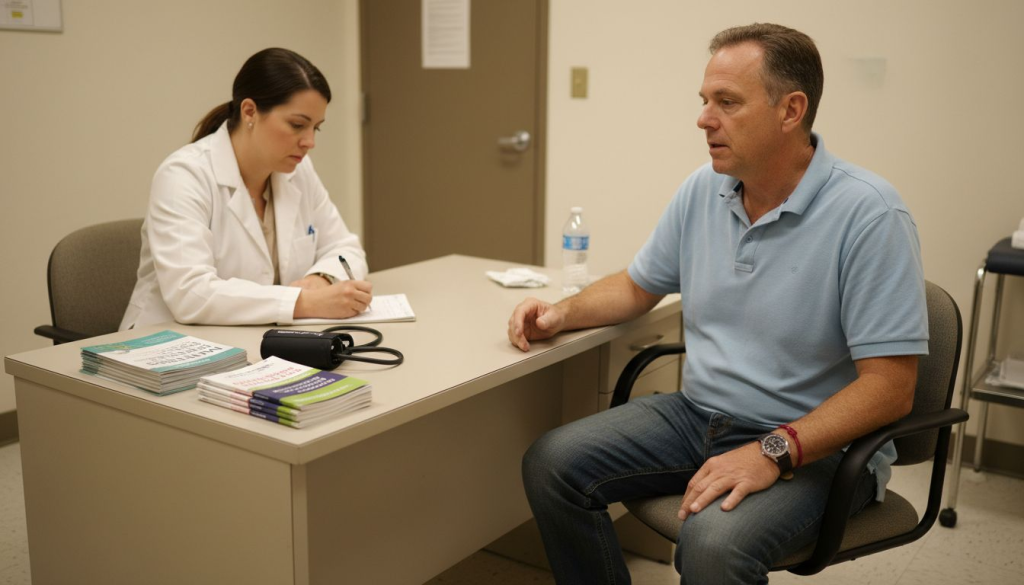
Bring a short list of your symptoms, when they started, all medicines and supplements you take, and any history of steroid use, testicular injury or cancer treatment. Ask whether your test will be drawn in the morning and whether a repeat test is planned.
Treatment Is a Decision for You and Your Clinician
Treatment depends on the cause, your symptoms and your plans, especially whether you want children.
Lifestyle first
The AUA advises that all men with testosterone deficiency be counseled on lifestyle changes as part of treatment.[2] Cleveland Clinic describes nutritious eating and physical activity as a starting point, with other treatment considered if these do not help after six to 12 months or if symptoms are severe.[1] For evidence based habits, see how to support healthy testosterone naturally.
Testosterone therapy
Testosterone can be given as skin gel, injections, implanted pellets, nasal gel or, in specific situations, oral capsules.[1] It is a prescription treatment with real trade offs:
- Fertility: The AUA states that testosterone therapy should not be prescribed to men who are currently trying to conceive, and the Endocrine Society advises against starting it in men planning fertility in the near term.[2][4]
- Blood and prostate checks: The AUA recommends measuring hemoglobin and hematocrit before therapy (because of the risk of a high red blood cell count) and measuring PSA in men over 40.[2]
- Other risks: MedlinePlus lists infertility, enlarged prostate, blood clots, worsening heart disease, sleep problems, cholesterol problems and higher blood pressure as possible risks.[3]
- Heart health: The AUA notes that low testosterone is itself a cardiovascular risk factor, while it cannot be stated definitively whether therapy raises or lowers the risk of cardiovascular events.[2]
- Response: MedlinePlus notes that if symptoms do not change after 3 months of treatment, therapy is less likely to help. Cleveland Clinic describes follow up visits once or twice a year.[1][3]
Men who want children may be offered other options, such as clomiphene citrate, instead of testosterone.[1] These decisions belong in a conversation with a urologist or endocrinologist.
Where Supplements Fit
No over the counter supplement can diagnose, treat or replace care for testosterone deficiency, and products sold with that promise deserve suspicion. Ultra Bann, made by DL Bioproducts, is a botanical vitality supplement (one capsule every 2 days) with seven herbs listed at exact amounts on the label. It is not a therapy for low testosterone and it is not a substitute for testing or medical care. If you already take it, or any herbal product, tell your doctor before your blood test. You can review the full label on our ingredients page.
Frequently Asked Questions
What is usually the first sign of low testosterone?
Mayo Clinic describes less sex drive and less energy as early signs in adult men, with changes such as reduced body hair, lower muscle mass and bone loss developing over time.[5] Because low energy has many causes, a drop in libido or in morning erections is the more telling early clue.
What testosterone level is considered low?
The AUA and Cleveland Clinic use a total testosterone below 300 ng/dL as the cutoff, confirmed on two separate early morning tests and combined with symptoms.[1][2] Labs report slightly different ranges, so your doctor will read your result against your lab’s reference range.
Can I tell if I have low testosterone without a blood test?
No. Symptoms can raise the suspicion, but they overlap with depression, thyroid problems, sleep apnea, diabetes and medicine side effects.[3] Guidelines also do not recommend validated questionnaires to define who should be treated; diagnosis requires confirmed blood levels.[2]
Can low testosterone be temporary?
Yes, in some cases. A brief illness can temporarily lower testosterone, and causes such as opioid use, anabolic steroids, obesity and untreated sleep apnea can sometimes be addressed.[1] This is one reason doctors repeat the test before making a diagnosis.
Which doctor should I see for low testosterone symptoms?
Start with your primary care doctor, who can order morning blood tests and look for common causes. If the levels are confirmed low, you may be referred to a urologist or an endocrinologist to find the cause and discuss treatment.
References
- Cleveland Clinic. Low Testosterone (Male Hypogonadism). my.clevelandclinic.org
- American Urological Association. Evaluation and Management of Testosterone Deficiency (2018, validity confirmed 2024). auanet.org
- MedlinePlus Medical Encyclopedia. Could you have low testosterone? U.S. National Library of Medicine. medlineplus.gov
- Bhasin S, et al. Testosterone Therapy in Men With Hypogonadism: An Endocrine Society Clinical Practice Guideline. Journal of Clinical Endocrinology and Metabolism, 2018. endocrine.org
- Mayo Clinic. Male hypogonadism: Symptoms and causes. mayoclinic.org
These statements have not been evaluated by the Food and Drug Administration. This product is not intended to diagnose, treat, cure or prevent any disease. This article is for information only and is not medical advice.
Ultra Bann natural male vitality support
1 capsule every 2 days. Free US shipping and a 60-day money-back guarantee on your first order.
See Ultra BannThese statements have not been evaluated by the Food and Drug Administration. This product is not intended to diagnose, treat, cure, or prevent any disease.